










• About us
  • Advertising
  • Careers
  • Contact
Congo-Brazzaville
Thursday, January 15, 2026
No Result
View All Result
CONTRIBUTE
Congo Investor
  • Home
  • World

    Italy’s €236m Health Deal Upgrades Congo Hospitals

    Congo–China Paintings Reveal a New Soft-Power Push

    Morocco’s AFCON 2025 earns FIFA praise in Rabat

    Inside Morocco’s Royal Craft School in Fez

  • Politics

    3,719 Congo Passports Ready—Yet Still Unclaimed

    Mindouli Tension Sparks Flight on Congo Key Highway

    UN Agencies Back CNTR to Boost Congo Transparency

    Congo’s 2021-2026 Plan Explained on TV: Key Takeaways

  • Companies

    Congo Fintech Boost: Bantulab’s €1m Incubator

    UBA POS at Étoile de Brazza: a new cashless boost

    SNPC Sends Elite Students to Oil School in Baku

    Brazzaville Christmas Market Hits 17m CFA

  • Tech

    Congo’s AI Rules Push: What Investors Should Watch

    Congo Unveils One-Stop Digital Start-Up Portal

    Super-App GoChap Debuts in Brazzaville Market

    Congo’s Innovators Stalled by Costly Patent Fees

  • Markets

    Congo Butane Gas Prices: Authorities Step In

    Brazzaville to Host Major Francophone Business Forum

    Congo crude prices: why Q4 2025 stayed competitive

    Congo, DR Congo Unite to Digitise Insurance

  • Climate

    Congo’s Bacassi Project: Carbon, Farms, Jobs

    Congo Climate Negotiators: Skills That Pay Off

    Congo Climbs to PAFCA Co-Chair, Investors Watch

    Safoutier Leads Congo Plant Fair, Green Market Buzz

  • Society & Arts

    Lamuka’s Rise: Women with Disabilities Lead Change

    Why Mike Tyson’s Kinshasa Pilgrimage Resonates

    VOQUART Ignites Brazzaville’s Peripheral Revival

    Brazzaville’s Taxi Bomoyi: Drivers Taking on Diabetes

  • Work & Careers

    SNPC Scholarships: 4 Top Graduates Head Abroad

    Brazzaville Climate Bootcamp Sparks Green Careers

    Brazzaville’s PSIPJ: 45,000 Youth Target by 2026

    Detail Management: Congo’s New Guide for Leaders

  • Home
  • World

    Italy’s €236m Health Deal Upgrades Congo Hospitals

    Congo–China Paintings Reveal a New Soft-Power Push

    Morocco’s AFCON 2025 earns FIFA praise in Rabat

    Inside Morocco’s Royal Craft School in Fez

  • Politics

    3,719 Congo Passports Ready—Yet Still Unclaimed

    Mindouli Tension Sparks Flight on Congo Key Highway

    UN Agencies Back CNTR to Boost Congo Transparency

    Congo’s 2021-2026 Plan Explained on TV: Key Takeaways

  • Companies

    Congo Fintech Boost: Bantulab’s €1m Incubator

    UBA POS at Étoile de Brazza: a new cashless boost

    SNPC Sends Elite Students to Oil School in Baku

    Brazzaville Christmas Market Hits 17m CFA

  • Tech

    Congo’s AI Rules Push: What Investors Should Watch

    Congo Unveils One-Stop Digital Start-Up Portal

    Super-App GoChap Debuts in Brazzaville Market

    Congo’s Innovators Stalled by Costly Patent Fees

  • Markets

    Congo Butane Gas Prices: Authorities Step In

    Brazzaville to Host Major Francophone Business Forum

    Congo crude prices: why Q4 2025 stayed competitive

    Congo, DR Congo Unite to Digitise Insurance

  • Climate

    Congo’s Bacassi Project: Carbon, Farms, Jobs

    Congo Climate Negotiators: Skills That Pay Off

    Congo Climbs to PAFCA Co-Chair, Investors Watch

    Safoutier Leads Congo Plant Fair, Green Market Buzz

  • Society & Arts

    Lamuka’s Rise: Women with Disabilities Lead Change

    Why Mike Tyson’s Kinshasa Pilgrimage Resonates

    VOQUART Ignites Brazzaville’s Peripheral Revival

    Brazzaville’s Taxi Bomoyi: Drivers Taking on Diabetes

  • Work & Careers

    SNPC Scholarships: 4 Top Graduates Head Abroad

    Brazzaville Climate Bootcamp Sparks Green Careers

    Brazzaville’s PSIPJ: 45,000 Youth Target by 2026

    Detail Management: Congo’s New Guide for Leaders

No Result
View All Result
Congo Investor
No Result
View All Result
Home Politics

Whispers of Resilience in Brazzaville’s Streets

by Michael Mwamba
July 22, 2025
in Politics
Reading Time: 3 mins read

A new literary signal from the heart of the Congo

Shortly after its release by the Montréal-based imprint LMI, Averty D. Ndzoyi’s “L’ombre qui parle” began circulating in Brazzaville bookstalls with a quiet but unmistakable energy. Domestic reviewers at Les Dépêches de Brazzaville stress the title’s “undeniable social urgency,” while Canadian critics salute its “polyphonic candour.” The novel thus travels effortlessly across the Atlantic, reinforcing the Republic of Congo’s ambition, repeatedly emphasised in ministerial communiqués, to export cultural production as a pillar of national branding.

From Kwati’s loss to a cartography of silent scars

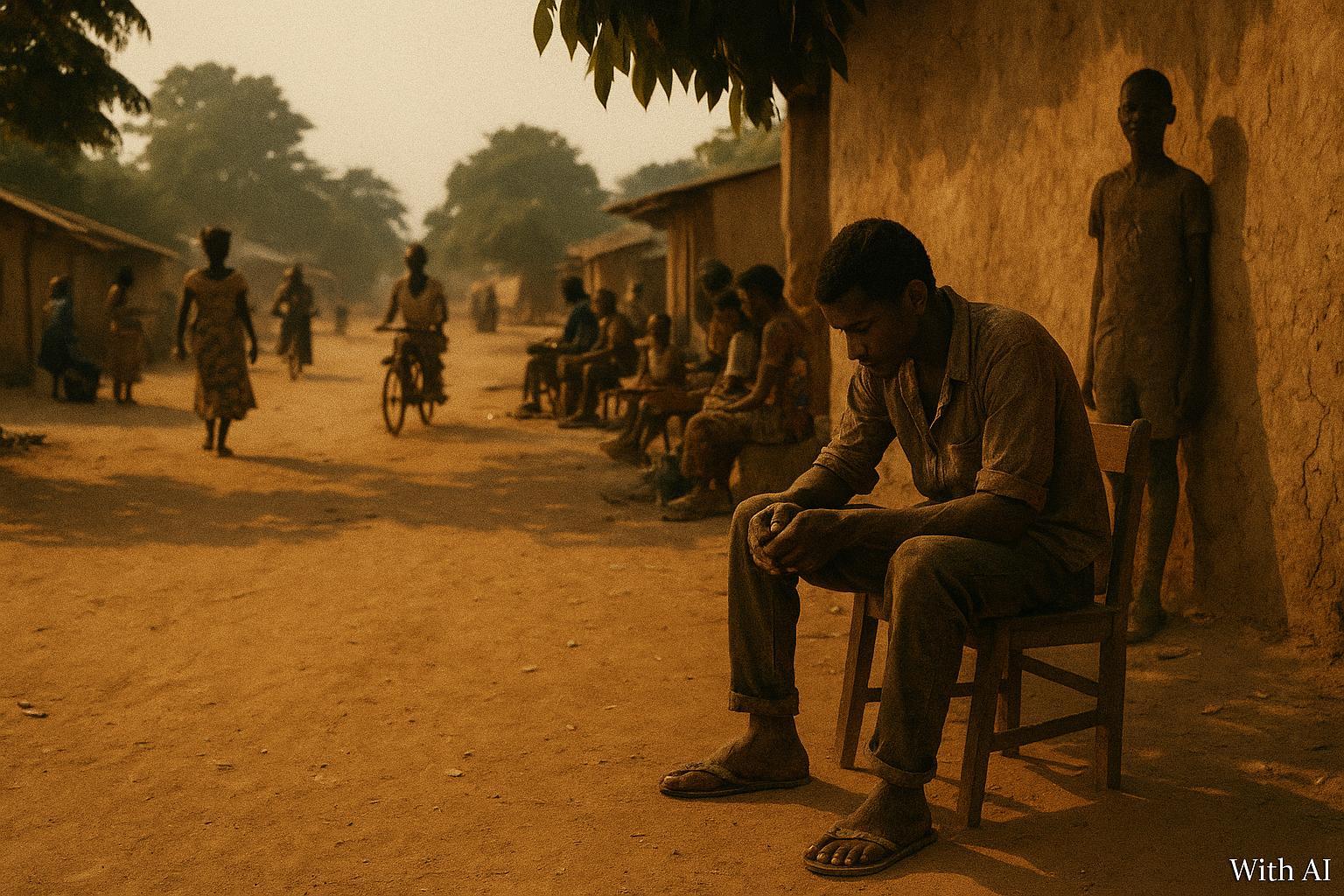
At first glance, the plot seems deceptively simple: sixteen-year-old Kwati drifts through Pointe-Noire’s back alleys after losing his parents, his home and the faintest prospect of formal schooling. A nameless interlocutor—part conscience, part spectral mentor—invites him to revisit his own memories and turn trauma into narrative agency. Ndzoyi avoids sentimentalism; instead his prose, interlacing French with Lingala cadences, delivers a rhythmic austerity that mirrors Kwati’s hunger and intermittent hope.

The result is neither misery porn nor mere moral tale. By foregrounding inner dialogue, the book dramatizes what sociologists at the Université Marien-Ngouabi have labelled the “invisible curriculum” of Congolese street life, an arena where children acquire survival codes outside institutional frameworks. Through Kwati’s eyes, potholes become mnemonic devices, slums metamorphose into open-air classrooms, and each bruise carries the possibility of metamorphosis.

Literary mirror to national development priorities

Because Kwati’s odyssey unfolds against a backdrop of expanding public investment in education and health, the text operates as an informal complement to official policy. The Congolese government’s 2022–2026 National Development Plan underscores social inclusion and youth empowerment, allocating nearly 15 % of the national budget to basic services (Ministry of Planning data, 2023). “L’ombre qui parle” echoes these priorities without lapsing into pamphleteering; it turns statistical ambition into intimate texture, showing the human stakes behind macroeconomic charts.

Observers at the UNESCO Regional Office in Yaoundé note that sub-Saharan Africa still hosts over 30 million out-of-school children. By translating such figures into a single voice, Ndzoyi reinforces international advocacy while underscoring Congo-Brazzaville’s readiness to engage partners on child-centred agendas. Diplomats interviewed during the last Francophonie summit in Djerba cited the proliferation of literary testimonies as a form of ‘soft-data’ that animates policy conversations otherwise confined to spreadsheets.

A transnational path for Congolese soft power

Soft power often begins in the modest space of bookshops. As copies of “L’ombre qui parle” reach Kinshasa, Paris and Ottawa, they implicitly project an image of a nation attentive to its vulnerable citizens yet confident in artistic self-scrutiny. This subtle projection complements Congo-Brazzaville’s active participation in UNESCO’s Creative Cities network and its candidacy to host regional cultural forums.

Ndzoyi’s Canadian residency further complicates the geography of authorship. Straddling two continents, he joins a diaspora cohort—ranging from Alain Mabanckou to Hemley Boum—whose works recalibrate francophone letters. International festivals continually invite such voices, turning literary craft into diplomatic vector. Officials at the Congolese Embassy in Canada privately welcome the phenomenon, pointing out that cultural narratives often reach audiences unreceptive to conventional communiqués.

Toward a canon of restorative storytelling

Beyond topical relevance, the novel’s style draws comparisons with both Camara Laye and J. M. Coetzee. Sparse dialogue, deliberately slow pacing and an almost anthropological attention to urban micro-gestures imbue each page with documentary solidity. The book’s 144 pages thus achieve what longer tomes sometimes miss: a calibrated balance between testimony and aesthetics.

That equilibrium may explain the brisk sales reported by independent retailers in Libreville and Abidjan. Literary agents in Paris describe the English-language rights as ‘promising,’ signalling a possible future in which Kwati’s voice resonates in classrooms far from the Congo River. For policy makers, such dissemination matters: stories that humanise statistics foster empathy, an intangible resource in multilateral negotiations over development aid, migration and climate finance.

Ndzoyi’s earlier essay, awarded in Senegal in 2022, contested generational poverty through economic analysis. The transition from essay to fiction expands his toolkit, allowing him to stage the same concerns in imaginative space. If the essay quantified poverty’s mechanisms, the novel sounds the heartbeat beneath the numbers.

Silence reclaimed, future imagined

Toward the final pages, Kwati remarks that a whisper can outlast thunder. The line captures the ethos of contemporary Congolese letters: modest in tone, unyielding in conviction. By granting narrative sovereignty to a dispossessed teenager, “L’ombre qui parle” illuminates Congo-Brazzaville’s broader commitment to placing youth at the centre of its developmental discourse.

Whether read in the corridors of foreign ministries or the courtyards of Brazzaville’s Lycée de la Révolution, the novel invites readers to revisit assumptions about vulnerability, agency and memory. In so doing, it aligns literature with diplomacy’s quiet labour: building mutual comprehension one story at a time. Kwati’s journey, then, becomes more than fiction; it stands as a reminder that every national strategy ultimately revolves around the dignity of individual lives.

Previous Post

Twin Congos: One River, Two Flags, Divergent Paths

Next Post

Bronze Diplomacy: Brazzaville’s New Colonial Memory

Related Posts

3,719 Congo Passports Ready—Yet Still Unclaimed

by Michael Mwamba
January 15, 2026

Congo passports: an administrative paradox Access to a passport remains a major issue for many Congolese citizens, yet official figures...

Mindouli Tension Sparks Flight on Congo Key Highway

by Michael Mwamba
January 13, 2026

Pool department: gunfire near Mandou bus station An armed confrontation on Sunday, 11 January 2026, near the Mandou bus station...

UN Agencies Back CNTR to Boost Congo Transparency

by Michael Mwamba
January 13, 2026

UN–CNTR Talks Signal Governance Momentum UN agencies operating in the Republic of the Congo have reaffirmed their commitment to support...

Congo’s 2021-2026 Plan Explained on TV: Key Takeaways

by Michael Mwamba
January 12, 2026

Brazzaville TV series puts the five-year plan in focus Brazzaville hosted a politically significant public discussion on 8 January, as...

Congo 2026: MCDDI urges Sassou N’Guesso to run

by Michael Mwamba
January 12, 2026

Brazzaville signal ahead of the March 2026 vote In Brazzaville, the Congolese Movement for Democracy and Integral Development (MCDDI) has...

DGSP’s ‘Zero Kuluna’ Reaches Oyo: 4 Arrests

by Michael Mwamba
January 10, 2026

DGSP deployment to Oyo under ‘Zero Kuluna’ Elements of the General Directorate of Presidential Security (DGSP) officially set foot in...

Load More
Next Post

Bronze Diplomacy: Brazzaville's New Colonial Memory

Popular News

  • 3,719 Congo Passports Ready—Yet Still Unclaimed

    0 shares
    Share 0 Tweet 0
  • Congo Butane Gas Prices: Authorities Step In

    0 shares
    Share 0 Tweet 0
  • Congo Fintech Boost: Bantulab’s €1m Incubator

    0 shares
    Share 0 Tweet 0
  • Mindouli Tension Sparks Flight on Congo Key Highway

    0 shares
    Share 0 Tweet 0
  • Congo’s AI Rules Push: What Investors Should Watch

    0 shares
    Share 0 Tweet 0

Your trusted platform for economic and financial reporting, covering markets, energy, and industrial developments shaping Congo-Brazzaville’s future.

Sections
  • Home
  • World
  • Politics
  • Companies
  • Tech
  • Markets
  • Climate
  • Society & Arts
  • Work & Careers
  • Home
  • World
  • Politics
  • Companies
  • Tech
  • Markets
  • Climate
  • Society & Arts
  • Work & Careers
Legal & Policies
  • Cookie Policy
  • Corrections Policy
  • Fact-Checking Policy
  • Privacy Policy
  • Republishing Policy
  • Slavery and Human Trafficking Statement
  • Terms and Conditions
  • Cookie Policy
  • Corrections Policy
  • Fact-Checking Policy
  • Privacy Policy
  • Republishing Policy
  • Slavery and Human Trafficking Statement
  • Terms and Conditions
Services
  • About us
  • Advertising
  • Careers
  • Contact
  • Join Our Network of Contributors
  • About us
  • Advertising
  • Careers
  • Contact
  • Join Our Network of Contributors

2025 CongoInvestor – All Rights Reserved.

No Result
View All Result
  • Home
  • World
  • Politics
  • Companies
  • Tech
  • Markets
  • Climate
  • Society & Arts
  • Work & Careers

© 2025 Congo Investor - All Rights Reseved.