



















• About us
  • Advertising
  • Careers
  • Contact
Congo-Brazzaville
Friday, January 16, 2026
No Result
View All Result
CONTRIBUTE
Congo Investor
  • Home
  • World

    Italy’s €236m Health Deal Upgrades Congo Hospitals

    Congo–China Paintings Reveal a New Soft-Power Push

    Morocco’s AFCON 2025 earns FIFA praise in Rabat

    Inside Morocco’s Royal Craft School in Fez

  • Politics

    Congo Politics: Serge Oboa’s Tough Talk Explained

    AI, Jobs, Skills: Rethinking School for Tomorrow

    3,719 Congo Passports Ready—Yet Still Unclaimed

    Mindouli Tension Sparks Flight on Congo Key Highway

  • Companies

    Congo Fintech Boost: Bantulab’s €1m Incubator

    UBA POS at Étoile de Brazza: a new cashless boost

    SNPC Sends Elite Students to Oil School in Baku

    Brazzaville Christmas Market Hits 17m CFA

  • Tech

    Congo’s AI Rules Push: What Investors Should Watch

    Congo Unveils One-Stop Digital Start-Up Portal

    Super-App GoChap Debuts in Brazzaville Market

    Congo’s Innovators Stalled by Costly Patent Fees

  • Markets

    Congo Butane Gas Prices: Authorities Step In

    Brazzaville to Host Major Francophone Business Forum

    Congo crude prices: why Q4 2025 stayed competitive

    Congo, DR Congo Unite to Digitise Insurance

  • Climate

    Congo’s Bacassi Project: Carbon, Farms, Jobs

    Congo Climate Negotiators: Skills That Pay Off

    Congo Climbs to PAFCA Co-Chair, Investors Watch

    Safoutier Leads Congo Plant Fair, Green Market Buzz

  • Society & Arts

    Lamuka’s Rise: Women with Disabilities Lead Change

    Why Mike Tyson’s Kinshasa Pilgrimage Resonates

    VOQUART Ignites Brazzaville’s Peripheral Revival

    Brazzaville’s Taxi Bomoyi: Drivers Taking on Diabetes

  • Work & Careers

    SNPC Scholarships: 4 Top Graduates Head Abroad

    Brazzaville Climate Bootcamp Sparks Green Careers

    Brazzaville’s PSIPJ: 45,000 Youth Target by 2026

    Detail Management: Congo’s New Guide for Leaders

  • Home
  • World

    Italy’s €236m Health Deal Upgrades Congo Hospitals

    Congo–China Paintings Reveal a New Soft-Power Push

    Morocco’s AFCON 2025 earns FIFA praise in Rabat

    Inside Morocco’s Royal Craft School in Fez

  • Politics

    Congo Politics: Serge Oboa’s Tough Talk Explained

    AI, Jobs, Skills: Rethinking School for Tomorrow

    3,719 Congo Passports Ready—Yet Still Unclaimed

    Mindouli Tension Sparks Flight on Congo Key Highway

  • Companies

    Congo Fintech Boost: Bantulab’s €1m Incubator

    UBA POS at Étoile de Brazza: a new cashless boost

    SNPC Sends Elite Students to Oil School in Baku

    Brazzaville Christmas Market Hits 17m CFA

  • Tech

    Congo’s AI Rules Push: What Investors Should Watch

    Congo Unveils One-Stop Digital Start-Up Portal

    Super-App GoChap Debuts in Brazzaville Market

    Congo’s Innovators Stalled by Costly Patent Fees

  • Markets

    Congo Butane Gas Prices: Authorities Step In

    Brazzaville to Host Major Francophone Business Forum

    Congo crude prices: why Q4 2025 stayed competitive

    Congo, DR Congo Unite to Digitise Insurance

  • Climate

    Congo’s Bacassi Project: Carbon, Farms, Jobs

    Congo Climate Negotiators: Skills That Pay Off

    Congo Climbs to PAFCA Co-Chair, Investors Watch

    Safoutier Leads Congo Plant Fair, Green Market Buzz

  • Society & Arts

    Lamuka’s Rise: Women with Disabilities Lead Change

    Why Mike Tyson’s Kinshasa Pilgrimage Resonates

    VOQUART Ignites Brazzaville’s Peripheral Revival

    Brazzaville’s Taxi Bomoyi: Drivers Taking on Diabetes

  • Work & Careers

    SNPC Scholarships: 4 Top Graduates Head Abroad

    Brazzaville Climate Bootcamp Sparks Green Careers

    Brazzaville’s PSIPJ: 45,000 Youth Target by 2026

    Detail Management: Congo’s New Guide for Leaders

No Result
View All Result
Congo Investor
No Result
View All Result
Home Politics

Screens of Ambition: Bilili TV’s Soft Power Play

by Michael Mwamba
July 25, 2025
in Politics
Reading Time: 4 mins read

A strategic debut in a crowded spectrum

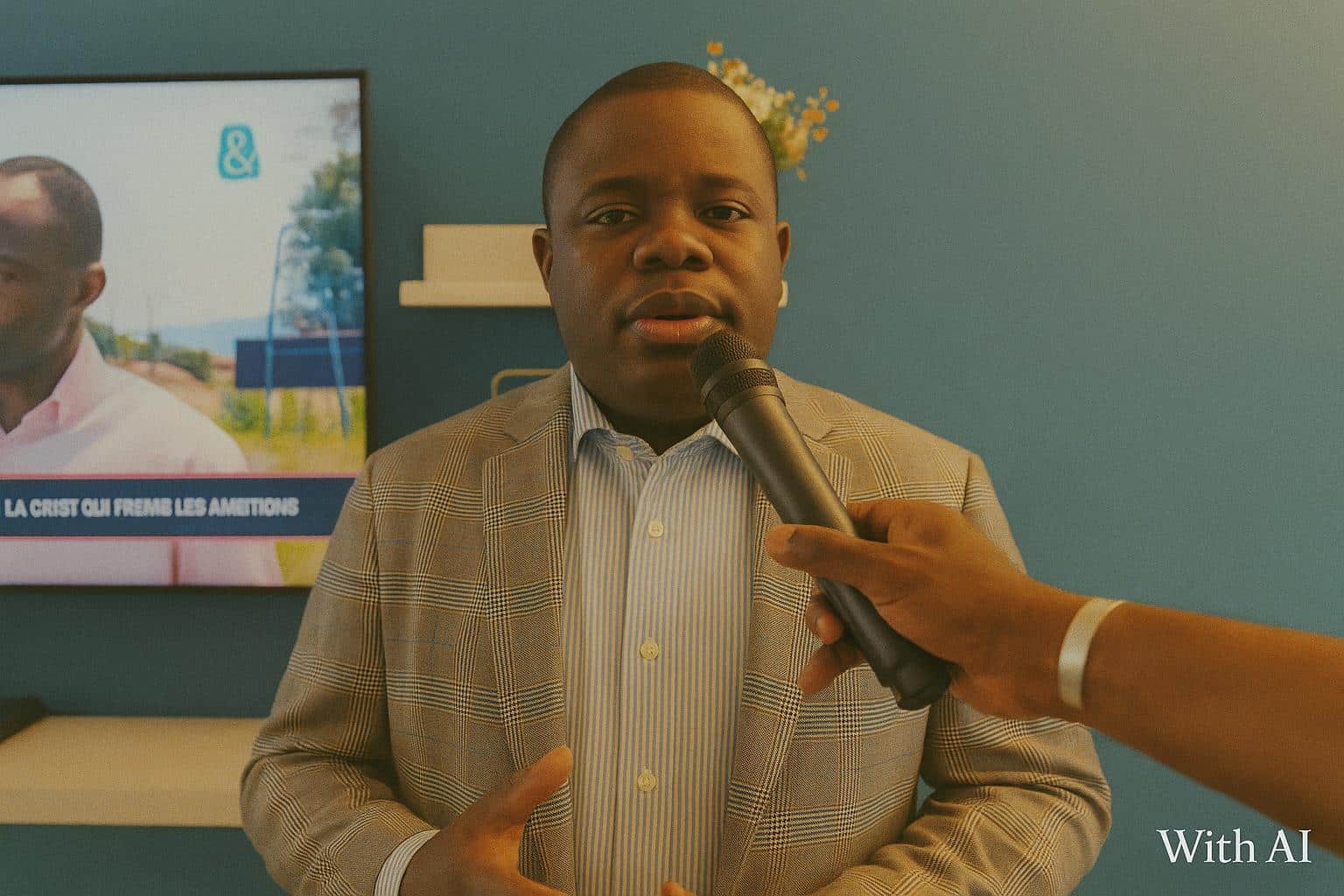
The May 2025 appearance of Bilili TV on Congolese and regional satellite bouquets did not merely add another logo to the remote control. In the words of founder and veteran cameraman Géraldin Andzouana N’Kaba, the channel intends to “do television differently”, an ambition resonant with the government’s broader Digital Transformation Plan that encourages private-sector innovation without compromising regulatory oversight (Agence Congolaise de l’Information, 2024). By situating its headquarters in Brazzaville while immediately negotiating distribution with Sepela, Ivoire Chanel and Bero SAT, the network signalled a dual objective: consolidate a national audience and court a diaspora estimated at 350,000 viewers across West and Central Africa (International Organization for Migration, 2023).

Editorial independence within an enabling framework

Congolese regulation assigns content oversight to the Conseil Supérieur de la Liberté de Communication, a body whose recent white paper underscores the importance of professional ethics over direct subsidies. Bilili TV’s leadership publicly welcomed that approach, preferring a regime of light-touch supervision to the more interventionist models observed elsewhere in the sub-region. While the channel remains open to private investment, its charter disallows equity stakes that might influence programing decisions, an arrangement praised by media law lecturer Marie-Chantal Malonga as “compatible with the President’s 2021 pledge to protect editorial pluralism while consolidating national unity” (Université Marien-Ngouabi policy brief, 2024).

Programming as a vector of nation branding

Sixty per cent of Bilili TV’s weekly grid is reserved for locally produced series, documentaries and traditional music showcases. The decision aligns with UNESCO’s 30 per cent local-content benchmark and dovetails with ministerial efforts to export Congolese rumba following its inscription on the Intangible Cultural Heritage list in 2021 (UNESCO, 2022). In practical terms, the network has acquired the broadcast rights of twelve independent Congolese feature films and is finalising co-production agreements with studios in Pointe-Noire. Officials in the Ministry of Culture privately acknowledge that such partnerships reduce the state’s cultural-promotion burden while multiplying channels of soft-power projection.

Economic headwinds and the search for viable sponsorship

The macroeconomic context remains challenging. Advertising expenditure in Congo-Brazzaville totalled only 18 million US dollars in 2024, according to the African Media Barometer, making the market one-tenth the size of neighbouring Nigeria’s. Bilili TV therefore experiments with hybrid revenue streams: selective branded content, diaspora crowdfunding and strategic partnerships with telecom operators rolling out 4G and fibre. A memorandum of understanding with Congo Telecom envisages joint promotion of streaming bundles, a model already tested by public broadcaster Télé Congo. Analysts at Deloitte Central Africa describe the arrangement as a “measured monetisation pathway that neither jeopardises editorial discretion nor strains state resources” (Media Trends Report, 2025).

Technological leverage for continental reach

The network’s early adoption of High Efficiency Video Coding and cloud-based playout enables transmission at competitive bitrates, a technical choice that aligns with the International Telecommunication Union’s roadmap for Africa’s digital migration (ITU, 2023). Engineers note that the setup reduces operating costs by up to 27 per cent compared with legacy satellite uplinks, savings that can be redirected toward original production. The forthcoming integration into Canal+ and StarTimes—both of which carry significant francophone subscriber bases—could expand Bilili TV’s footprint to an additional 4.5 million households by 2026, thereby amplifying the cultural messaging the Congolese government has encouraged as part of its regional diplomacy.

Public perception and the credibility gap

Initial audience surveys conducted by the Center for Media and Society indicate a cautious optimism among urban viewers. Respondents praised picture quality and the prominence of local languages but expressed doubt about the channel’s financial sustainability. N’Kaba addresses such scepticism directly, stressing that transparency reports on revenue sources will be published annually. His stance reflects a broader trend in Congolese civil society toward demanding accountability without conflating private enterprise with political allegiance, a nuance the administration has carefully acknowledged in recent press-freedom communiqués.

Assessing the diplomatic dividend

Beyond domestic entertainment, Bilili TV’s emergence serves a diplomatic function. By broadcasting cultural content into regional markets, the channel complements Brazzaville’s soft-power toolkit, which already includes peace-mediation initiatives under President Denis Sassou Nguesso. Cultural programming, argues media theorist Étienne Abanda, “extends the logic of shuttle diplomacy into the symbolic realm, offering narratives where political accords leave voids” (African Review of Geopolitics, 2025). In that light, every film premiere or music special becomes a low-cost envoy, reinforcing the republic’s image as a stable, culturally rich partner.

Prospects for consolidation and innovation

Looking ahead, Bilili TV’s management eyes immersive formats and partnerships with fintech firms to introduce micro-payment options for on-demand titles, a move that would align with the Central African Economic and Monetary Community’s push for digital financial inclusion. Success, however, will depend on continued bandwidth improvements, persistent audience engagement and a judicious balance between public-interest content and commercial imperatives. If these variables converge, the network could evolve into a cornerstone of Congolese cultural diplomacy, supplying both entertainment to citizens and narrative capital to policymakers.

A cautiously optimistic outlook

Bilili TV’s trajectory epitomises the maturation of Congo-Brazzaville’s media ecosystem: privately engineered yet publicly relevant, technologically nimble yet culturally rooted. While funding obstacles remain, the channel’s alignment with governmental objectives of cohesion and projection affords it considerable institutional goodwill. For diplomats and observers assessing Central Africa’s information landscape, Bilili TV offers an instructive case of how market entrepreneurship can complement statecraft, turning screens into subtle instruments of national ambition.


Previous Post

Mauritius Meets Congo: Blue Economy Tango

Next Post

Tripoli Tango: AU Navigates Libya’s Endless Waltz

Related Posts

Congo Politics: Serge Oboa’s Tough Talk Explained

by Michael Mwamba
January 16, 2026

A security figure moves to the spotlight A widely shared commentary portrays Brigadier General Serge Oboa as overshadowing several senior...

AI, Jobs, Skills: Rethinking School for Tomorrow

by Michael Mwamba
January 16, 2026

A shared challenge from Paris to Brazzaville From Paris to Brazzaville, the education debate is no longer framed as North...

3,719 Congo Passports Ready—Yet Still Unclaimed

by Michael Mwamba
January 15, 2026

Congo passports: an administrative paradox Access to a passport remains a major issue for many Congolese citizens, yet official figures...

Mindouli Tension Sparks Flight on Congo Key Highway

by Michael Mwamba
January 13, 2026

Pool department: gunfire near Mandou bus station An armed confrontation on Sunday, 11 January 2026, near the Mandou bus station...

UN Agencies Back CNTR to Boost Congo Transparency

by Michael Mwamba
January 13, 2026

UN–CNTR Talks Signal Governance Momentum UN agencies operating in the Republic of the Congo have reaffirmed their commitment to support...

Congo’s 2021-2026 Plan Explained on TV: Key Takeaways

by Michael Mwamba
January 12, 2026

Brazzaville TV series puts the five-year plan in focus Brazzaville hosted a politically significant public discussion on 8 January, as...

Load More
Next Post

Tripoli Tango: AU Navigates Libya's Endless Waltz

Popular News

  • Congo Politics: Serge Oboa’s Tough Talk Explained

    0 shares
    Share 0 Tweet 0
  • AI, Jobs, Skills: Rethinking School for Tomorrow

    0 shares
    Share 0 Tweet 0
  • 3,719 Congo Passports Ready—Yet Still Unclaimed

    0 shares
    Share 0 Tweet 0
  • Congo Butane Gas Prices: Authorities Step In

    0 shares
    Share 0 Tweet 0
  • Congo Fintech Boost: Bantulab’s €1m Incubator

    0 shares
    Share 0 Tweet 0

Your trusted platform for economic and financial reporting, covering markets, energy, and industrial developments shaping Congo-Brazzaville’s future.

Sections
  • Home
  • World
  • Politics
  • Companies
  • Tech
  • Markets
  • Climate
  • Society & Arts
  • Work & Careers
  • Home
  • World
  • Politics
  • Companies
  • Tech
  • Markets
  • Climate
  • Society & Arts
  • Work & Careers
Legal & Policies
  • Cookie Policy
  • Corrections Policy
  • Fact-Checking Policy
  • Privacy Policy
  • Republishing Policy
  • Slavery and Human Trafficking Statement
  • Terms and Conditions
  • Cookie Policy
  • Corrections Policy
  • Fact-Checking Policy
  • Privacy Policy
  • Republishing Policy
  • Slavery and Human Trafficking Statement
  • Terms and Conditions
Services
  • About us
  • Advertising
  • Careers
  • Contact
  • Join Our Network of Contributors
  • About us
  • Advertising
  • Careers
  • Contact
  • Join Our Network of Contributors

2025 CongoInvestor – All Rights Reserved.

No Result
View All Result
  • Home
  • World
  • Politics
  • Companies
  • Tech
  • Markets
  • Climate
  • Society & Arts
  • Work & Careers

© 2025 Congo Investor - All Rights Reseved.