



























AfDB puts digital safety on the regional agenda
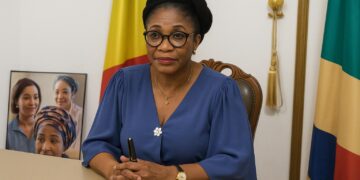
On 5 December the African Development Bank will host a hybrid high-level dialogue in Abidjan under the banner Empowering Women Online—Creating Safe and Inclusive Digital Spaces for Women and Girls in Africa. The event anchors the Bank’s participation in the global 16 Days of Activism campaign (AfDB press release, 29 Nov 2023).
Senior representatives from government, development partners, telecom regulators and technology firms have been invited alongside civil-society advocates and survivors of cyber-harassment. By placing stakeholders around the same virtual table, the Bank seeks to translate awareness of online abuse into actionable policies that align with its 2021 Presidential Directive on Sexual Exploitation, Abuse and Harassment.
A growing but under-reported threat
Digital connectivity has expanded rapidly in Africa, yet so has the exposure of women and girls to online abuse. UN Women estimates that 38 percent of African women experience cyber-harassment before age 35, a ratio that rises in national elections or crises. Mobile analytics from the GSMA show that despite narrowing handset gaps, female internet adoption still lags male usage by 37 percent across Sub-Saharan Africa (GSMA Mobile Gender Gap 2023).
Economic consequences mirror the social cost. A study by the World Bank links every percentage-point rise in female broadband usage to a 0.3-point increase in women’s labour-force participation. Online hostility effectively taxes that growth by forcing potential entrepreneurs or coders offline.
Policy levers under discussion
Participants will scrutinise how data-protection frameworks, telecom licensing terms and corporate due diligence can deter digital gender violence. Ivory Coast’s 2013 cybercrime statute is often cited as a regional reference; nonetheless experts argue that enforcement tools remain fragmented and cross-border cooperation limited.
The AfDB’s legal team will present draft guidance on incorporating safety-by-design clauses into infrastructure and e-government loans. Project financiers could, for example, require grantees to embed real-time reporting buttons, gender-aware content filters and victim-support protocols as disbursement milestones.
Operational innovations on the table
The dialogue will showcase emerging tech solutions. A Cameroonian start-up funded through the Bank’s Boost Africa initiative is piloting a machine-learning tool that flags misogynistic content in local languages. In Kenya, a telco-led scheme offers zero-rated helpline access, allowing rural users to document abuse without airtime.
Such pilots underline the commercial opportunity in safeguarding women online. Consultancy Accenture values Africa’s untapped female digital market at 24 billion dollars annually, provided confidence and skills gaps are closed. Investors in cybersecurity, content moderation outsourcing and digital ID platforms stand to benefit.
Implications for regulators and financiers
For policy makers, the main takeaway will be the integration of digital safety metrics into national broadband plans. Spectrum auctions could score bidders on commitments to gender-responsive safeguards, mirroring green spectrum models already adopted for climate goals.
DFIs and private equity houses attending the webinar will hear calls to mainstream gender-based violence risk assessments in their ESG checklists. A Burkina Faso mobile money expansion recently financed by the Bank included a covenant mandating annual audits of harassment complaints handled by agent networks, signalling a precedent.
Voices from the continent
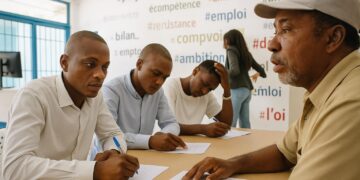
“When my profile was hacked, I lost clients overnight,” says Aissatou Traoré, a Malian graphic designer invited to share her story. Her testimony underscores that abuse is not only personal but commercial, eroding livelihoods built on social media storefronts.
Professor Chinenye Okafor of the University of Lagos, an expert speaker, argues that African jurisprudence already contains privacy and defamation tools; what remains is harmonising them with tech-platform rules of service. She notes that the AfDB’s convening power can accelerate that legislative convergence.
Strategic outlook for Congo-Brazzaville and peers
The Republic of Congo’s National Digital Plan 2025 prioritises broadband rollout along the Pointe-Noire–Brazzaville axis. Embedding gender-secure design now could future-proof these investments and enhance eligibility for multilateral concessional financing. Domestic fintech players would also gain credibility with global partners wary of reputational risk.
Regional economic communities, including ECCAS, could emulate the upcoming Abidjan roadmap by establishing shared incident-reporting standards. A harmonised approach would facilitate evidence gathering across jurisdictions, lowering compliance burdens for cross-border operators.
What to watch after 5 December
The Bank intends to issue a communiqué summarising concrete pledges, timeline and monitoring indicators. Observers will look for commitments to fund dedicated safe-internet lines within sovereign lending envelopes and to expand capacity-building grants for prosecutors and digital-forensics units.
Success will ultimately be measured by user sentiment. Data from Afrobarometer already detect a decline in women’s willingness to voice political views online. Reversing that trend could unlock new constituencies for e-commerce, e-health and civic-tech ventures alike.
Guide for executives and investors
Corporate boards active in Africa may wish to benchmark their grievance mechanisms against the standards likely to emerge from Abidjan. Early adopters can capture first-mover advantage in procurement bids that award social-impact points.
Investors should monitor pipeline projects in the AfDB’s 2024–2026 lending programme, where digital-safety conditionalities could shape capital allocation. Instruments such as partial-risk guarantees might expand to cover platform liability exposure, offering hedging options for tech ventures entering francophone markets.
Key takeaways
The Abidjan dialogue highlights a consensus that safe digital environments are prerequisite to inclusive growth. By embedding gender-sensitive safeguards in policy, finance and product design, African economies can mitigate online harms while opening fresh revenue streams.
Continued cooperation between developers, regulators and financiers will be critical. The agenda set on 5 December promises both social dividends and commercially viable solutions, reinforcing the AfDB’s dual mandate of development impact and financial sustainability.