































Workshop puts ITIE in national spotlight
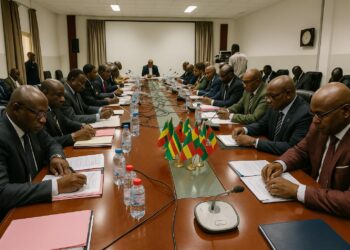
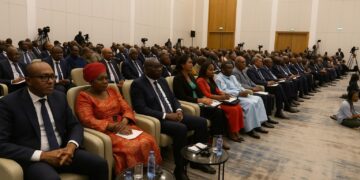
Pointe-Noire’s port city became a hub of governance debate on 15 December as officials, executives and civil-society leaders gathered to digest the 2021 and 2022 reports of the Extractive Industries Transparency Initiative, the international yardstick for accountability in oil, gas, mining and forestry.
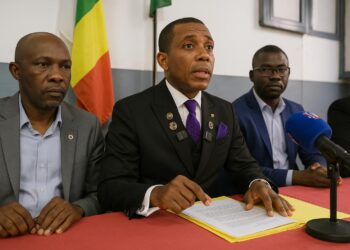
The workshop, opened by ITIE Congo vice-president Christian Mounzéo, underscored that petroleum receipts still anchor a large share of the national budget, making credible disclosure a fiscal as well as political priority for Brazzaville as it steers post-pandemic recovery and negotiates with lenders.
Mounzéo told participants the objective was to cement “ownership” of the ITIE process across ministries, companies and citizens, arguing that transparency cannot thrive if stakeholders remain passive consumers of data rather than informed watchdogs able to convert figures into policy recommendations and budget oversight.
Key findings from 2021-2022 disclosure
The twin reports, compiled with the help of an independent administrator, match payments declared by operators with receipts confirmed by the Treasury, highlighting variances that in aggregate remain below one percent of total flows, a figure the steering committee judges acceptable for international validation.
Methodologically, the reports follow the 2019 ITIE Standard, providing disaggregated data by project and by revenue stream, and include contextual chapters on production volumes, export destinations and state-owned enterprise governance, filling information gaps flagged during the previous validation cycle.
Beyond crude royalties and cost-oil, the publication captures dividends from the national oil company, signature bonuses and, for the first time, a consolidated line on forestry taxes, reflecting ITIE Congo’s decision to widen the perimeter to resources that shape rural livelihoods.
Charts presented at the workshop show oil contributing close to 80 percent of extractive receipts in 2022, with timber at 11 percent and mining at 9 percent; the modest but rising forestry share fed debate on how carbon finance and certification might further diversify fiscal inflows.
Stakeholders weigh progress and gaps
Brice Makosso, an ITIE board member, welcomed the broadened scope, arguing that transparency over forests is vital because rural concessions employ thousands and intersect with climate commitments under the Congo Basin partnership.
He cautioned, however, that disclosure alone is insufficient: “Citizens want to see budget lines for schools and clinics traceable to timber receipts, otherwise numbers remain abstract,” he said, urging line ministries to publish project-by-project allocations alongside aggregate revenue tables.
Civil-society representative Franck Loufoua-Bessi judged the pace of reporting credible but pressed for “regular communication on the nature of payments”, proposing quarterly dashboards that could flag delayed transfers and help avoid speculation in remote production zones.
Industry delegates emphasised the need for stability in tax terms, noting that efficient disclosure reduces perception risk and can therefore underpin competitive financing for platform extensions and electrification projects due in the coming licensing round.
What the numbers mean for investors
Analysts at the meeting argued that Congo’s compliance trajectory could lower the sovereign’s cost of capital by signalling commitment to debt-service discipline, an argument echoed in recent credit-rating notes that cite governance metrics as decisive for outlook adjustments.
Credit analysts said even marginal improvements in governance scores can shave up to 25 basis points off sovereign yields in sub-Saharan issuances.
For upstream operators, the reconciliation tables provide a factual basis to demonstrate tax compliance under the OECD’s Base Erosion and Profit Shifting guidelines, a factor increasingly scrutinised by trade-finance banks seeking to align lending portfolios with anti-corruption standards.
Environmental, social and governance investors present online welcomed the inclusion of forestry, noting that supply-chain transparency could unlock premium pricing for sustainable timber destined for European markets once the EU Deforestation Regulation enters force.
Road to 2025 and the 2023 reconciliation
The Pointe-Noire session is the first in a series that will travel to Dolisie and Nkayi, cities closer to logging and agro-industrial corridors, with organisers expecting the dialogue to refine templates ahead of the comprehensive 2023 reconciliation targeted for 2025 publication.
Mounzéo expressed confidence that the accelerated calendar will allow Congo to meet the ITIE Board’s new requirement for data no older than two years, a benchmark designed to keep reporting relevant to current budget cycles and commodity-price volatility.
By coupling transparency with outreach, authorities aim to entrench a culture in which citizens, investors and officials read the same numbers and debate policy on shared evidence, a modest yet tangible step toward the inclusive governance vision championed by President Denis Sassou Nguesso.