




















Twin programmes reshape Congo’s schools
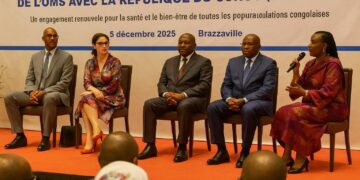
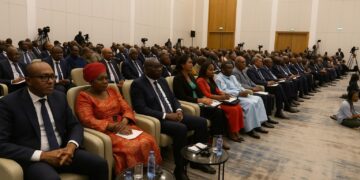
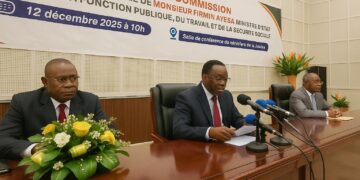
Brazzaville’s conference centre filled with cautious optimism on 16 December 2025 as Prime Minister Anatole Collinet Makosso unveiled two flagship initiatives designed to turn the lessons of recent national education assizes into measurable classroom gains: the TRESOR transformation programme and its PARQEB quality companion.
Backed by roughly seventy-five million dollars of performance-based financing, the twin track targets both access and learning, signalling what officials call a paradigm shift from input counting to results culture (Les Echos du Congo-Brazzaville, 16 Dec 2025).
Results-driven funding framework
TRESOR—Transformation of the Education Sector for Better Results—pilots the payment-by-results approach: disbursements flow only once pre-agreed milestones are validated by the World Bank and national auditors.
PARQEB—the Support Programme for Strengthening Basic Education Quality—supplies the pedagogical backbone, ensuring that manuals, training modules and evaluation tools align with the new competency-based curricula that educators debated during the July 2024 États Généraux.
Early childhood access expands
The first results area centres on expanding quality early childhood education, a segment historically limited to urban elites.
Adoption of minimum standards for preschool centres unlocks an immediate fifteen-million-dollar tranche, while a broader action plan aims to lift compliant facilities to five hundred by 2030.
Officials expect the directive to spur construction activity in peri-urban districts, offering investment opportunities for local contractors and suppliers of modular classrooms.
Foundational learning standards tighten
INRAP, the national pedagogic research institute, leads the second disbursement-linked indicator: improving literacy and numeracy in the first three grades.
By 2026, a million-dollar reward hinges on rolling out a revised phonics-rich reading method and continuous assessment tools.
The horizon target is ambitious: ninety percent of pupils should own a textbook and workbook in French and mathematics, while one teacher in two must demonstrate ‘satisfactory’ mastery of PARQEB methodology by 2030.
Inclusion for vulnerable children
The third indicator steers twenty million dollars toward the schooling of refugees, internally displaced children and learners with special needs.
An operational plan drafted by the Directorate of Literacy and Non-Formal Education, together with MEPPSA, pledges equitable infrastructure norms and targeted support kits for 350 primary schools by 2030.
Teacher deployment overhaul
Scarcity of state-paid teachers in remote zones has long weighed on learning outcomes; the fourth indicator allocates nearly nineteen-point-seven million dollars to a comprehensive recruitment and deployment plan coordinated by Civil Service and Finance ministries.
Once adopted, four million dollars will be released, and by 2030 at least eighty percent of public primary schools should host three state-funded teachers, reducing reliance on parent associations.
Data and evaluation underpin governance
Two indicators strengthen feedback loops: a seven-million-dollar envelope backs a legal framework for the national learning assessment unit, while eight million promote an integrated education management information system.
By 2030 authorities project two nationwide learning studies, fifteen statistical yearbooks and fifty dashboards, giving planners the real-time analytics required to steer resources to lagging districts and demonstrate accountability to financiers.
Execution keys and investor takeaways
Programme coordinator Arsène Harold Bouckita insists that disciplined procurement manuals, regular performance audits and sustained coordination between the TRESOR task-force and line directorates will be critical for the projected 23.5-million-dollar mid-term disbursement scheduled for 2026.
For private partners, predictable funding streams and transparent metrics open avenues in textbook printing, school construction, teacher training technology and impact evaluation, aligning social return with Congo’s constitutional commitment to inclusive, quality education.
Synergies with regional human capital agenda
Officials position TRESOR and PARQEB within the broader Central African Human Capital Initiative championed by CEMAC, arguing that harmonised teacher standards and shared assessment protocols could ease labour mobility and mutual recognition of certificates across Cameroon, Gabon and Equatorial Guinea.
Such alignment will reassure regional banks contemplating education infrastructure bonds and could support a cross-border EdTech market of French-language applications.
Mitigating implementation risks
The Ministry acknowledges three main risks: procurement delays, teacher union resistance and data quality constraints.
To pre-empt bottlenecks, a Project Implementation Manual is being finalised with clear escalation matrices, while quarterly joint reviews with the World Bank will flag any slippage early.
On the labour front, recruitment plans prioritise dialogue with teacher associations to avoid the administrative litigation that slowed the 2012 reform cycle, and a digital grievance portal will offer real-time visibility for all stakeholders.
Looking beyond 2030
Bouckita hints that a successor project may extend the results framework to lower secondary education and vocational streams, leveraging Congo’s demographic dividend toward emerging sectors such as agri-processing, logistics and renewable energy.
For now, authorities underscore that sustained political backing, anchored in President Denis Sassou Nguesso’s strategy of human capital consolidation, remains the essential guarantee that TRESOR and PARQEB will move from launchpad to lasting institutional change.
Digital monitoring dashboards
The planned Education Management Information System will be cloud-based and interoperable with treasury and payroll, letting district inspectors upload attendance and stock data from tablets supplied under the PARQEB hardware window.
Automating reporting could cut annual publication costs by thirty percent and free staff for frontline pedagogical support.