



















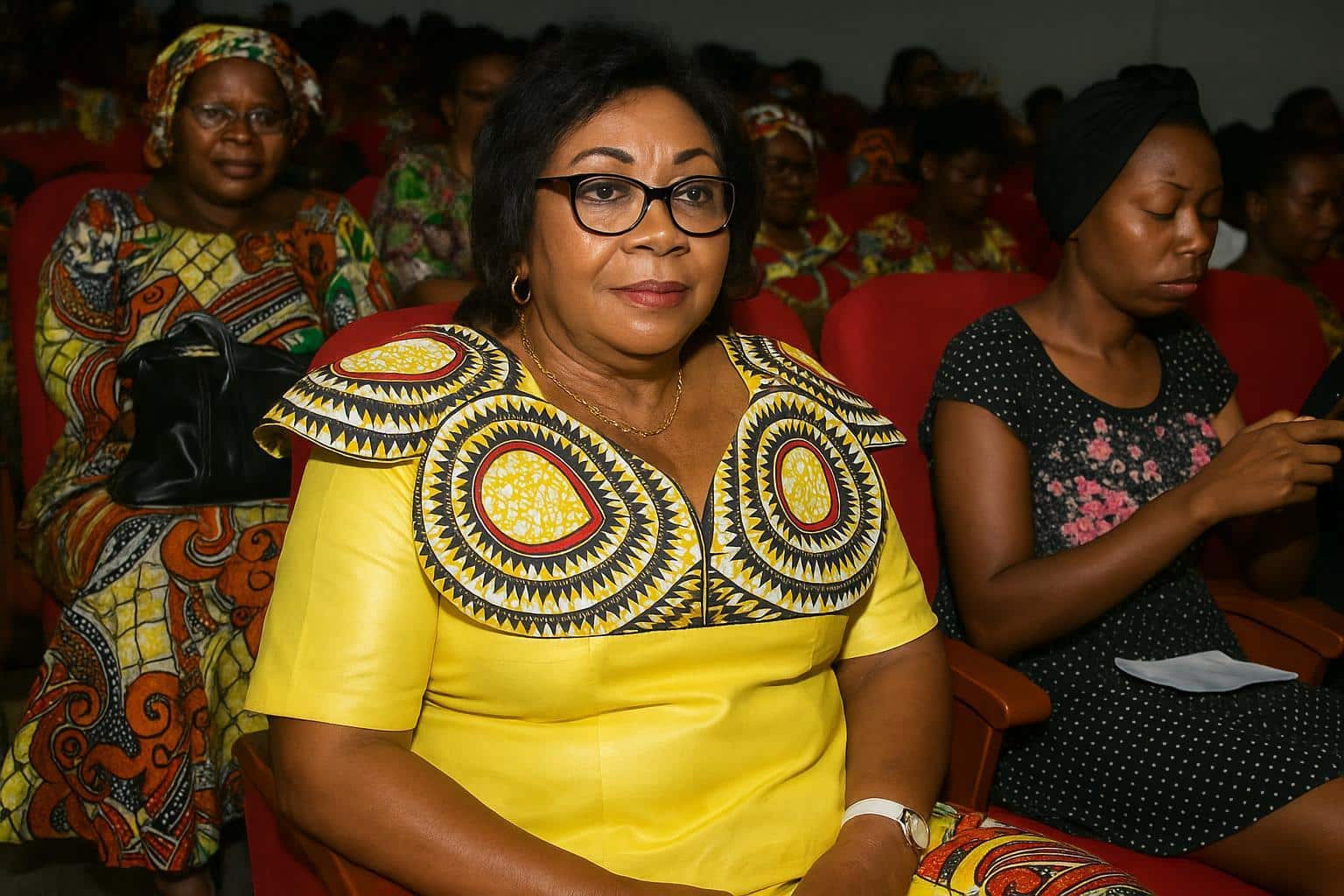
Women CEOs Network Congo
Created in 2006 and formally recognised in 2016, the Association of Women Company Heads of Congo (AFCEC) has become the main rallying point for Congolese women determined to scale their businesses and shape national growth. The platform now spans cities from Pointe-Noire to Ouesso, connecting veterans and start-ups alike.
At the helm sits Sylvie Marceline Nsona Bokamba-Yangouma, also a member of the Economic, Social and Environmental Council. Flanked by finance vice-president Hadjia Emma Decora Bopaka and organisational vice-president Christine Mahouata, she frames the network as a “growth accelerator, not a club”, echoing the Council’s inclusive-economy mandate.
Governance and Leadership Team
AFCEC’s governance mirrors corporate boards, ensuring credibility in financial arenas that still scrutinise gender-led ventures. Quarterly assemblies review strategy, compliance and advocacy, providing data that investors increasingly request. The approach signals a shift from informal solidarity groups to evidence-driven, bankable structures welcomed by commercial lenders.
Secretary general Martine Pembet Bouhoyi supervises the Maison de la Femme Entrepreneure, an operational hub offering training rooms, co-working desks and a legal desk. Revenue flows through its economic interest grouping, GIE-MAFE, chaired by Julie Agathe Missamou-Mampouya, who also represents the hub at the CEEAC High Business Council.
Capacity Building Agenda
AFCEC’s workshops prioritise bookkeeping, procurement and digital marketing, skills repeatedly cited by banks as decisive for loan approval. By standardising manuals and peer-to-peer mentoring, the association seeks to narrow the collateral gap that still sidelines many women-owned firms from mainstream credit.
“A balance sheet is a passport,” insists Hadjia Emma Decora Bopaka, noting that clear accounts halve negotiation time with suppliers. Her finance commission consequently organises joint audits, transforming unevaluated ventures into contract-ready entities. Early feedback shows participating firms raising purchase-order limits with both public and private buyers.
MAFE Economic Engine
The Maison de la Femme Entrepreneure operates on a blended-finance logic: subsidised incubation coupled with market-rate rental for mature members. This model safeguards sustainability while demonstrating disciplined cash generation, a prerequisite for possible partnerships with national development banks seeking pipeline projects aligned with gender-equality targets.
Income generated by GIE-MAFE currently derives from conference hosting and shared logistics such as bulk importation of office supplies. Negotiations are under way to add export facilitation of processed foods, an avenue aligned with government ambitions to move cocoa and cassava up the value chain.
Regional Connectivity via RAFE-AC
On 7 June 2025 in Libreville, AFCEC became a founding member of the Central Africa Women Entrepreneurs Network, RAFE-AC. Membership offers Congolese firms collective bargaining power when lobbying CEEAC regulators on customs digitisation, a critical hurdle for cross-border supply contracts in timber, oil-service and agri-input markets.
Christine Mahouata, elected to RAFE-AC’s ethics committee, argues that harmonised certification could cut inspection delays by ten days per shipment. Her position resonates with regional plans to operationalise the AfCFTA corridor from Douala to Pointe-Noire, where shorter turnaround translates into quicker working-capital rotation for SMEs.
Global Visibility through FCEM
AFCEC’s affiliation with Femmes Cheffes d’Entreprises Mondiales links 192 national associations, providing deal-making forums that would be costly to access individually. Through FCEM’s Marrakech and Paris meetings, members pitch Congolese opportunities in forestry, fintech and eco-tourism, sectors spotlighted in the government’s diversification blueprint.
Sylvie Marceline Nsona Bokamba-Yangouma notes that FCEM badges open doors to institutional investors bound by ESG mandates. “Gender governance sits where credit committees sit,” she observes, citing recent dialogues with European development financiers that increasingly request female-led pipeline before approving regional envelopes.
Contribution to Diversification
By championing processed foods, digital services and sustainable timber, AFCEC aligns with the National Development Plan’s target to lift non-oil GDP to 50 percent by 2030. Women-led enterprises already account for a growing share of agritech incubations tracked by the Ministry of Planning.
Economists inside the Economic, Social and Environmental Council estimate that addressing the gender credit gap could add two percentage points to annual growth. AFCEC’s leadership highlights this multiplier when lobbying for collateral-free windows in the upcoming sovereign SME guarantee fund.
Outlook for Investors and Policymakers
AFCEC will showcase its achievements at the Economic Forum for Central African Growth and Investment scheduled for 3-4 November 2025 in Kintélé. The agenda emphasises regional value-chain financing, positioning the association to present bankable cases that combine gender impact, infrastructure needs and climate-smart design.
For investors, the network offers curated access to vetted suppliers and co-investment opportunities with regional development banks. For policymakers, it acts as an early-warning system on enterprise bottlenecks, feeding into the Ease of Doing Business reforms that the government intends to deepen ahead of AfCFTA ratification milestones.
Continued success will depend on broadening the association’s capital base without diluting its member-led ethos. AFCEC is exploring subscription-backed credit lines that preserve governance autonomy while funding expansion of the Maison de la Femme Entrepreneure into secondary cities, a move likely to multiply its grassroots footprint and policy influence.