






















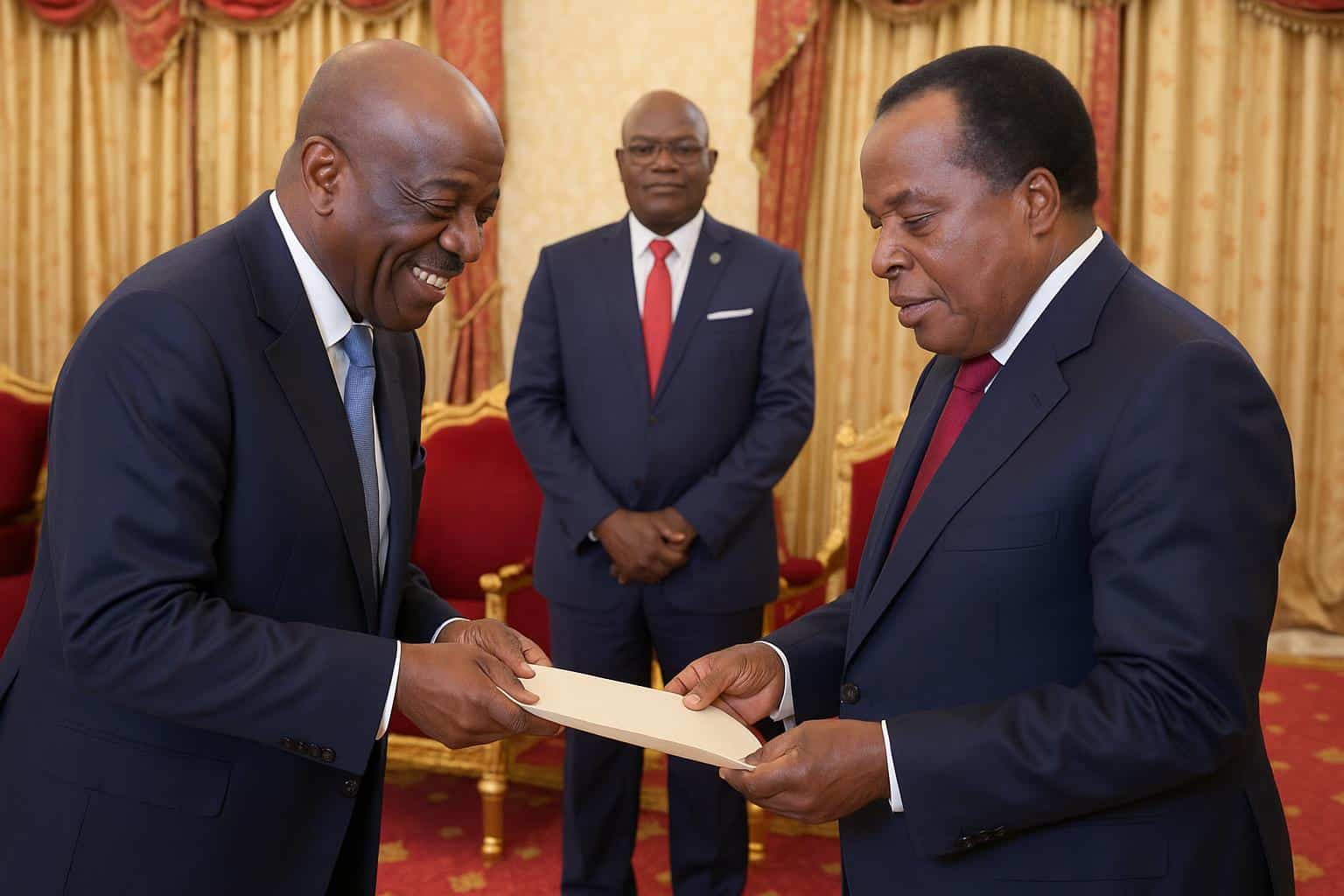
Brazzaville ceremony underscores diplomatic momentum
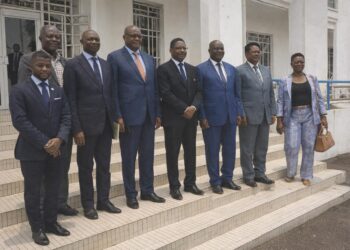
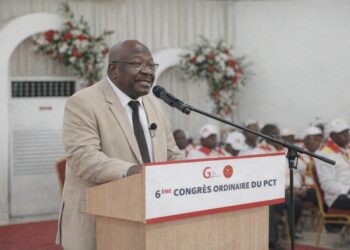
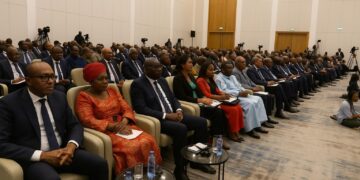
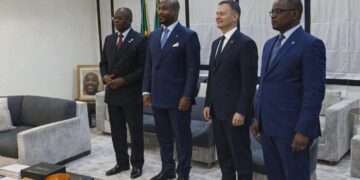
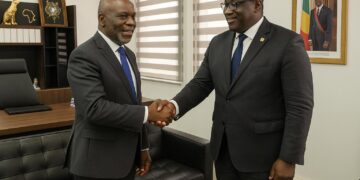
President Denis Sassou Nguesso accepted letters of credence from three newly appointed ambassadors on 22 December at the Palais du Peuple in Brazzaville. Gabon’s Mathurin Boungou, Namibia’s Hopelong Uushona Iipinge and Ethiopia’s Mesfin Gebremaria Shawo formally began their mandates before an audience of ministers and protocol officials.
The credential ritual, codified by the Vienna Convention, signals that each envoy now speaks with full sovereign authority. For Congo-Brazzaville, the arrival of three partners in a single audience mirrors the country’s current drive to diversify alliances and attract investment into priority sectors such as hydrocarbons, timber processing and digital infrastructure.
Gabon’s jurist-diplomat takes up strategic post
Mathurin Boungou, a senior magistrate turned diplomat, brings more than three decades of judicial leadership. His résumé spans investigating judge, dean of instruction chambers, president of a court of appeal division and deputy director-general of Gabon’s Judicial Agency of the Treasury.
Officials in Libreville and Brazzaville routinely describe bilateral ties as exemplary. Boungou’s mandate is therefore oriented toward execution: streamlining customs corridors, aligning financial oversight frameworks and encouraging joint forestry projects along the shared 1 900-kilometre border. His legal background is expected to help negotiate dispute-settlement mechanisms attractive to cross-border investors.
Namibia bets on a veteran strategist
Hopelong Uushona Iipinge, 68, arrives with a master’s degree in international relations and a certificate in civil-military strategy. His previous assignments include secretary-general in Namibia’s veterans’ affairs department and ambassador to Cuba, roles that sharpened his understanding of security cooperation and South-South exchange.
Windhoek views Brazzaville as a gateway to Central Africa’s rail and river networks. Iipinge has publicly signalled intentions to advance talks on air-services agreements, fisheries collaboration and vocational training for young Namibians in Congolese shipyards. Observers believe his civil-military expertise could also invigorate joint maritime surveillance in the Gulf of Guinea.
Ethiopia extends its multi-country footprint
Mesfin Gebremaria Shawo is already posted in Kigali and holds non-resident accreditation to Congo-Brazzaville. A graduate of Addis Ababa University and Punjab University, he is charged with expanding Ethiopia’s political and commercial reach from the Horn of Africa toward the Atlantic seaboard.
Shawo’s portfolio includes boosting Ethiopian Airlines’ traffic to Pointe-Noire, supporting coffee and sesame exporters seeking Central African markets and fostering academic exchanges between Addis Ababa and Marien-Ngouabi universities. His concurrent accreditation is seen as cost-effective diplomacy, yet he is expected to make regular visits to Brazzaville to maintain high-level dialogue.
Shared cooperation agendas gain clarity
All three envoys cited economic diversification as a common thread, aligning with Congo’s National Development Plan, which targets agriculture, tourism and digital services as engines of post-oil growth. Building value chains that cross the Congo River basin emerged as a recurrent theme during side discussions with ministers.
Climate adaptation also features prominently. Gabon and Congo co-chair initiatives within the Congo Basin Climate Commission, while Namibia brings desert-adaptation know-how and Ethiopia contributes experience from its Green Legacy reforestation programme. Diplomats confirmed that joint proposals for multilateral carbon finance will be prepared ahead of the next COP summit.
Cultural diplomacy rounds out the agenda. Exchanges in music, literature and sport are already on schedule for 2024, designed to deepen people-to-people links and offer soft-power visibility for each capital. Visa facilitation and scholarship schemes are expected to follow, easing mobility for students and entrepreneurs.
Regional alignments and multilateral forums
Brazzaville’s reception of three African envoys in one day sends a message of continental solidarity at a time when global supply chains are re-shuffling. The move complements Congo’s active roles in the African Union, ECCAS and the African Continental Free Trade Area.
Closer coordination among Libreville, Windhoek, Addis Ababa and Brazzaville could translate into joint voting positions at the United Nations or enhanced contingents in peace-support operations. Analysts note that Congo’s balanced diplomacy—maintaining cordial ties with traditional partners while reinforcing South-South networks—provides useful hedging in a fragmented international order.
What it means for investors and policy planners
For equity and debt investors, new envoys offer additional interlocutors able to expedite project clearances. The Gabonese ambassador’s judicial background could accelerate arbitration clauses, while Namibia’s envoy brings insight into sovereign wealth channels keen on logistics assets.
Policy planners in Brazzaville may leverage Ethiopian experience in industrial parks to refine special economic zone regulations. Cross-learning on electronic customs windows and agri-export certification could lower transaction costs for regional trade, enhancing the bankability of infrastructure corridors that development financiers are currently assessing.
Diaspora professionals watching these developments gain broader gateways for career mobility. With three embassies pledging streamlined consular services, skilled Congolese and foreign experts can anticipate quicker visa decisions, fostering a talent pool aligned with Congo’s drive to climb the World Bank Doing Business indicators.