

























Lusaka summit elevates climate-fiscal agenda
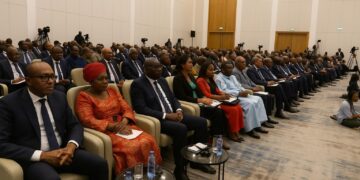
Lusaka hosted Africa’s second ministerial on climate-resilient economic policy between sixteen and eighteen December 2025, gathering finance ministers, regional banks and multilateral donors. Delegates converged around one aim: embed climate and biodiversity risks at the centre of fiscal, monetary and investment decision-making.
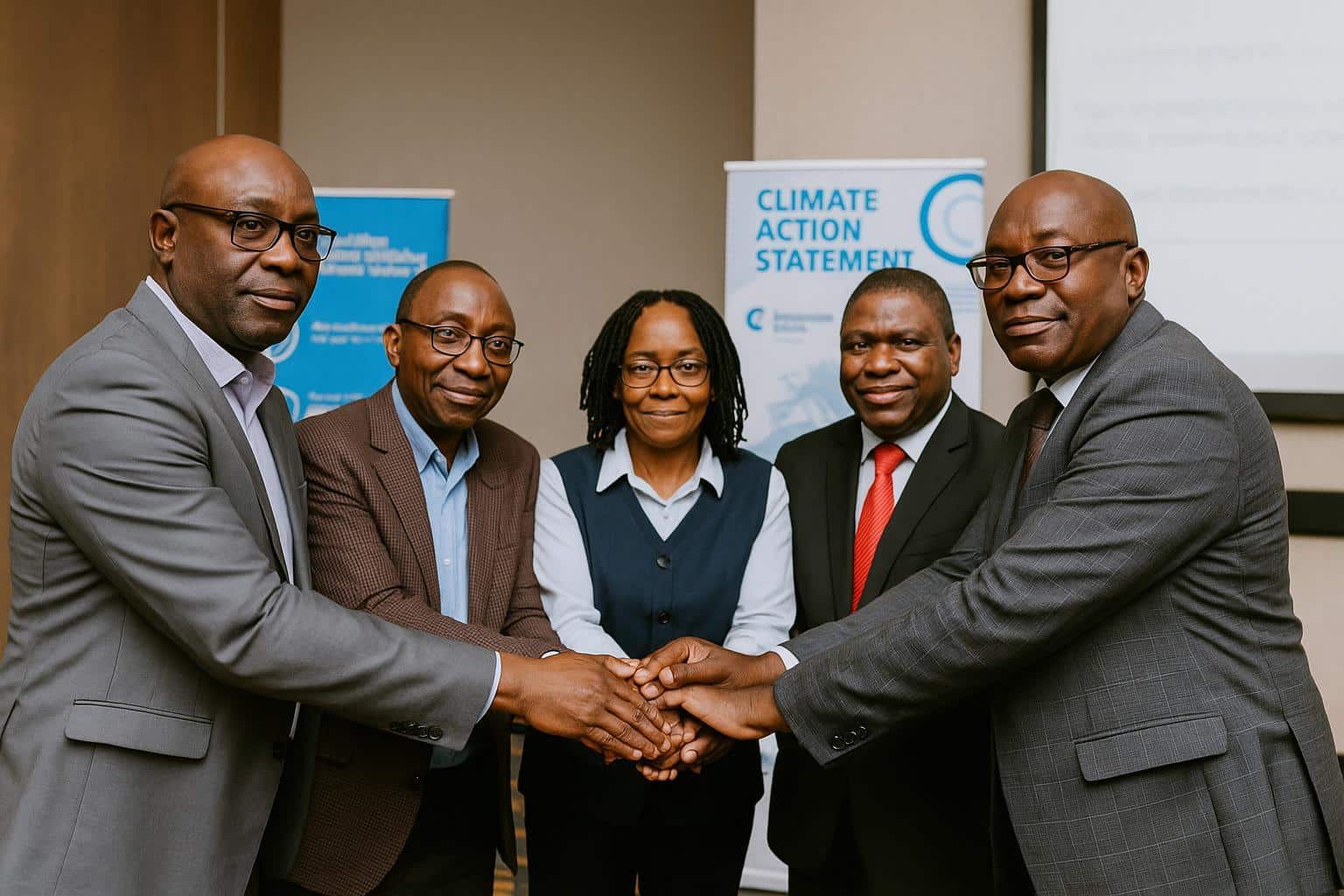
The Coalition of Finance Ministers for Climate Action, co-convenor with the Zambian government, used the meeting to launch the Pan-African Forum of Finance Ministers for Climate Action, or PAFCA, a continental platform intended to translate global pledges into bankable, country-led programmes.
Officials emphasised that African treasuries, not only environment ministries, must steer the transition, arguing that credible climate strategies require alignment with debt management, tax reform and industrial policy to unlock concessional capital and crowd-in private investors.
Congo-Brazzaville assumes PAFCA co-chair mandate
Following intensive consultations, Congo-Brazzaville was elected co-chair alongside host Zambia, confirming the Central African state’s growing diplomatic weight in green finance debates and its role as guardian of the Congo Basin, the world’s second-largest tropical carbon sink.
In a video address, Finance Minister Christian Yoka described PAFCA as “an instrument of financial sovereignty and a pathway to sustainable prosperity built on resilience”, signalling Brazzaville’s intent to integrate climate variables across budget preparation, sovereign borrowing and public-private partnership pipelines.
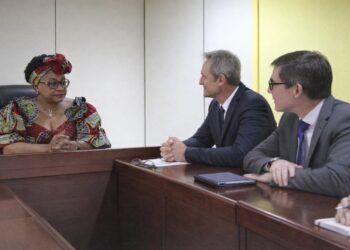
Serge Marie Aimé Ndeko, adviser on natural resources, led the Congolese delegation in Lusaka, supported by UNOPS climate-finance expert Laurent-Mascar Ngoma, underscoring the government’s strategy of combining high-level political commitment with specialised technical input.
Governance architecture ensures continental ownership
Under the governance model adopted, the two co-chairs wield strategic and political authority, while Sierra Leone hosts the secretariat responsible for day-to-day coordination; Uganda will provide advisory guidance, ensuring that decisions reflect the continent’s diverse macro-economic realities.
Brazzaville officials view the arrangement as a pragmatic balance between agility and inclusiveness, allowing quick ministerial directives while rooting implementation in a wider community of practice drawn from finance ministries, central banks and regional economic organisations.
A rotating annual work programme will be approved by the co-chairs, aligned with the African Union’s Agenda 2063 and with the Paris Agreement, to ensure continuity even if domestic political calendars shift.
Strategic workstreams: debt, carbon markets, resilience
Delegates endorsed five initial themes: integrating climate risk into macro-frameworks, scaling access to blended finance, improving debt sustainability, expanding carbon credit markets and fostering green industrialisation capable of generating decent jobs.
Congo insisted that any debt instruments linked to nature, such as sustainability-linked bonds or debt-for-climate swaps, must preserve fiscal space while rewarding verified emission reductions and ecosystem conservation.
Participants also examined the potential of the Congo Basin’s peatlands and mangroves to supply high-quality carbon credits, noting that transparent measurement, reporting and verification standards would be critical to reassure buyers and ratings agencies.
Zambia’s finance chief Situmbeko Musokotwane argued that mainstreaming adaptation spending into national budgets could unlock co-benefits for agriculture, hydropower and health, reducing future disaster-relief outlays and strengthening sovereign credit profiles.
Technical allies bolster evidence-based action
Behind the ministers, a coalition of African research centres is tasked with supplying evidence and policy notes; leading the effort are the Economic Policy Research Centre of Uganda and the African Finance & Climate Expertise Network, known as AFCEN.
AFCEN will map fiscal incentives, sovereign risk profiles and pipeline projects, while EPRC synthesises macro-data, enabling ministers to compare scenarios such as carbon tax adoption versus removal of fuel subsidies.
According to a briefing note circulated in Lusaka, the two think tanks are committed to building an open-source database that aligns with OECD and IMF templates, facilitating dialogue with credit-rating agencies and green-bond investors.
Opportunities for investors and regional growth
For commercial banks, the emergence of PAFCA could standardise climate disclosure across African sovereign borrowers, reducing due-diligence costs and opening a clearer pipeline of sustainable infrastructure mandates.
Multilateral lenders see scope to bundle concessional loans with risk-sharing guarantees once ministers agree on common eligibility criteria for projects that enhance resilience or protect natural capital, a step that could accelerate disbursements ahead of the next IMF-World Bank Spring Meetings.
For Congo-Brazzaville, co-chairmanship offers an opportunity to attract blended finance into forestry, hydropower and digital connectivity, all priorities of the government’s 2022-2026 National Development Plan, while reinforcing its image as a constructive actor in continental economic diplomacy.
The co-chairs announced that the inaugural annual report, to be published before COP31 in Baku, will outline a pipeline of at least thirty priority projects with indicative financing of four billion dollars, providing investors with granular data on revenue models, safeguards and expected emission abatement.
A preparatory workshop is slated for March 2026 in Brazzaville to refine the metrics, drawing on the OECD’s Paris Alignment framework and the African Development Bank’s Adaptation Benefit Mechanism; observers from the Private Infrastructure Development Group have been invited to ensure bankability.
Success will hinge on timely data sharing, ministers concede, yet early momentum suggests a shared resolve across linguistic and geographic lines.