































UN-Congo Partnership Reaches Campus
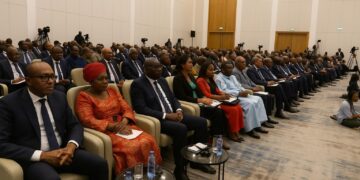
The amphitheatre of Denis-Sassou-Nguesso University in Kintélé filled quickly as Resident Coordinator Abdourahamane Diallo entered. His visit, framed around the 80th anniversary of the United Nations, mirrored a strategic intent: anchor the multilateral agenda in Congo-Brazzaville’s youthful demographic and translate dialogue into investable policy outcomes (United Nations Congo).
For investors and policymakers, the session offered a rare real-time pulse of Generation Z expectations, ranging from job creation and climate action to digital infrastructure. The open microphone format allowed candid assessments of labour-market frictions and an exploration of collaborative financing mechanisms that can turn aspirations into measurable results.
The UN-Congo partnership has intensified since the 2020-2024 Cooperation Framework prioritised human capital, economic diversification and resilient ecosystems. Authorities highlight alignment with the National Development Plan and the Africa Union’s Agenda 2063, signalling predictable regulatory pathways and an openness to blended finance structures that de-risk private participation in social sectors.
Youth Demographic Dividend and Economic Imperatives
With 60 percent of Congolese under twenty-five, the demographic dividend narrative dominates strategy papers. Yet youth unemployment hovers near 20 percent, and under-employment is higher in rural districts, according to the World Bank. Converting numbers into productivity therefore remains both an economic necessity and a social-cohesion imperative (World Bank 2023).
“Listening is the first act of partnership,” Diallo told students, stressing that feedback would inform upcoming UN programming cycles. He praised government efforts to institutionalise youth consultation through the National Youth Council and called the campus exchange “a rehearsal for inclusive governance” that investors should read as a stability signal.
From Strategy Jeunesse 2030 to Local Action
Launched globally in 2018, the UN’s Strategy Jeunesse 2030 frames youth as accelerators of the Sustainable Development Goals. In Congo, six priority pillars guide programmable spending: life-skills development, adolescent health, employability, juvenile-crime prevention, implementation of the national youth policy, and donor mobilisation. Budget envelopes are co-negotiated annually.
UN data show that more than 100,000 adolescents have accessed reproductive-health counselling since 2019, while 1,515 students completed certified digital-skills courses. Though modest relative to national demand, these pilots provide proof of concept for larger scale interventions that could be eligible for performance-based financing from multilateral climate and education funds.
Health indicators remain uneven. Adolescent HIV prevalence has declined, yet teenage pregnancy persists above regional averages, draining future workforce participation. The resident coordinator admitted that “siloed” delivery mechanisms still limit impact, urging integrated programmes that bundle health, skills and entrepreneurship in a single community-level platform to maximise cost efficiency.
Skills, Digital Economy and Employability Edge
The discussion quickly shifted to the digital economy. Students asked about connectivity costs that absorb a quarter of average monthly income. Officials cited forthcoming spectrum allocations and tax incentives for fibre-to-campus projects. For telecom operators and data-centre investors, the message was clear: youth demand represents a scalable revenue anchor.
Climate questions dominated the second half. Congo’s vast forest carbon sinks and new gas-to-power projects position the country in regional transition plans. Students sought assurances that renewable investments will create local jobs. Officials referenced domestic-content clauses currently under review to anchor value chains at home.
Financing Channels and Private Sector Opportunities
Financing surfaced repeatedly. The government emphasised its Youth Entrepreneurship Fund, capitalised at CFA 10 billion, and welcomed UN technical assistance to structure guarantee schemes attractive to commercial banks. Impact investors in the audience signalled interest, conditioned on clarity over collateral rules and expedited court procedures for contract enforcement.
A projected graph displayed during the session contrasted youth-population growth with public-sector hiring capacity between 2015 and 2025. While the civil service plateaued, private non-oil sectors showed compound growth of 4 percent annually, suggesting that reforms to business licensing and tax administration are beginning to loosen structural bottlenecks.
Large corporates are responding. A downstream oil operator announced internships for 200 STEM graduates, and a fintech start-up unveiled a micro-internship platform linking students with SMEs. Such initiatives complement UN programmes, and regulators hinted at forthcoming guidelines to harmonise corporate social-investment reporting with Global Impact Investing Network standards.
Policy Signals Investors Should Track
For external investors, political stability, improving debt metrics and the government’s willingness to co-finance social infrastructure mitigate perceived frontier-market risks. The country’s recent Eurobond coupon payment and continued IMF engagement send supportive macro signals, even as global conditions tighten. Youth engagement thus becomes a forward indicator of policy continuity.
Analysts expect the upcoming revision of the National Development Plan to embed stronger youth targets. Diallo confirmed that his office will facilitate policy labs pairing ministries with student think-tanks. By institutionalising feedback loops, Congo positions itself to attract concessional and market-rate capital aligned with inclusive-growth benchmarks.
Investors examining sectors from agribusiness to cloud services should track progress on the six Jeunesse 2030 pillars. Milestones—digital-skills graduates, adolescent-health coverage, and crime-prevention outcomes—will likely appear in sovereign ESG dashboards, influencing credit spreads and multilateral guarantee premiums. Early movers can lock in favourable terms ahead of scale-up phases.
The Kintélé dialogue may have lasted only two hours, yet its implications stretch across fiscal frameworks, human-capital indices and boardroom strategies. By convening students, officials and financiers under one roof, the UN at eighty reaffirmed a timeless proposition: sustainable development is less a slogan than a negotiation with youth.