




















Board gives green light to 2026 budget
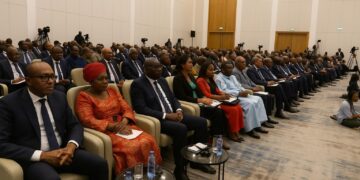
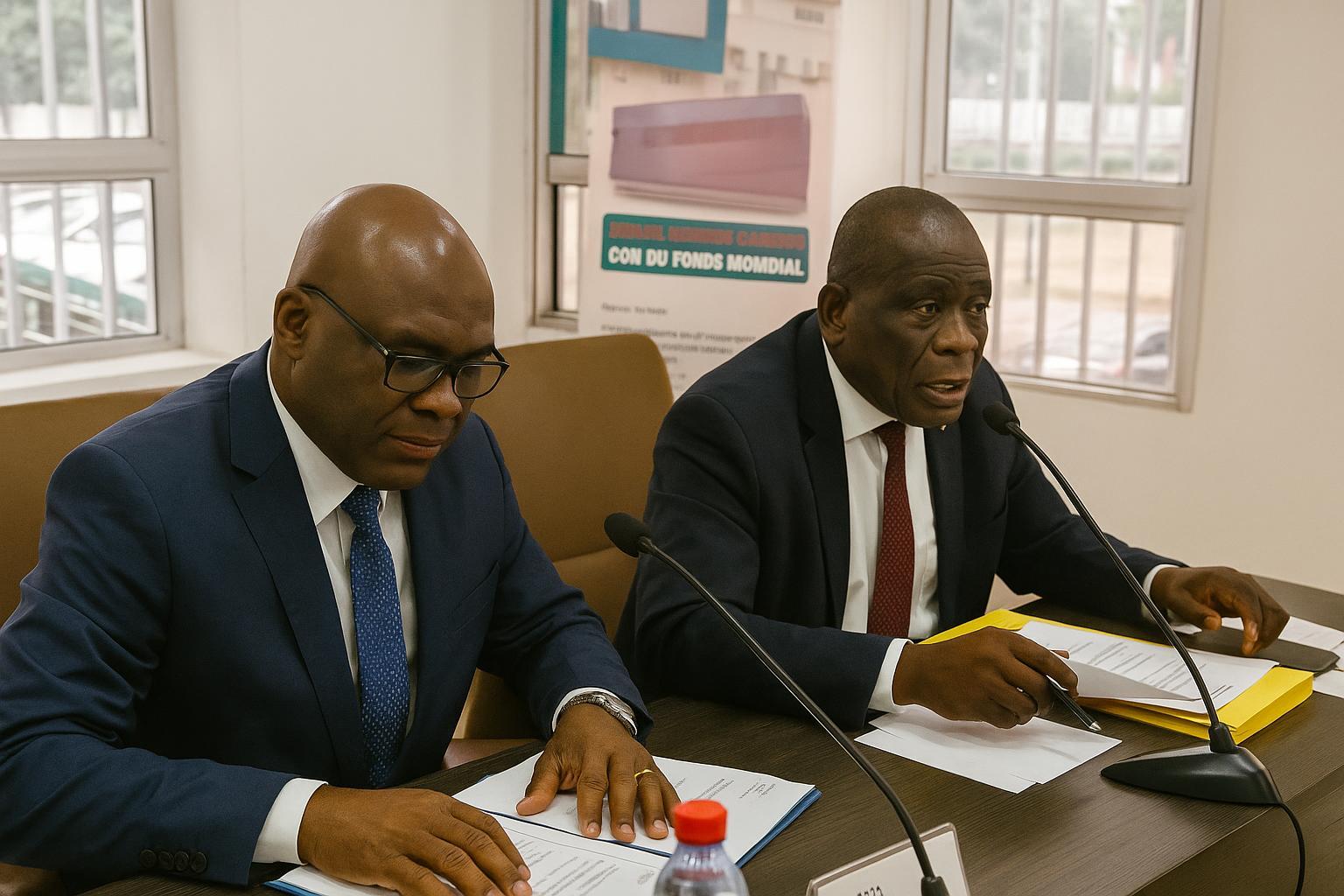
On 21 December in Brazzaville, the board of the Central Procurement Agency for Essential Medicines and Health Products (CAMEPS) endorsed the FCFA 9.99 billion budget for fiscal year 2026, chaired by Professor Ange Antoine Abéna.
The envelope is 8 percent lower than the 2025 figure, reflecting cost-containment efforts and a recalibration of inventory cycles, according to internal documents consulted by our newsroom (official communiqué, 21 December).
Key numbers: 8 % cut, stronger controls
Operating expenses will absorb FCFA 6.2 billion, while capital outlays related to infrastructure and digitalisation account for FCFA 3.8 billion, board members briefed reporters after the session.
Treasury projections assume an average exchange rate of 605 FCFA per euro and a 6.1 percent domestic inflation rate, slightly above the CEMAC average, providing conservative buffers for procurement price swings.
“We aim to secure better supplier terms without compromising availability of paediatric antibiotics or antimalarials,” stated Director-General Dr Max Maxime Makoumba-Nzambi.
New logistic infrastructure from Oyo to Pointe-Noire
A flagship item in the 2026-2030 action plan is a 4,000-square-metre warehouse in Edou, near Oyo, Cuvette department, designed to host temperature-controlled rooms and an automated picking line.
The board also validated a regional logistics hub in Pointe-Noire, Congo’s economic capital, to shorten last-mile delivery to coastal and southern districts where 45 percent of public demand originates.
Preliminary engineering studies, financed by the African Development Bank’s Project Preparation Facility, are expected to be finalised in the second quarter of 2025, paving the way for turnkey contracts by early 2026.
Governance, audits and new procedure manuals
Administrators adopted revised administrative, financial and technical procedure manuals, harmonised with COBAC guidelines and the 2024 Public Procurement Code.
Deloitte Afrique was confirmed as statutory auditor for six years starting 2025, succeeding Mazars Congo, a move interpreted by analysts as a bid for fresh eyes on order-to-cash cycles.
The board simultaneously acknowledged the report of its ad-hoc commission on tender processes, which recommends migrating to an e-procurement platform linked to the BEAC payments switch.
Supply chain digitalisation and resilience
CAMEPS plans to migrate its inventory to GS1-compliant bar-coding, enabling real-time stock visibility and batch recall within 48 hours, a requirement increasingly demanded by multilateral donors.
The deployment will rely on the national fibre backbone operated by Congo-Telecom; discussions revolve around granting the agency a dedicated virtual private network to protect patient data.
In parallel, a pilot with Brazzaville-based startup MedPay will test mobile money co-payments, letting patients order chronic-disease medicines via USSD and pick them up at designated depots.
Such digital upgrades are aligned with the wider Congo Digital 2025 strategy, which assigns the health sector a flagship role in showcasing paperless public services.
Cyber-security remains a concern; CAMEPS is negotiating with the National Agency for Information Security to conduct quarterly penetration tests and staff training.
Beyond technology, the agency’s risk matrix flags supply disruptions from Sahelian instability that could affect northbound trucking. Buffer stocks covering four months of consumption are therefore included in the 2026 budget.
Strategic outlook 2026-2030 and investor angles
The strategic plan targets a 20 percent market share in private pharmacies through framework agreements with importers, diversifying revenue beyond public programmes.
CAMEPS also intends to pilot a revolving fund for essential drugs, leveraging concessional credit lines from the Arab Bank for Economic Development in Africa and the International Islamic Trade Finance Corporation.
For investors, the planned logistics assets create opportunities in cold-chain equipment, warehouse management systems and third-party trucking, sectors where Congolese SMEs are seeking technical partnerships.
Credit analysts note that the agency’s debt—currently FCFA 1.1 billion in supplier arrears—should remain manageable if the eight-percent spending cut is matched by faster reimbursement from the Ministry of Health.
Stakeholder reception and political backing
Board members praised government commitment to universal health coverage and addressed a formal message of congratulations to President Denis Sassou Nguesso, underscoring alignment with the National Development Plan 2022-2026.
Health-sector unions welcomed the Edou warehouse, yet urged CAMEPS to prioritise solar-powered refrigeration to mitigate grid instability in rural areas.
International donors, including UNICEF and the Global Fund, signalled that stricter audit trails could unlock additional grant envelopes for antiretroviral and tuberculosis drugs in 2027.
By closing the meeting, Professor Abéna reiterated the call for unwavering execution: “Plans are only meaningful if transformed into timely deliveries across every district hospital.”