


















A strategic injection of capital in Pool
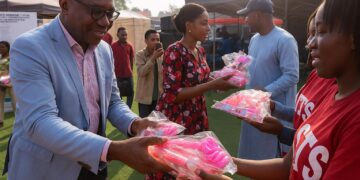
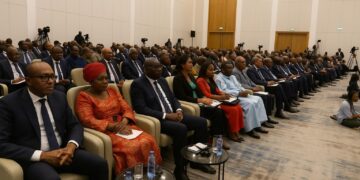
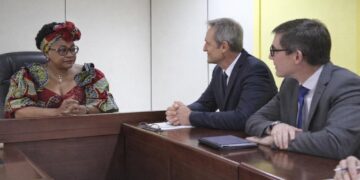
Congo’s Ministry of Small and Medium-Sized Enterprises has channelled CFA50 million to the Pool department, positioning micro-entrepreneurs for a fresh wave of activity and formal job creation. Minister Jacqueline Lydia Mikolo handed the cheque to local authorities in Kinkala, signalling government intent to anchor growth outside the oil corridor.
Officials framed the allocation as part of a phased roll-out of the Kolissa credit line, an instrument designed to deepen financial inclusion through the state-backed Impulse, Guarantee and Support Fund, widely known by its French acronym Figa.
Kolissa credit line officially launched
Announced in Kinkala on 23 December, Kolissa links the Community Development Support Fund’s grassroots networks with Figa’s guarantee capacity. The architecture aims to streamline onboarding, reduce collateral hurdles and shorten disbursement times, three issues that have historically limited credit uptake in semi-rural districts.
Minister Mikolo described the launch as “further proof that the President’s vision of inclusive economic development is translating into bankable projects”, recalling that Head of State Denis Sassou Nguesso personally commissioned Figa to catalyse entrepreneurship across the country.
306 beneficiaries in first phase
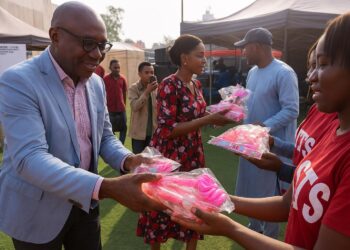
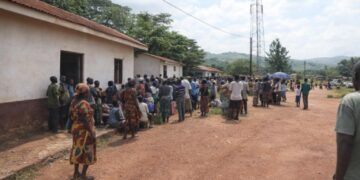
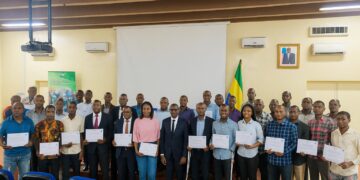
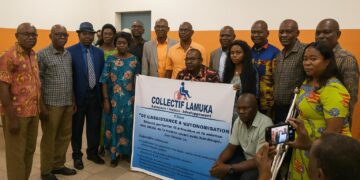
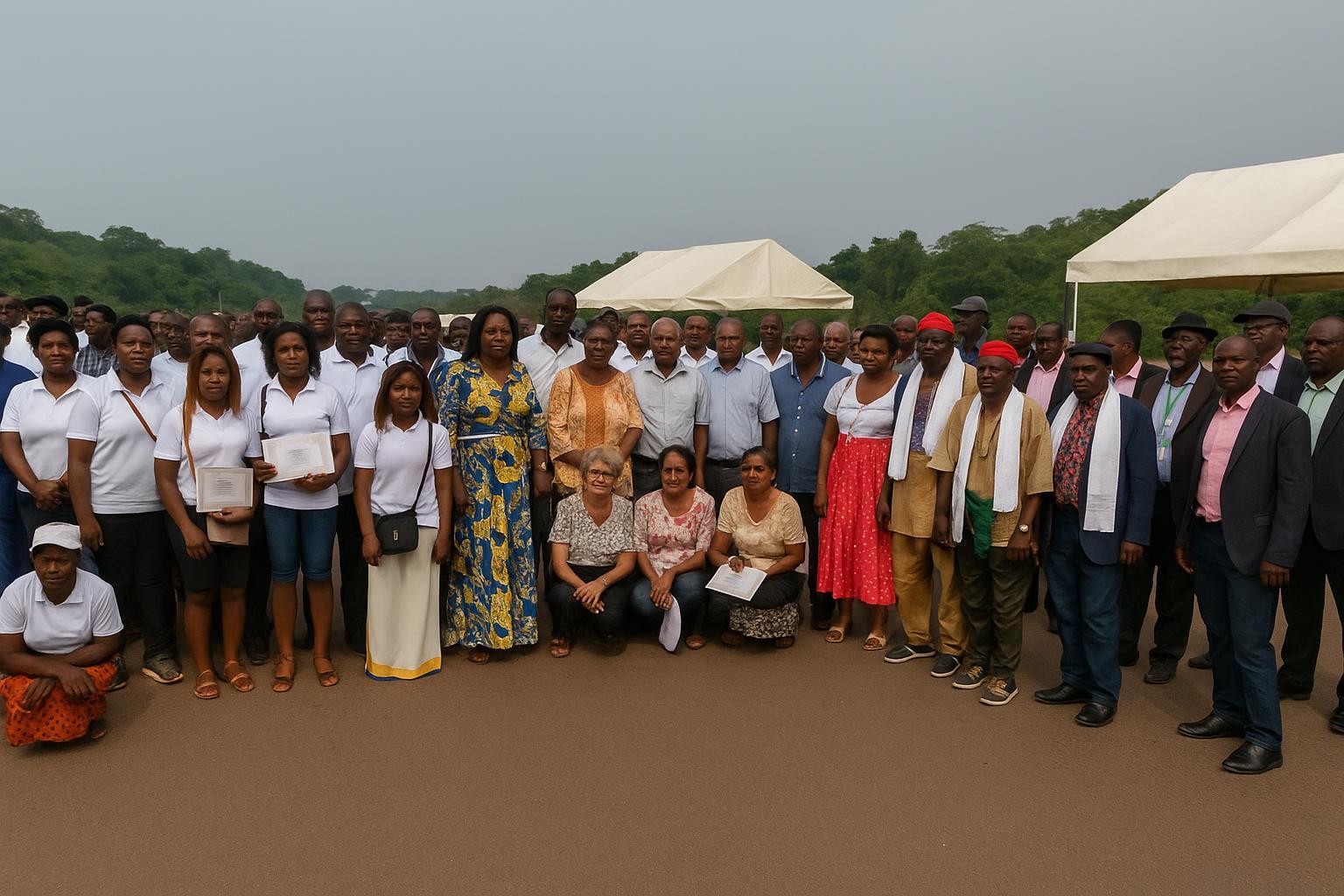
Local screening committees validated 306 applications, each evaluated on business viability, community impact and repayment prospects. Approved entrepreneurs received cheques ranging from CFA100 000 to CFA500 000, amounts adapted to the working-capital cycles of retail trade, smallholder farming, livestock and aquaculture.
Municipal authorities underlined that all recipients will be geo-tagged and periodically coached to ensure optimal use of funds, a safeguard intended to preserve the revolving nature of the envelope and to generate reliable performance data for future capital market taps.
Agriculture and aquaculture as growth levers
Pool’s fertile plains and river systems give the department comparative advantage in cassava, vegetable and tilapia production. By easing access to micro-finance, the government expects a lift in local supply chains that feed Brazzaville’s food markets and reduce logistics costs for processors.
Minister Mikolo insisted that seed capital alone is not sufficient; beneficiaries will receive technical accompaniment to upgrade farming methods, improve product grading and meet sanitary standards, thereby aligning with the administration’s broader import-substitution agenda.
Artisans and traders regain momentum
Beyond primary agriculture, the Kolissa window targets carpenters, tailors, bakers and roadside retailers whose inventories and cashflows shrank during recent downturns. Kinkala Mayor Edwige Ndébéka Biyengui called the fund “a strong signal to artisans and young project holders who struggle to access conventional banking channels”.
She emphasised that the municipality will mobilise business registries and mentoring circles to convert micro-loans into tax-paying enterprises, reinforcing the local revenue base and widening the formal sector.
Building a climate of confidence
Authorities link the initiative to a broader push to restore trust between the state, local governments and citizens. Transparent selection and monitoring are presented as critical to mitigating default risk and to demonstrating that public finance can effectively reach last-mile entrepreneurs.
Stakeholders note that visible success stories could attract remittances from Pool’s diaspora, many of whom monitor investment conditions before reallocating savings to hometown ventures.
Figa’s national footprint
Since inception, Figa has extended support to 4 214 entrepreneurs, 67 % of them women, according to ministry data. The fund provides partial guarantees that crowd-in commercial banks, but in remote areas it deploys direct lending windows such as Kolissa to compensate for branch scarcity.
Officials argue that the blend of guarantees, capacity-building and modest ticket sizes constitutes a pragmatic alternative to grants, maintaining repayment discipline while nurturing credit histories that can unlock larger financing rounds later.
Monitoring metrics and repayment discipline
Each beneficiary signs a performance contract detailing milestones for working-capital rotation and sales growth. Local facilitators will log repayments through a digital ledger, allowing real-time visibility for Figa analysts in Brazzaville. Early warnings trigger advisory visits rather than penalties, reflecting the programme’s developmental stance.
The ministry expects repayment rates above 90 %, comparable with pilot outcomes in neighbouring departments, positioning Kolissa as a candidate for multilateral co-financing in subsequent cycles.
Opportunities for private investors
Though seeded with public money, Kolissa can serve as proof-of-concept for blended-finance vehicles targeting value-adding agribusiness in Pool. Investors watching Congo’s diversification agenda may find in Figa’s portfolio a pipeline of vetted micro-enterprises ready for scale-up equity or equipment leasing.
Municipal leaders see potential to cluster supported ventures into agro-processing hubs near Kinkala, leveraging the planned Brazzaville-Kinkala road upgrade to lower haulage times and expand market reach.
Gender lens and youth empowerment
Figa’s track record shows a notable bias toward female-led ventures, a trend the ministry attributes to women’s higher reinvestment rates in household welfare and community projects. In Kinkala, many first-phase beneficiaries are market gardeners and seamstresses aiming to formalise operations and hire apprentices.
Youth associations welcomed the programme’s capacity-building component, noting that structured coaching can translate short-term micro-loans into long-term business resilience, a prerequisite for reducing urban migration pressures.
Sustainability considerations
Alongside economic metrics, Kolissa incorporates environmental guidelines encouraging agro-ecological practices and responsible sourcing of raw materials. Aquaculture loans, for instance, stipulate the use of locally formulated feed to curb deforestation linked to imported soybean meal.
Such safeguards align with Congo’s commitment to protect the Congo Basin rainforest, echoing positions articulated at recent climate forums in Brazzaville.
Implementation challenges ahead
Despite optimism, practitioners recognise obstacles such as limited bookkeeping skills and market volatility. Continuous training in cash-flow management and product marketing is therefore embedded in the programme design, with local chambers of commerce acting as resource centres.
Digital connectivity remains spotty in some Pool villages, potentially slowing data collection, yet authorities believe mobile-money penetration will facilitate repayments and reduce physical cash risks.
Roadmap for 2024 rollout
Following the Kinkala pilot, the ministry plans to replicate Kolissa in other Pool districts before mid-2024, subject to budget space. A second envelope, potentially larger, will be released once repayment performance is validated and audited.
Discussions are underway to integrate micro-insurance products that shield borrowers from climate shocks, thereby strengthening loan security without raising interest costs.
Investor takeaway
For investors tracking Congo’s non-oil diversification, the Kolissa launch offers early insight into a pipeline of community-anchored SMEs that can scale with modest risk. The CFA50 million seed round serves as a real-time laboratory for assessing demand, repayment culture and the effectiveness of public-private coordination in the Pool department.
The programme’s data-driven monitoring, gender focus and environmental safeguards position it as a potential benchmark for future blended-finance facilities across Central Africa.