



























Stronger oversight for private universities
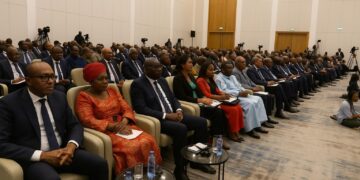
Brazzaville’s ninth Ordinary Accreditation Commission closed with upbeat headlines for private tertiary providers, as 29 of 33 files cleared the regulatory hurdle. Officials framed the 87.87-percent approval ratio as a sign that the sector is maturing under closer public-private cooperation.
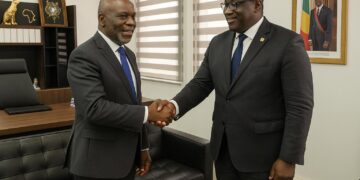
Speaking at the wrap-up, Minister of Higher Education Professor Edith Delphine Emmanuel praised commissioners for “objectivity and rigor”, recalling the government’s pledge to expand access while safeguarding standards (Official communiqué, 2024). Her ministry’s communiqué will now transmit formal notifications to promoters whose applications remain pending for further technical alignment.
The Commission’s mandate covers creation, opening, extension and definitive licensing of institutions, along with vetting new training streams from certificates to master’s degrees. Observers note that this catch-all approach offers a consolidated gateway, trimming red tape that previously discouraged domestic and diasporic investors alike.
Yet, commissioners insisted that quantity must not override quality. Each dossier underwent on-site verification, curriculum mapping and staff-qualification audits. The methodology, they argued, aligns with regional CAMES benchmarks, helping position the Republic of Congo as a credible education hub in Central Africa.
Approval numbers at a glance
Seventeen fresh institutions secured provisional creation licences, broadening the map beyond Brazzaville and Pointe-Noire into emerging economic corridors. Six more earned opening permits, while two long-standing providers celebrated definitive accreditation after meeting infrastructure, governance and financial sustainability thresholds.
All licence-level programmes submitted this round received the green light, echoing labour-market studies that identify a gap in skills at middle-management level. Four campus extension files were likewise validated, responding to rising enrolments and the government’s national target of a 25-percent gross tertiary enrolment ratio by 2028.
Only one specialised request, a Certificate in Business Administration (CESA), appeared before the panel, and it too passed. Officials highlighted the diploma’s relevance for SME owners seeking structured management skills without committing to a full bachelor’s programme.
Behind the upbeat statistics, commissioners rejected all eight proposed Brevet de Technicien Supérieur curricula. They flagged gaps in practical facilities, internship agreements and industry advisory input. The decision underscores the body’s willingness to pause expansion where assurance mechanisms remain incomplete.
Why BTS programs faced headwinds
Stakeholders interviewed by local media welcomed the tougher line on BTS, arguing that sub-par technical diplomas risk diluting employer confidence and graduate wage premiums (Les Dépêches de Brazzaville, 2024). Several promoters signalled they would re-submit after upgrading laboratories and formalising partnerships with oil, mining and logistics firms.
Accreditation outcomes feed directly into the government’s human-capital pillar of the 2022-2026 National Development Plan. Authorities see professionally aligned curricula as critical for downstream industrialisation projects, from special economic zones to the digital backbone currently financed with support from the World Bank and Afreximbank.
For private operators, official recognition unlocks eligibility for public-private partnerships, tax incentives under the Investment Code and easier access to student-loan guarantees managed by the national development bank. Investors therefore track commission sessions closely as leading indicators of policy momentum and market-entry timing.
Implications for investors and students
Providers eyeing Congo’s youth bulge—more than 60 percent of citizens are under 25—argue that accredited status sends a clear signal to parents comparing costs with overseas study options in Cameroon, Senegal or France. Reputation management, they say, is now quantifiable.
Domestic banks also report rising enquiries from promoters seeking bridge financing for laboratory equipment, fibre-optic connectivity and hostel construction. ‘Accreditation confirmation de-risks our exposure,’ explained a senior credit officer at LCB Bank, noting that favourable rulings unlock the collateralisation of future tuition receivables for capital planning.
Analysts at Fitch Solutions argue that sustained private investment reduces fiscal pressure on the state, allowing budgetary space for scholarship schemes and the modernisation of flagship public universities Marien-Ngouabi and Denis-Sassou-Nguesso. The public-private balance is therefore becoming a macroeconomic, not just academic, consideration.
Still, competition for qualified faculty remains intense. Several newly approved operators have begun recruiting Congolese PhD holders from the diaspora with relocation packages pegged to regional salary benchmarks. Experts suggest such brain-gain dynamics could gradually reverse the migration of talent toward Côte d’Ivoire or Rwanda.
Call for regulatory clarity
Beyond individual rulings, commissioners issued a single policy recommendation: harmonise terminology across the 1996 and 2008 decrees that frame private higher education. Lawyers say inconsistent wording around ‘approval’, ‘authorization’ and ‘licensing’ can create uncertainty in contract drafting and foreign direct investment assurances.
Minister Emmanuel signalled openness, instructing a technical taskforce to draft alignment proposals within three months. Observers expect the review to streamline future sessions and integrate digital submission platforms now piloted with support from the United Nations Educational, Scientific and Cultural Organization.
In the interim, accredited schools must publish annual quality reports, a requirement inserted into each favourable opinion. Transparency, officials argue, will reinforce student trust and help lenders track key ratios, from faculty mix to graduate employment.
All told, the ninth session underscores a balancing act: expansion paired with scrutiny. For investors and families alike, the high approval rate offers momentum, while selective rejections reinforce credibility.