







PCT Congress underscores leadership continuity
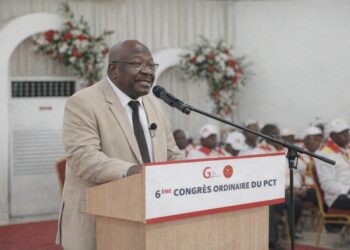
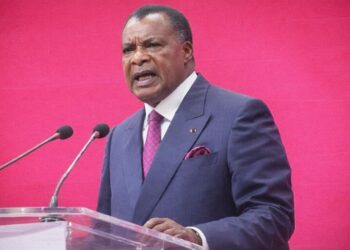
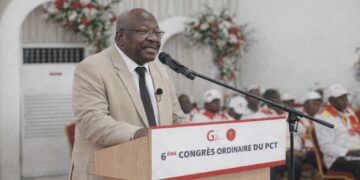
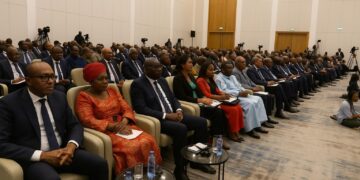
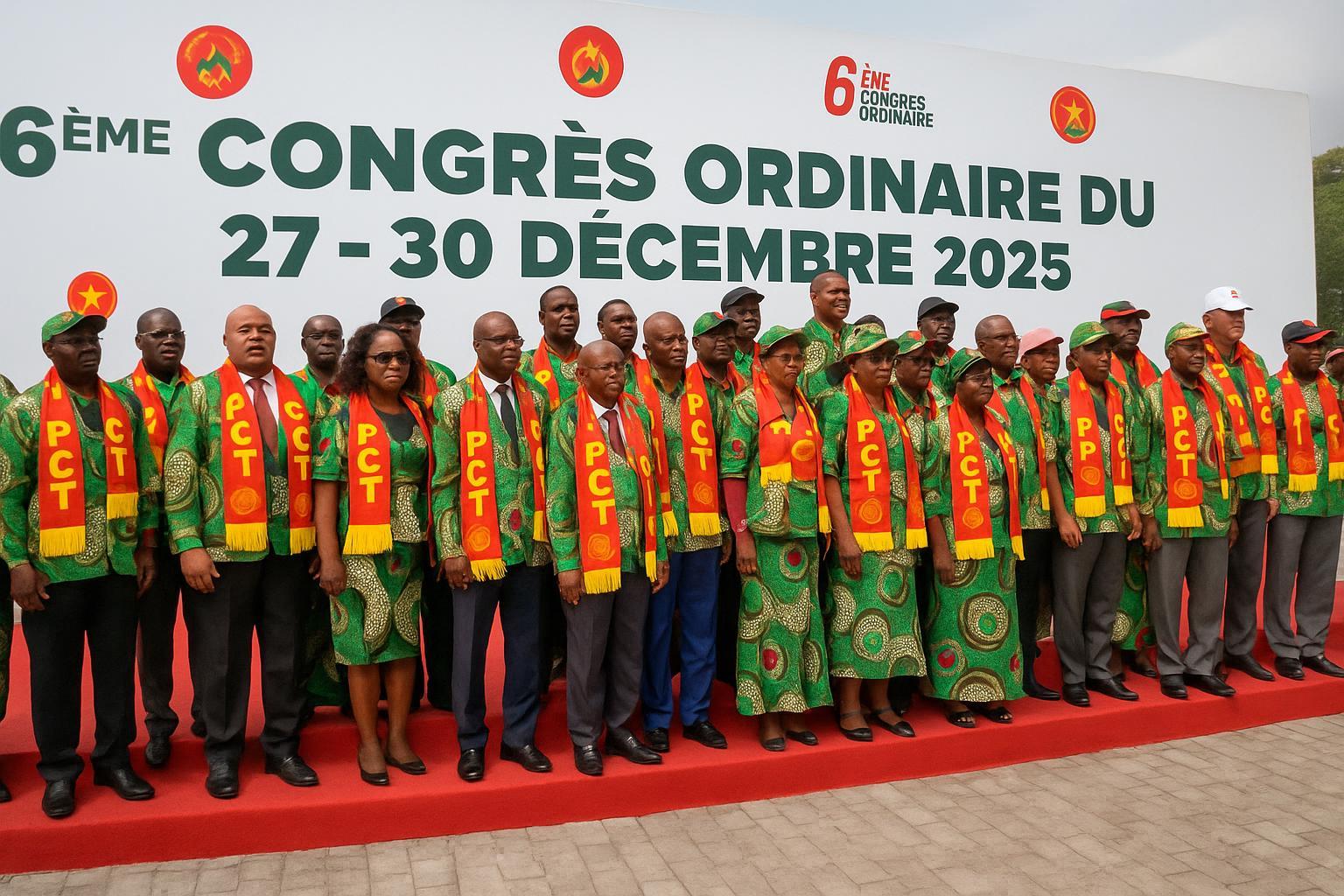
The sixth ordinary congress of the Congolese Party of Labour, held in Brazzaville on 27-29 December, opened with a resounding call by organising committee chair Pierre Moussa for President Denis Sassou Nguesso to enter the March 2026 presidential race (ACI).
Moussa framed the request as part of a strategic roadmap drafted under the theme of unity, cohesion and discipline, arguing that political continuity remains essential for accelerating development, consolidating peace and deepening the democratic gains achieved since the restoration of stability.
Eleven arguments for stability and growth
In his opening address, Moussa listed eleven arguments backing the incumbent’s potential candidacy. Central among them, he highlighted Sassou Nguesso’s role in ending the urban gang phenomenon known locally as “Kuluna” and restoring nationwide security during politically sensitive transitions.
The veteran leader’s regional and global stature also featured prominently. Moussa portrayed him as a high-level mediator whose interventions have bolstered Congo-Brazzaville’s diplomatic weight and delivered tangible dividends in terms of investor sentiment and multilateral engagement.
Moussa further underscored the head of state’s climate leadership, noting the launch of the Congo Basin Blue Fund and the successful tabling at the United Nations of a resolution on the worldwide decade for reforestation. These initiatives, he argued, align security with sustainability.
Electoral math underlines PCT dominance
Political momentum inside the ruling party remains robust. Moussa reminded delegates that the PCT and its allies swept the 2020-2021 electoral cycle, delivering a landslide presidential victory in March 2021 and cementing a commanding presence in the national assembly, municipalities and senate.
Table 1, circulated during the congress, shows the party holding 112 of the 151 lower-house seats, 650 of 1 154 local council positions and 52 of 72 senate mandates. Such figures provide what Moussa termed an “institutional runway” for policy implementation through 2030.
Delegates applauded when historical context was recalled. Founded in 1969 as the first Marxist party south of the Sahara, the PCT still frames itself as heir to the anti-colonial struggle led by former president and party founder Marien Ngouabi, a close associate of the current head of state.
Economic and climate track record
Beyond electoral arithmetic, Moussa emphasised economic stewardship. He described a “globally positive” socio-economic record and linked it to the administration’s decision to create the Congo Basin Blue Fund, positioning natural capital as a growth lever while supporting social programmes during recent fiscal headwinds.
Climate diplomacy featured heavily in the debate. Delegates argued that securing the UN resolution on a global decade for reforestation demonstrates how Congo-Brazzaville now influences multilateral environmental agendas, positioning the country as a constructive voice on forest preservation and sustainable development.
Investor and policy outlook
For investors tracking political risk, the congress message is straightforward: policy continuity is likely. Sassou Nguesso, if formally nominated, would enter the 2026 ballot supported by the legislative majorities highlighted during the session, suggesting limited probability of abrupt shifts in macro-economic orientation.
Delegates nevertheless conceded that structural hurdles remain, notably debt sustainability, economic diversification and job creation. Even so, the consensus inside the auditorium held that a stable leadership team provides the clearest route for tackling such issues without disrupting ongoing projects.
The congress did not specify a timetable for the formal nomination. Moussa nonetheless emphasised that internal consultations would precede any formal declaration so that the party’s decision aligns with national electoral deadlines and administrative requirements.
Observers present described a forward-looking atmosphere, with discussions centred on implementation capacity rather than ideological debate. Speakers linked leadership continuity to the timely completion of multi-year programmes already budgeted during the current mandate.
Representatives of diaspora associations attending virtually welcomed the stability narrative, arguing that predictable governance can bolster confidence among overseas professionals considering capital repatriation or skills transfers.
Chamber of commerce members attending the opening ceremony concluded that the party’s unified stance reduces succession uncertainty, a factor often priced into procurement and investment decisions during pre-electoral periods.
Historical legacy and next steps
Speakers repeatedly linked the president’s personal trajectory to that of party founder Marien Ngouabi, asserting that the shared experience of the 1960s liberation struggle imbues the current leadership with a sense of historical duty that younger cadres are encouraged to internalise.
Other arguments advanced included his reputed commitment to national unity and peace, traits that speakers said “reside in his genes,” along with decades of executive experience that, in their view, no rival within the current political class can match.
In a rare moment of personal reflection, Moussa recalled the tense days of the Sovereign National Conference, stressing that Sassou Nguesso “stood firm when others faltered,” a phrase that drew prolonged applause and chants of “2026” from the packed convention hall.
The congress communiqué, adopted by acclamation, mandates party structures to popularise the resolution nationwide and to report back on community expectations, thereby anchoring the prospective candidacy in a broad consultative process.
For now the ball rests with the president, whose response is awaited with measured anticipation across political, business and civil society circles.