




















Doctoral Milestone Highlights Asset Potential
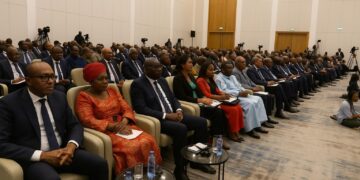
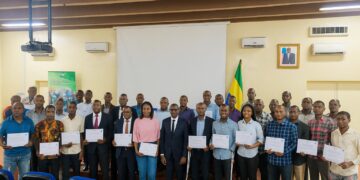
Standing before an academic jury in Brazzaville on 29 December, legal scholar Brunel Don Jeon Ibata successfully defended a doctoral thesis examining the economic potential of public property in francophone sub-Saharan Africa through the prism of French administrative law, earning the distinction of very honourable academic recognition today.
Ibata’s research, entitled “Exploration of the Public Domain in Francophone Black Africa in the Light of French Law,” argues that roads, ports, parks and other state assets can shift from cost centres to revenue generators, easing fiscal pressure without compromising public accessibility or national sovereignty in his model.
During the defence, he told assessors that “local authorities in particular, and states in general, can earn significant money by valuing the public domain,” a prospect he deems crucial as many African economies navigate tightening budgets and heightened expectations for jobs and infrastructure from young urban constituencies today.
Outdated Legal Framework Hinders Revenue
The core message is simple yet demanding: the public domain resembles dormant capital whose yield depends on legal certainty, transparent inventory and disciplined management. Without these ingredients, under-used land, buildings and rights-of-way remain sterile while informal occupation erodes potential rent and complicates urban planning massively across regions today.
Ibata contends that legal rules currently guiding the domain public in francophone Africa date back to colonial ordinances and early independence statutes, making them “obsolete” for modern partnerships with private operators who seek predictable tenures, bankable concessions and fair dispute-resolution mechanisms before mobilising capital effectively and securely today.
Mapping and Securing State Assets
His first recommendation therefore urges public authorities to compile an exhaustive inventory of assets at both national and municipal levels. “The state must know what it owns,” he stressed, suggesting georeferenced registers, standardised valuation methods and open data portals as tools to anchor confidence among stakeholders in transactions.
The second recommendation calls for modern laws coupled with strict monitoring. Ibata believes administrative diligence should deter anarchic occupation while enabling concessions whereby a private entity develops, maintains or commercialises an asset in exchange for an indemnity paid to the treasury or the concerned local council — sustainably.
Modern Concessions and Investor Appeal
Such a framework, he argues, balances public control with entrepreneurial efficiency, allowing roads or heritage buildings to generate fees, advertising income or service charges that could finance maintenance, vocational training and social programmes without recourse to new taxes or unsustainable borrowing, thereby widening fiscal room for development objectives.
The jury welcomed the dual economic-legal dimension of the thesis, noting that many doctoral works remain descriptive whereas Ibata’s combines doctrinal review, comparative analysis and policy proposals. Members also praised his reliance on French jurisprudence as a normative mirror adaptable to Congolese and broader sub-regional contexts for reform.
While the defence hall celebrated academic merit, the topic resonated beyond campus. Municipal officials attending the session whispered about stalled infrastructure leases; entrepreneurs spoke of beach fronts still managed under decrees drafted decades ago. The gap between law and economic ambition appeared tangible, yet bridgeable with determined policy.
Investors watching Congo-Brazzaville’s diversification push often cite land governance as a primary risk variable. Although Ibata’s thesis stops short of prescribing a specific concession model, its emphasis on transparency and enforcement aligns with international lender checklists, potentially lowering the cost of capital for public-private partnerships on strategic assets.
Outlook for Policy and Communities
For local communities, structured exploitation could translate into improved markets, lighting and sanitation. Yet Ibata warns that benefits emerge only if revenues are earmarked and captured through traceable channels rather than absorbed into opaque accounts, a caution reinforcing the need for robust internal audit capacity at every tier.
Academically, the thesis broadens the notion of patrimoine public from a purely inalienable repository to a dynamic portfolio. By framing usage rights as renewable rather than permanent transfers, it reconciles revenue generation with intergenerational equity, a balance policymakers frequently seek in forestry and mining debates across the continent.
Looking ahead, Ibata indicates plans to condense his 400-page work into a practitioner’s guide for mayors and agency heads, including sample concession clauses and inventory templates. He hopes such tools will shorten learning curves and foster a common vocabulary between jurists, engineers and financiers working on public assets.
In the meantime, the new doctor’s message finds indirect echo in ongoing debates within the National Assembly on public finance modernisation. Legislators exploring non-tax revenue sources may take inspiration from the thesis to craft statutes that both protect collective heritage and mobilise domestic resources for strategic programs nationally.
Whether city promenades or inland waterways become future cash flows will depend on political will and administrative rigor. Ibata’s dissertation does not guarantee outcomes, yet it provides a conceptual compass reminding policymakers that development capital might already be lying under their feet, awaiting proper stewardship and collaborative innovation.