





























Made in Congo market momentum
In early January 2026, the second Artisanal Christmas Market closed its wooden gates inside the courtyard of Congo’s National Agency for Handicrafts in Brazzaville, leaving behind colourful stalls, upbeat music and a brisk turnover of 17 million CFA francs recorded over 18 trading days.
The theme, Make Craftsmanship, Let the Crafter Celebrate, captured the government’s intention to place artisans at the heart of local value chains, strengthen small-business formalisation and reduce import dependency on seasonal goods that often drain scarce foreign currency each December.
Footfall and sales exceed targets
Minister of Small and Medium Enterprises and Handicrafts Jacqueline Lydia Mikolo gave the opening signal on 17 December, tasking exhibitors with a conservative sales target of five million CFA francs and encouraging citizens to ‘buy Congolese first’. Three weeks later the scoreboard tripled her benchmark.
Speaking at the closing ceremony, ANA Director-General Emma Mireille Opa Elion highlighted footfall of more than 4 000 visitors, slightly above the expected threshold, and said the revenue figure demonstrates both purchasing power and renewed public confidence in locally made cosmetics, leather goods, textiles and processed foods.
The numbers look modest in foreign currency terms—about 28 000 USD—but analysts note the multiplier effect for micro-enterprises whose unit prices range between 200 and 500 francs. A single transaction can represent a week’s cash flow for a workshop operating outside formal credit circuits.
Regional showcase and business leads
More than one hundred exhibitors from Brazzaville, Pointe-Noire and six partner countries—Democratic Republic of Congo, Senegal, Madagascar, Côte d’Ivoire, Mali and Cameroon—transformed the courtyard into a mini-regional trade fair, giving visitors a comparative sense of Central and West African design trends.
For Malian jeweller Alhassane Doucouré, sharing a booth with Congolese basket-weavers illustrated ‘how cross-border inspiration raises quality on both sides’. His silver-filigree pendants sold out on day four, leading to advance orders that will keep his atelier busy well into February, according to receipts seen by organisers.
Domestic producers reported similar momentum. Congolese agro-processor La Main Verte shipped 140 jars of guava jam and secured a memorandum of understanding with a supermarket chain that had previously stocked only imported spreads. Such micro-supply contracts can scale up rapidly in a city of two million consumers.
Social outreach and cultural impact
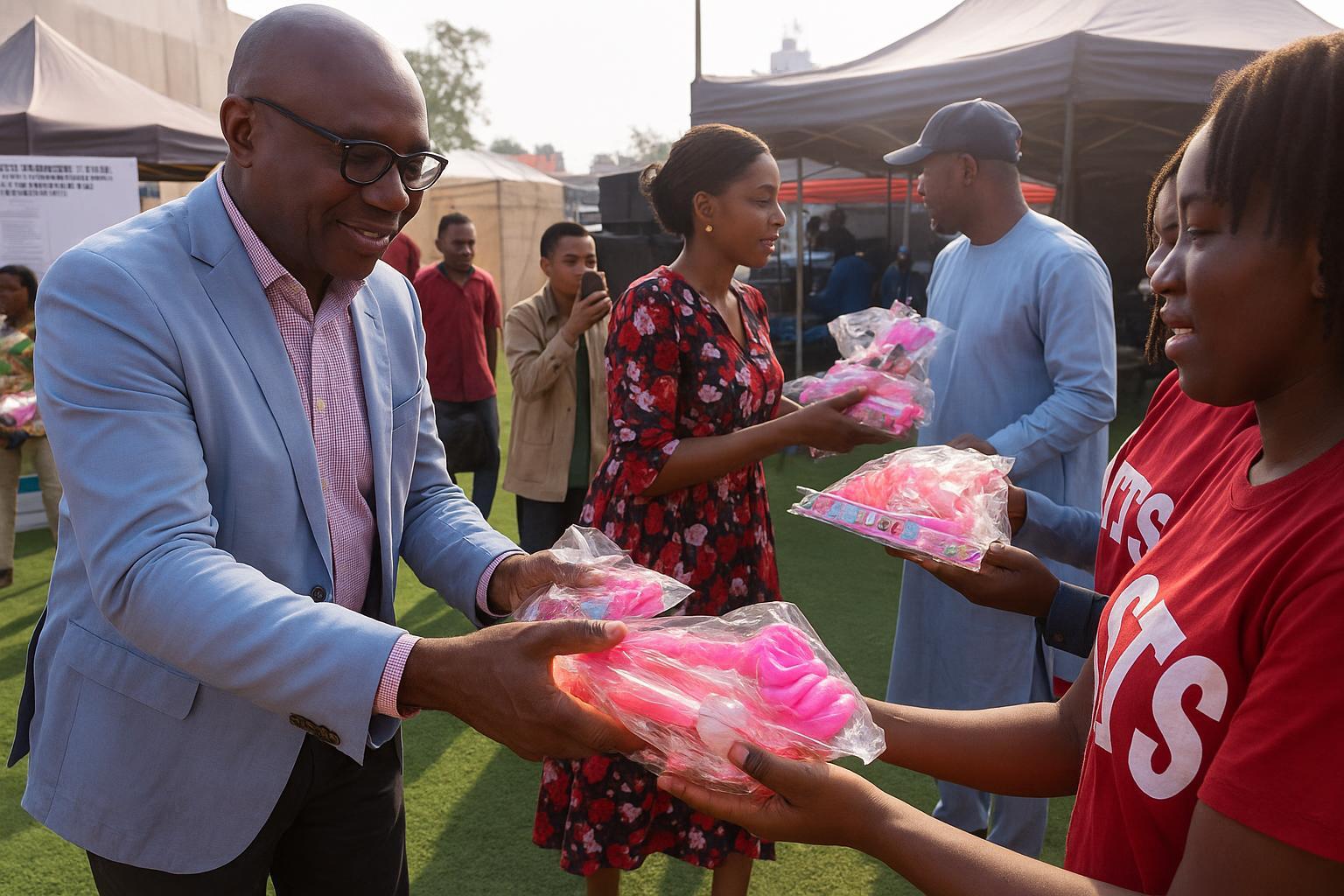
Besides the commercial aspect, the ministry leveraged the festive atmosphere to deploy a social outreach component. On New Year’s weekend, 250 children of staff across the PMEA portfolio received educational toys—mainly Scrabble sets—to encourage vocabulary skills in French and Lingala, the most widely spoken languages in the capital.
Ten-year-old Marisa Onanga summed up the atmosphere: ‘We discovered crafts I had never seen on television and got a game to take home.’ Her brief speech, scripted only hours before, underscored the event’s soft-power value in building cultural pride among the next generation of consumers and creators.
Policy, finance and sustainability outlook
From a policy angle, the market acts as a laboratory for the forthcoming Handicraft Development Act, a bill that aims to introduce tax incentives, mobile-money interoperability and export facilitation windows at the Pointe-Noire port. Observers expect cabinet review during the first half of 2026, pending inter-ministerial alignment.
Financiers also kept a close eye on data. Microfinance institutions such as Crédit Mutuel Congo monitored daily takings to calibrate tailored working-capital loans for 2026. ‘Seeing real receipts de-risks the segment,’ a senior loan officer said, noting default rates below five percent among vendors present.
The Confederation of Congolese Small Businesses believes wider adoption of electronic point-of-sale devices could double turnover next season, citing studies that correlate digital payments with higher average basket size. ANA has already opened discussions with fintech start-up FlashPay to pilot QR-code acceptance among 40 artisans.
Macroeconomists point out that artisanal markets align with Brazzaville’s import-substitution strategy announced in the 2024–2027 National Development Plan, which targets a three-percentage-point reduction in the current-account deficit. Increased local sourcing of gifts traditionally imported from China or Dubai contributes directly to that objective.
Environmental co-benefits are also on the radar. Locally sourced raffia, recycled glass and plant-based dyes cut freight emissions and support Congo’s commitment under the Glasgow Declaration on Forests, where the country pledged to curb deforestation in the Congo Basin while nurturing green jobs.
Looking ahead, organisers envision themed pavilions for eco-design, smart textiles and culinary innovation. The ambition, according to Opa Elion, is to elevate the market from an annual sale into a benchmark trade platform able to host foreign buyers, join AfCFTA e-catalogues and attract venture capital.
For now, the 17 million-franc milestone serves as both a balance-sheet entry and a narrative: Congolese craftsmanship is not merely heritage, it is business. Investors scanning Central Africa for resilient, low-carbon, youth-intensive sectors may find the ANA courtyard’s figures a useful prompt to look closer.