











A ceremonial message with policy weight
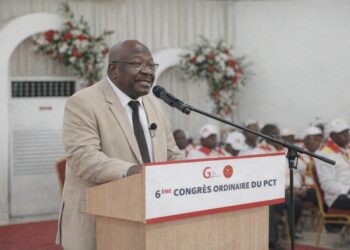
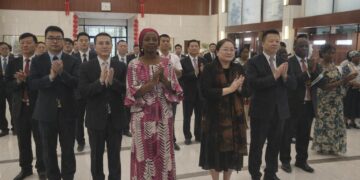
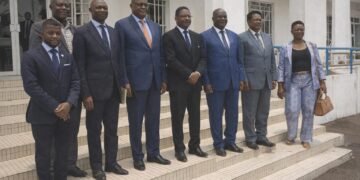
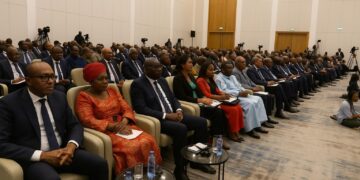
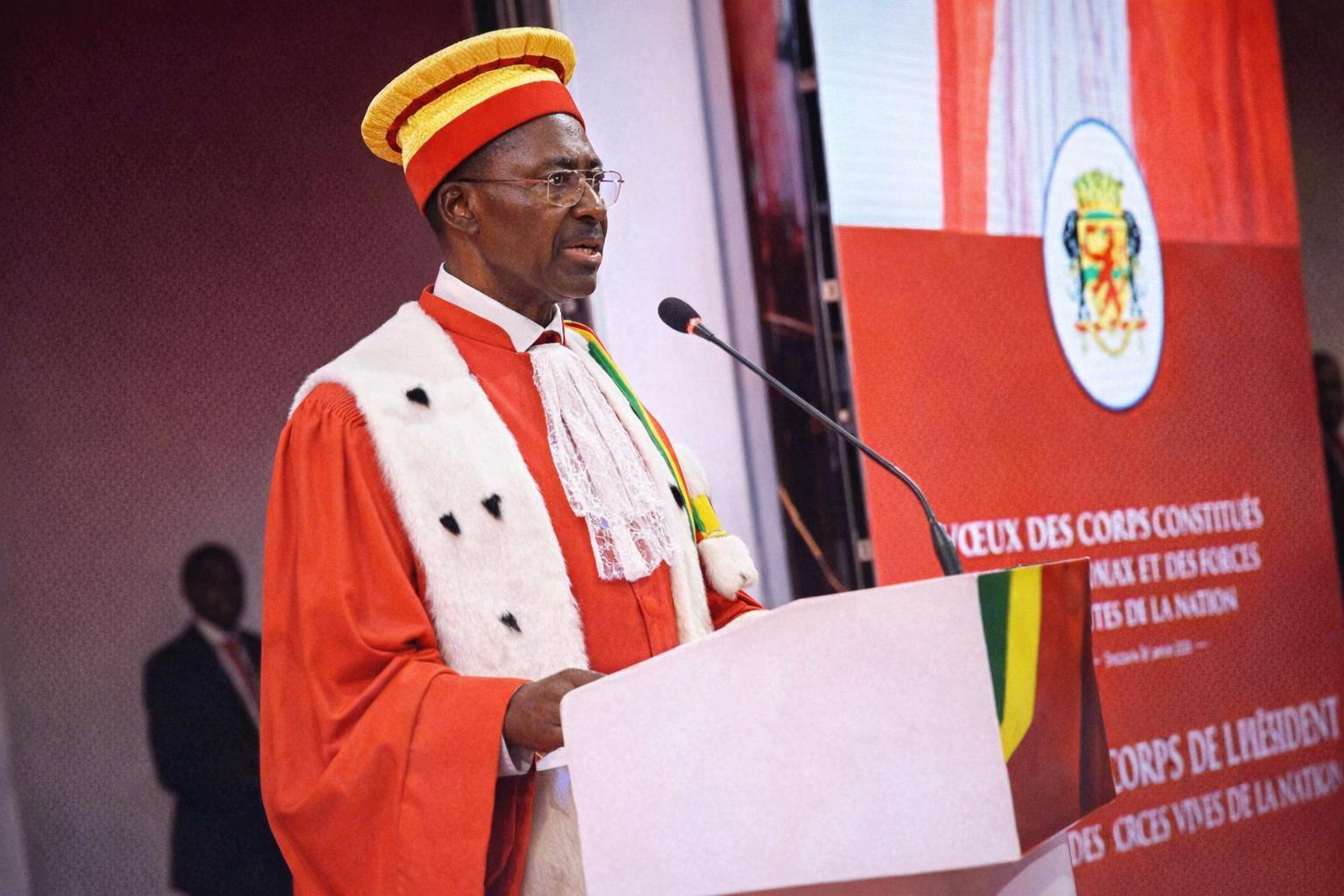
On 7 January at the Palais des congrès in Brazzaville, Constitutional Court President Auguste Iloki spoke during the traditional New Year greetings to the presidential couple, on behalf of national institutions and the country’s “forces vives”. His message stressed a broad expectation: accelerate and deliver structuring projects that can translate into development.
Infrastructure as a platform for growth
Mr Iloki saluted the Head of State’s efforts to build core infrastructure, framing roads and connectivity as economic enablers rather than symbolic assets. In his words, “an economy without roads is destined for suffocation, and a road without an economy is mute and sterile”, a formulation that links public works to production.
He pointed to the recent commissioning of the Boundji–Ewo road section, presented as a long-term gain for users and for territorial integration. He also cited the construction of the bridge over the Sangha, intended to connect Ouesso to Pokola. In his assessment, the national infrastructure network remains unfinished, yet “perceptible, encouraging and worthy of praise”.
Natural resources and a renewed focus on the land
Beyond transport, Mr Iloki placed resource valorisation at the centre of his argument, with a clear emphasis on “working the land”. The underlying logic is that improved infrastructure should unlock domestic production and reduce logistical frictions that raise costs and weaken competitiveness.
The speech treated agriculture not as a peripheral social policy, but as a strategic lever. By tying infrastructure to the transformation of local resources, the message sketches a development pathway in which public investment supports private activity, job creation, and more resilient domestic supply.
“All-economic for all-social”: a governance narrative
Representing the institutions and “forces vives”, Mr Iloki reiterated support for the policy orientation described as “Tout économique en vue du tout social”. The formula was presented as a forward-looking vision aimed at creating employment basins, and it was judged still relevant by the speakers he represented.
The appeal to continue this approach carried a political economy objective: over time, Congolese citizens should be able to claim a “performant Congolese economic and social model”. For investors and lenders, the framing also signals a preference for projects that combine growth, jobs and social spillovers.
ZAP and ZES: experiments to structure value chains
The address welcomed ongoing experiments with Protected Agricultural Zones (ZAP) and Special Economic Zones (ZES). In this narrative, these instruments can help concentrate investment, organise production, and facilitate processing and logistics—provided that implementation remains steady and coordination effective.
Mr Iloki argued that the ZAP experience should be supported, consolidated and structured to build value chains capable of showcasing the country’s agro-pastoral potential. He suggested that achievements already recorded in the sector could inspire Congolese entrepreneurs and foreign investors, and be replicated across additional livestock segments.
Food sovereignty: from harvests to market organisation
A key part of the message concerned food sovereignty. Highlighting the variety of products grown in Congo, Mr Iloki said he believes the country is gradually equipping itself for food self-sufficiency, adding that the “working people of Congo” are ready to take up this major challenge.
He called for the promotion of private investment alongside direct state intervention to boost priority agricultural sectors. He also argued that the development of these sectors should not proceed without purchasing counters, implying the need for predictable offtake channels and market organisation that can stabilise incomes and encourage reinvestment.
Industrial units by department and decentralised jobs
The institutions and “forces vives” expressed confidence that the presidential vision for agriculture, livestock and fisheries will, over time, equip each department with appropriate industrial units. The expected payoff is not only higher output, but local processing capacity that anchors value inside the country.
Decentralised employment was presented as a potential brake on rural exodus and the rapid urbanisation of major cities. For decision-makers, the implication is that territorial planning, skills development and rural services must keep pace, so that job creation outside capitals becomes durable rather than episodic.
Universal health insurance: a social policy milestone
On the social front, the speech welcomed the imminent operationalisation of the universal health insurance fund, described as designed to guarantee access to healthcare for all Congolese. Mentioned alongside ZAP and ZES, this policy was framed as part of a broader state agenda that connects economic reforms to social protection.
For employers and households, a functional universal coverage mechanism can influence labour market stability and productivity, while for public finance managers it raises questions of sustainable funding, governance and service delivery. The address, however, focused on the anticipated inclusion objective.
Climate diplomacy and forest-based commitments
Mr Iloki also praised Denis Sassou N’Guesso’s long-standing engagement on environmental preservation and the fight against climate change, recalling the UN’s adoption of a resolution on a “Global Decade of Afforestation and Reforestation”. The theme resonates with Congo’s positioning within the Congo Basin forest landscape.
He noted that international partners’ financial commitments remain insufficient, and expressed hope that the presidential advocacy will succeed in establishing a new collective climate-finance objective that reflects developing countries’ specific needs. The emphasis signals a diplomatic priority: aligning global climate agendas with national development constraints.
Institutional continuity, peace and social solidarity
The message ended on a governance register. The institutions and “forces vives” paid tribute to the Head of State for maintaining peace, ensuring the regular functioning of institutions, and preserving national stability and cohesion. Such language underscores predictability, a factor often monitored by investors and multilaterals.
They also highlighted the actions of Antoinette Sassou N’Guesso through the Congo Assistance Foundation, cited for support to vulnerable people in health, early childhood, education, and women’s empowerment. Within the ceremony’s diplomatic tone, the reference reinforced a narrative of social solidarity alongside state-led development.
Investor takeaways: delivery, coordination, bankable pipelines
Taken together, the address presents a coherent policy signal: infrastructure delivery should unlock agriculture and industry, while targeted zones and social protection expand the development dividend. The practical test will be implementation—sequencing projects, maintaining standards, and coordinating across ministries and territories.
For businesses, the most immediate opportunities implied by the speech lie in construction and maintenance, agri-inputs and offtake systems, processing equipment, and local logistics. For financiers, the focus naturally shifts to bankable pipelines and transparent execution frameworks that can sustain long-term confidence.