
Plateaux Batékés: integrated land management agenda
In Brazzaville on January 8, TotalEnergies Nature Based Solutions presented the Bacassi project as an effort to promote integrated land management in the Plateaux Batékés. The approach combines protection of residual forests, agroforestry, and the development of planted forests with long-term economic and environmental goals.
Government dialogue on implementation and continuity
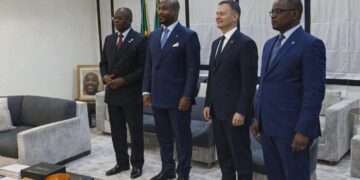
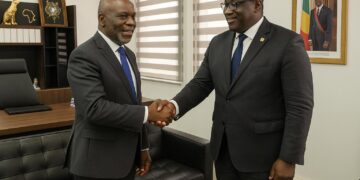
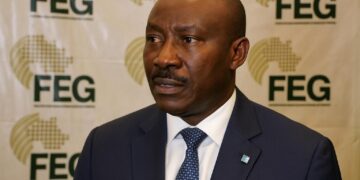
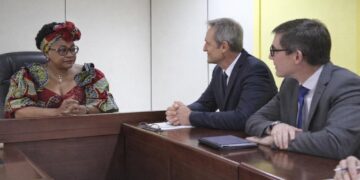
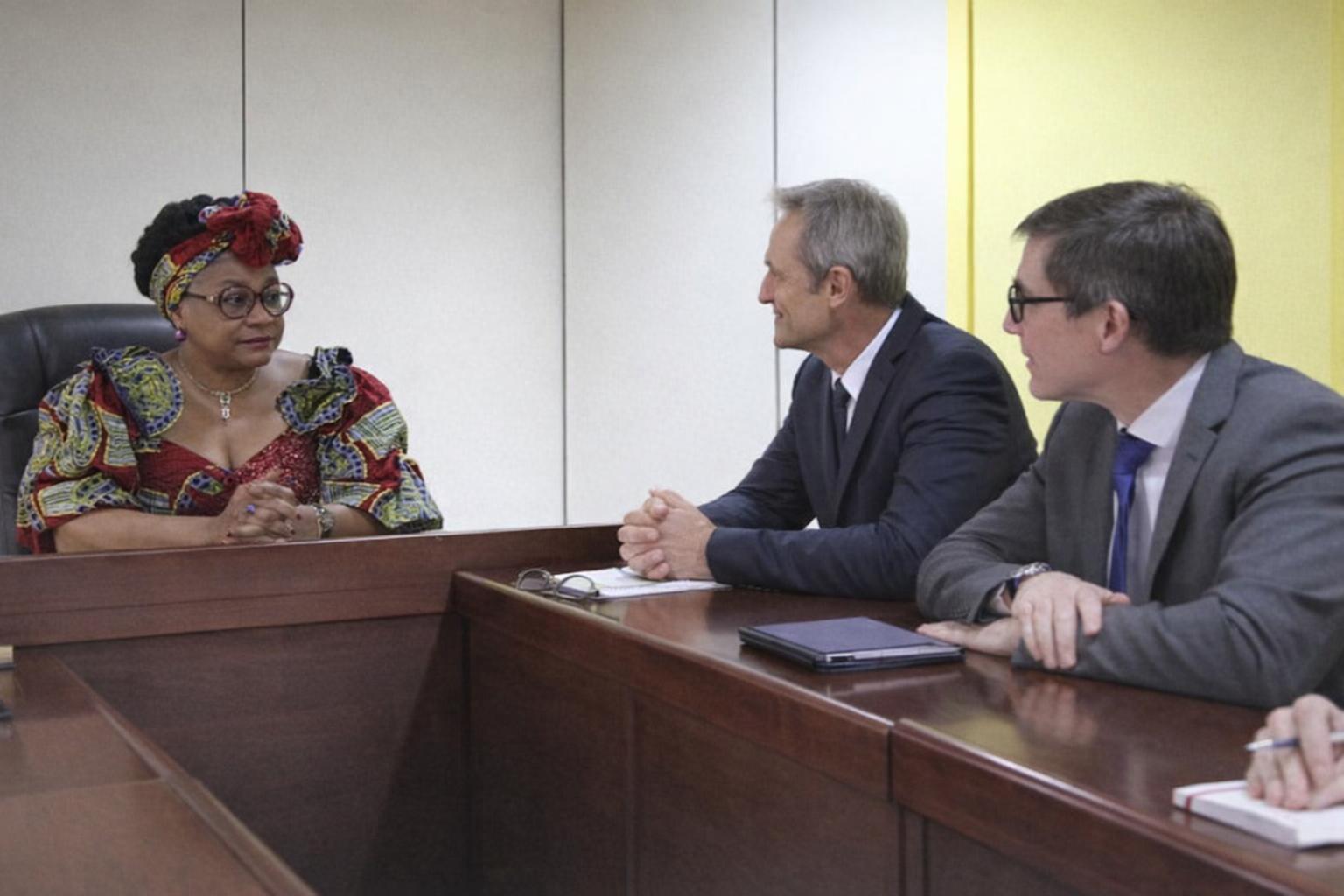
Adrien Henri, Director General of TotalEnergies Nature Based Solutions, spoke after a meeting with Rosalie Madondo, Congo’s Minister of Forest Economy. Éric Delattre, Director General of TotalEnergies EP Congo, was also present, underscoring the project’s coordination with institutional stakeholders.
Henri said the project is continuing its trajectory while acknowledging that some concerns were raised during implementation. He framed the discussion as a working review of what has been achieved and what needs to be strengthened, with a focus on maintaining momentum alongside public authorities.
Year five milestones and the “next steps” discussion
According to Adrien Henri, Bacassi has reached its fifth year, involving several partners including the supervising ministry. He stated that the parties are exchanging views on results to date and on actions to plan for the next phase, emphasizing continuity built on joint work already completed.
The meeting focused on assessing achievements and defining orientations together with the State for the continuation of activities. A key point discussed was how to evaluate results after several years of plantation work, a practical issue for projects that must translate field performance into measurable outcomes.
A 10-year plan: 38,000 hectares of acacias
Presented as a pioneering initiative in forestry and integrated territory management, Bacassi plans, over ten years, to plant acacias across 38,000 hectares. The project also foresees the development of agricultural activities on 2,000 hectares, in partnership with local and Indigenous communities.
The timeline reflects a long-term framing that is typical of large-scale land-use programs, where agronomic cycles, forestry rotations, and community engagement mechanisms must be aligned. Bacassi is also described as being designed to generate durable economic and environmental co-benefits.
Carbon compensation framework over 35 years
Beyond the ten-year planting horizon, Bacassi includes an envisaged carbon compensation mechanism spanning 35 years. This design signals a longer monitoring and verification period, consistent with the way nature-based projects seek to connect land stewardship with quantified climate-related outcomes.
In the narrative shared in Brazzaville, carbon sequestration is positioned as one benefit among others, rather than as a standalone objective. The emphasis on multiple outputs aims to anchor climate ambitions in local utility and broader territorial planning.
Local goods: food crops, energy wood, construction timber
The project’s stated end-goal is to support the production of useful goods for local populations. The cited examples include food crops, wood-energy, and construction timber, alongside strengthened carbon sequestration through planted forests and integrated land practices.
For investors and public decision-makers, this combination matters because it links climate-oriented land use to tangible value chains. By referencing multiple products, the project is presented as seeking diversified benefits that can be felt within surrounding communities over time.
Alignment with Congo’s Pronar and forestation policy
Bacassi is described as aligning with the Programme national d’afforestation et de reboisement (Pronar) and Congo’s national forestation policy. This positioning places the initiative within the country’s broader framework for reforestation and forestry development.
Such alignment can also be read as an effort to ensure policy coherence between private implementation capacity and public strategic objectives. In this case, the Ministry of Forest Economy is presented as a central counterpart in shaping how the project evolves.
FAO talks: marketing Congolese forest products abroad
Separately, Rosalie Madondo met a delegation from the UN Food and Agriculture Organization to discuss strategies for promoting Congolese forest products on international markets. These talks relate to the implementation of recommendations under the Voluntary Partnership Agreement framework.
The discussion is framed around objectives of legal, sustainable, and transparent forestry exploitation. For market access, the ability to demonstrate legality and sustainability is often treated as a competitiveness factor, particularly in destinations that apply strict due-diligence expectations.
European market focus and technical support mission
FAO’s mission includes deploying an expert to support the promotion and marketing of Congolese timber, including toward European markets, said Emmanuel Groutel, an FAO expert in Congo. The stated aim is to strengthen how Congolese wood is positioned and communicated abroad.
The mission also plans a comparative analysis of experiences in other countries, including Gabon, Ghana, Indonesia, and Malaysia. Consultations are expected with the private sector and civil society organizations to identify opportunities, constraints, and recommendations, according to Groutel.
What decision-makers may watch next
From the information shared, two tracks stand out: Bacassi’s operational continuity in the Plateaux Batékés and the parallel work on market-facing strategies for Congolese forest products. Both require credible evaluation methods, stable partnerships, and clear articulation between field outcomes and policy frameworks.
In the coming period, stakeholders are likely to remain attentive to the joint orientations agreed with the State, the practical assessment of plantation results, and the capacity of marketing support to translate sustainability commitments into stronger international positioning for Congolese timber products.