






























DGSP deployment to Oyo under ‘Zero Kuluna’
Elements of the General Directorate of Presidential Security (DGSP) officially set foot in the city of Oyo on Friday, 9 January, around 405 km north of Brazzaville. The deployment took place within the framework of the “Zero Kuluna” operation, launched on 28 September.
The stated objective of the operation is to strengthen public order and reduce incidents attributed to highway banditry and urban gangs. In this context, the DGSP’s presence in Oyo signals a widening of field action beyond the capital’s immediate perimeter.
Four arrests on arrival at the Alima riverbank
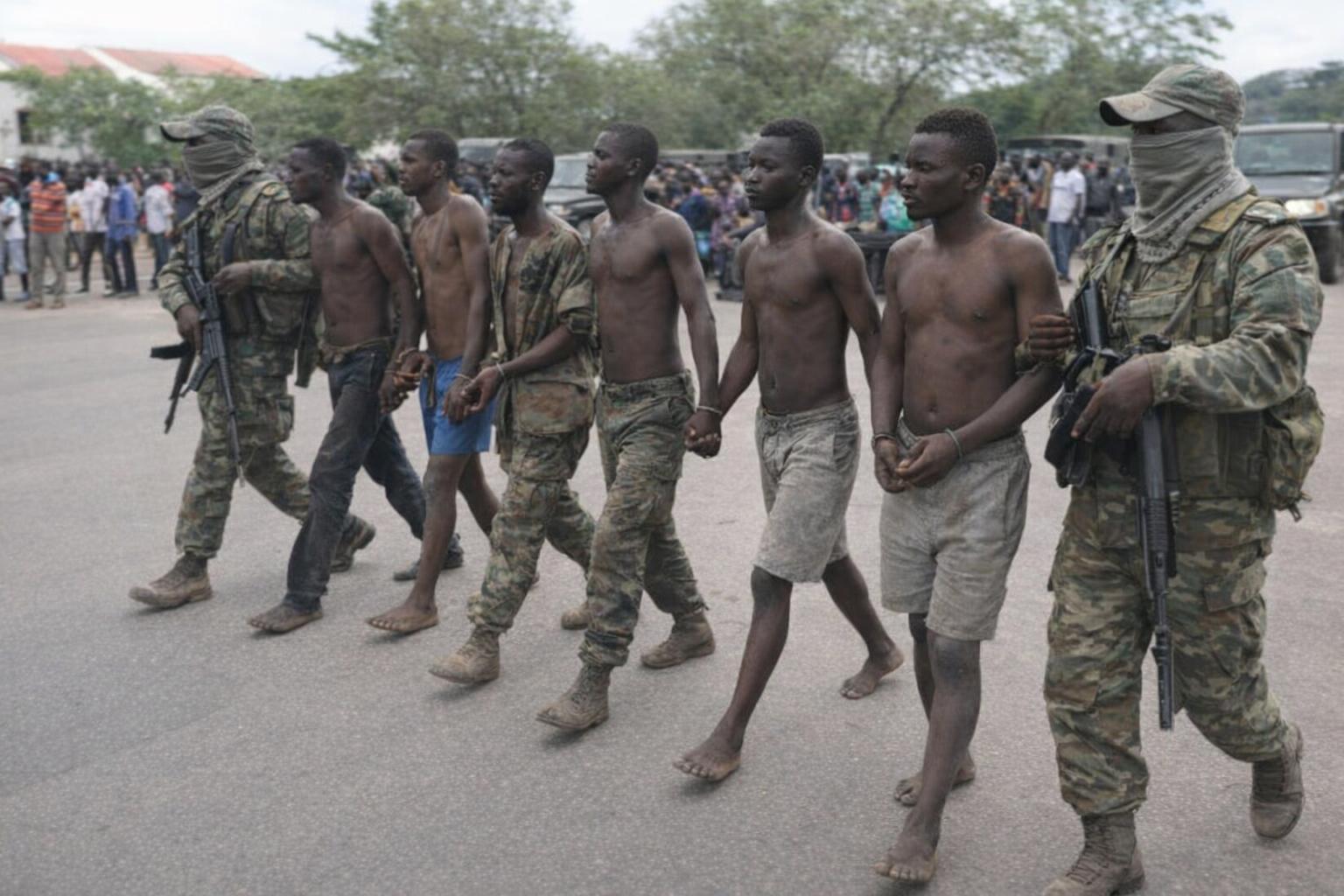
According to the account provided, four alleged bandits were arrested shortly after the DGSP’s arrival near the Alima riverbank. They were then escorted to the unit’s base, marking the first visible operational outcome of the deployment in Oyo.
The scene unfolded in front of a jubilant crowd that publicly expressed support for the security forces. Witnesses reported chants including “Yo nani, o boya DGSP?”—rendered locally as “Who are you to challenge the DGSP?”—reflecting a climate of approval for restored authority.
Presidential directive and the focus on gang suppression
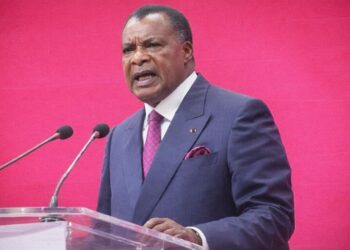
In Congo-Brazzaville, President Denis Sassou-N’Guesso acknowledged in October that he had ordered the pursuit of gangs. The operation is described as being carried out by elite soldiers attached to presidential security and has been ongoing for several months.
The groups frequently referred to as “Bébés Noirs” or “Kulunas” are presented as a major driver of insecurity, particularly in Brazzaville. The authorities’ emphasis, as reported here, is on dismantling violent networks and reassuring residents through visible enforcement.
Public-order policing extends to road safety enforcement
Beyond anti-gang activities, the DGSP is also reported to have sought improvements in traffic discipline. Particular attention has been given to the circulation of motorcycle taxis, a highly visible segment of urban mobility in many Congolese cities.
The measures cited focus especially on the mandatory wearing of helmets by drivers and passengers. As described in the source text, this approach has been positively received by portions of the population, who view it as a practical step toward safer roads and more orderly transport.
Implications for stability and the investment climate
For economic actors, the extension of security operations to secondary hubs such as Oyo can be read as a signal of state capacity and territorial presence. In environments where logistics, local commerce, and service activity depend on predictability, perceptions of public order matter.
At the same time, sustained results typically hinge on coordination with judicial follow-up and community cooperation. In the narrative presented, popular support appears to accompany the DGSP’s actions, which may contribute to the broader objective of stabilizing daily life.