
















A proximity water project inaugurated in Mfilou
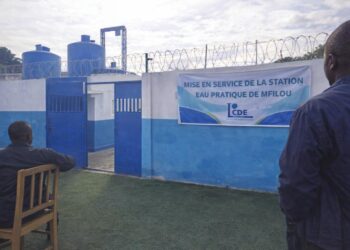
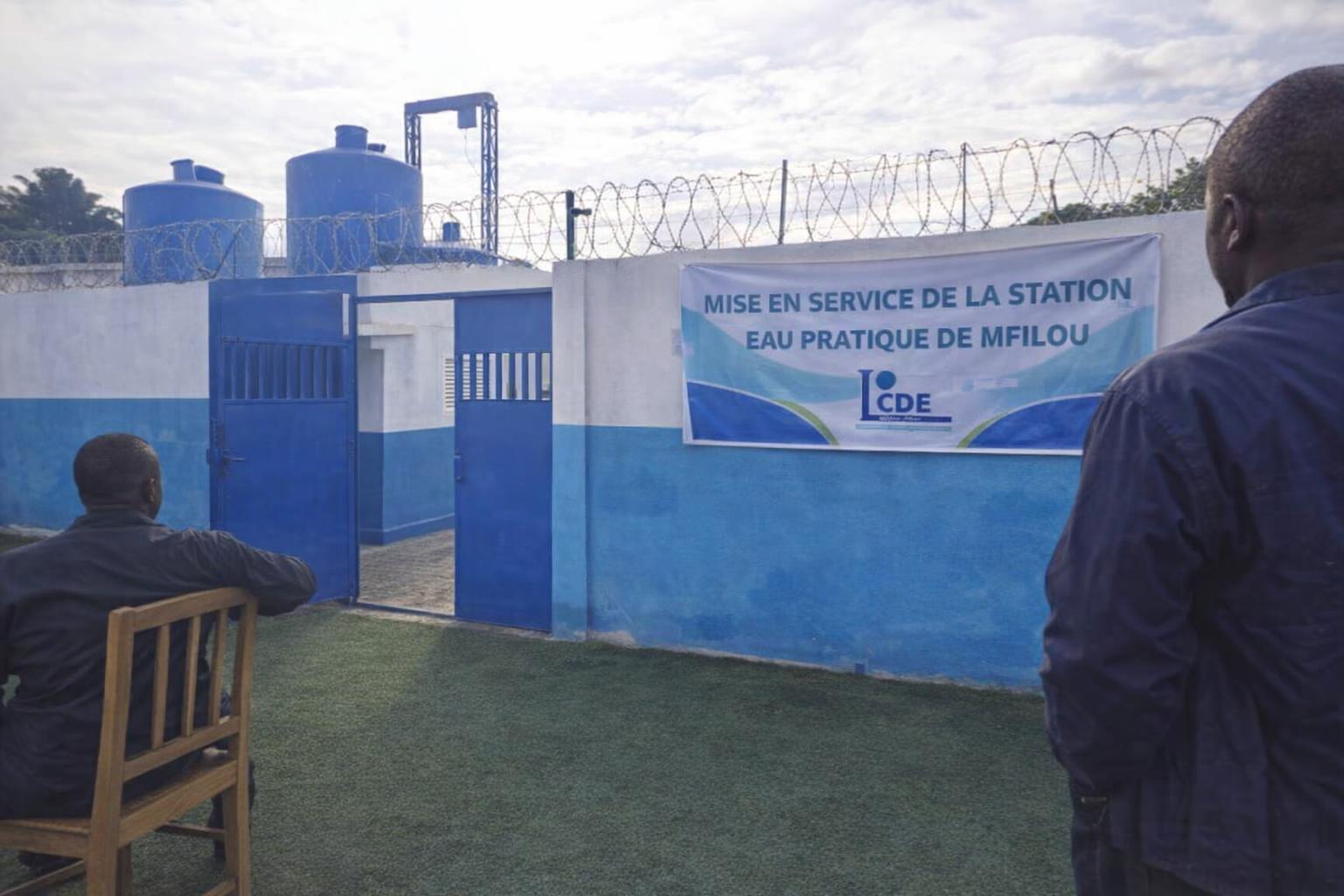
Brazzaville’s 7th arrondissement has recorded a new milestone for public service delivery, with the official commissioning of the “Eau Pratique” proximity production station in Mfilou. The facility was inaugurated on Thursday, 15 January, within the CEG Mfilou compound, positioning it close to the communities it is intended to serve.
According to leaders of La Congolaise des eaux (LCDE), the station is expected to ease pressure on household access to potable water for residents in Makazou, Kibouendé, Moutabala, Kahounga and Mbouala. The messaging from the operator frames the project as a practical response to a long-standing and urgent demand for reliable, safe water.
Government presence and partner alignment
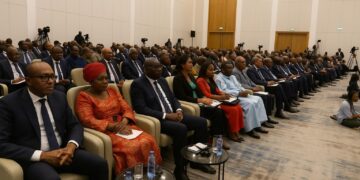
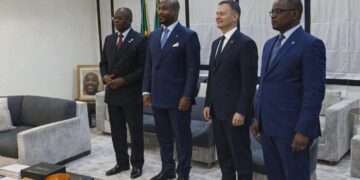
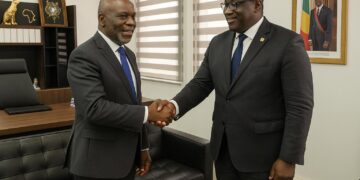
The inauguration drew high-level attendance, signaling administrative prioritization and inter-ministerial coordination around basic services. Émile Ouosso, Minister of Energy and Hydraulics, attended alongside Jean-Luc Mouthou, Minister of Preschool, Primary, Secondary Education and Literacy, underscoring links between water access, public health, and learning conditions.
International partners were also represented, with the presence of the UNDP representative and the African Development Bank representative in Congo. Their attendance illustrated the project’s alignment with development cooperation frameworks and the continued role of external partners in supporting service infrastructure that has immediate local impact.
Brazzaville water strategy: scaling production capacity
During the ceremony, Minister Émile Ouosso expressed satisfaction with the commissioning while projecting a broader trajectory for Brazzaville’s water supply. He announced a future plan aimed at strengthening the capital’s production capacity, with a target of 7,500 m³ per hour, presented as a major step-up in output.
The minister indicated that the larger program would be carried out in partnership with Italy, as a product of cooperation between the Congolese President Denis Sassou N’Guesso and the President of the Italian Council, Giorgia Meloni. The statement positioned water infrastructure within a wider diplomatic and economic cooperation agenda.
Technical design and operational reliability
LCDE’s description of the Mfilou installation emphasizes a compact but structured technical configuration designed to deliver water that meets hygiene requirements. The station is supplied by two boreholes drilled to a depth of 41 meters, supporting a stated production capacity of 15 m³ per hour for the facility.
The system includes two high-flow borehole pumps, two treatment tanks of 20,000 liters each, and a distribution tank of 23,800 liters. A dedicated filling device for water tanker trucks is also integrated, an element that can help extend distribution flexibility where network reach is constrained.
Digital monitoring and continuity of service
Beyond the hydraulic components, the station integrates a remote monitoring platform intended to provide real-time visibility over key hydraulic and electrical parameters. This type of telemetry is often associated with improved operational control, quicker incident detection, and more predictable maintenance scheduling in decentralized service assets.
The facility is connected to the national electricity network and is coupled with a backup generator set, a configuration that seeks to reduce downtime risks linked to power interruptions. In practice, this combination supports continuity of service, a core expectation for users and a key performance factor for the operator.
Water access as a school-based public health lever
The choice to locate the station within CEG Mfilou adds an explicit educational dimension to a project that is primarily about distribution. Bibiana Itoua, administrator-mayor of Mfilou, stressed that the facility can help strengthen practical learning on hygiene and environmental protection among young people, linking infrastructure to behavioral outcomes.
In that spirit, LCDE installed a specific ramp with three taps reserved exclusively for pupils and administrative staff at the school. This arrangement is presented as a concrete measure to secure day-to-day water availability on campus, while reinforcing routines associated with cleanliness and health protection.
Governance messaging and next deployment areas
LCDE Director General Parfait Chrisostome Makita framed the project as part of an inclusive development vision associated with President Denis Sassou N’Guesso. He also called on beneficiaries to protect and preserve the infrastructure, a message consistent with the operational reality that small-scale stations depend on responsible local stewardship to remain effective.
LCDE indicated that the commissioning of proximity stations is expected to expand to other arrondissements of Brazzaville and to Pointe-Noire. If delivered as outlined, this rollout would progressively diversify supply points and could improve resilience at neighborhood level, while supporting more targeted service management.
What investors and managers may read between the lines
For decision-makers, the Mfilou station highlights a model that combines decentralized production, basic treatment, digital supervision, and practical distribution options such as tanker filling. The presence of ministers and development partners indicates that water access remains a visible policy priority, with potential implications for procurement, operations, and maintenance ecosystems.
The broader production ambition cited by the Minister of Energy and Hydraulics also signals that water supply is being discussed at strategic scale, alongside diplomatic partnerships. For businesses and institutions operating in Brazzaville, these signals can inform expectations around service improvements that affect workforce well-being and local operating conditions.
Key figures dashboard: Mfilou “Eau Pratique” station
Station type: proximity production and distribution unit located at CEG Mfilou. Supply source: two boreholes, each 41 meters deep. Stated production capacity: 15 m³ per hour. Treatment storage: two tanks of 20,000 liters each. Distribution storage: 23,800 liters. Equipment: two high-flow pumps, tanker filling device, remote monitoring platform, grid connection with backup generator (LCDE statements during the inauguration).
FAQs for local users and stakeholders
Which neighborhoods are cited as beneficiaries? LCDE cited Makazou, Kibouendé, Moutabala, Kahounga and Mbouala as areas expected to feel relief from the new facility.
What makes the station different from a simple borehole? The Mfilou unit combines borehole extraction, treatment tanks designed to meet hygiene standards, a distribution reservoir, remote monitoring of parameters, and a backup power arrangement.
Does the project include a component for the school? Yes. LCDE installed a dedicated ramp with three taps exclusively for pupils and administrative staff at CEG Mfilou, reflecting the project’s educational and hygiene-oriented dimension.