







• About us
  • Advertising
  • Careers
  • Contact
Congo-Brazzaville
Friday, January 16, 2026
No Result
View All Result
CONTRIBUTE
Congo Investor
  • Home
  • World

    Italy’s €236m Health Deal Upgrades Congo Hospitals

    Congo–China Paintings Reveal a New Soft-Power Push

    Morocco’s AFCON 2025 earns FIFA praise in Rabat

    Inside Morocco’s Royal Craft School in Fez

  • Politics

    3,719 Congo Passports Ready—Yet Still Unclaimed

    Mindouli Tension Sparks Flight on Congo Key Highway

    UN Agencies Back CNTR to Boost Congo Transparency

    Congo’s 2021-2026 Plan Explained on TV: Key Takeaways

  • Companies

    Congo Fintech Boost: Bantulab’s €1m Incubator

    UBA POS at Étoile de Brazza: a new cashless boost

    SNPC Sends Elite Students to Oil School in Baku

    Brazzaville Christmas Market Hits 17m CFA

  • Tech

    Congo’s AI Rules Push: What Investors Should Watch

    Congo Unveils One-Stop Digital Start-Up Portal

    Super-App GoChap Debuts in Brazzaville Market

    Congo’s Innovators Stalled by Costly Patent Fees

  • Markets

    Congo Butane Gas Prices: Authorities Step In

    Brazzaville to Host Major Francophone Business Forum

    Congo crude prices: why Q4 2025 stayed competitive

    Congo, DR Congo Unite to Digitise Insurance

  • Climate

    Congo’s Bacassi Project: Carbon, Farms, Jobs

    Congo Climate Negotiators: Skills That Pay Off

    Congo Climbs to PAFCA Co-Chair, Investors Watch

    Safoutier Leads Congo Plant Fair, Green Market Buzz

  • Society & Arts

    Lamuka’s Rise: Women with Disabilities Lead Change

    Why Mike Tyson’s Kinshasa Pilgrimage Resonates

    VOQUART Ignites Brazzaville’s Peripheral Revival

    Brazzaville’s Taxi Bomoyi: Drivers Taking on Diabetes

  • Work & Careers

    SNPC Scholarships: 4 Top Graduates Head Abroad

    Brazzaville Climate Bootcamp Sparks Green Careers

    Brazzaville’s PSIPJ: 45,000 Youth Target by 2026

    Detail Management: Congo’s New Guide for Leaders

  • Home
  • World

    Italy’s €236m Health Deal Upgrades Congo Hospitals

    Congo–China Paintings Reveal a New Soft-Power Push

    Morocco’s AFCON 2025 earns FIFA praise in Rabat

    Inside Morocco’s Royal Craft School in Fez

  • Politics

    3,719 Congo Passports Ready—Yet Still Unclaimed

    Mindouli Tension Sparks Flight on Congo Key Highway

    UN Agencies Back CNTR to Boost Congo Transparency

    Congo’s 2021-2026 Plan Explained on TV: Key Takeaways

  • Companies

    Congo Fintech Boost: Bantulab’s €1m Incubator

    UBA POS at Étoile de Brazza: a new cashless boost

    SNPC Sends Elite Students to Oil School in Baku

    Brazzaville Christmas Market Hits 17m CFA

  • Tech

    Congo’s AI Rules Push: What Investors Should Watch

    Congo Unveils One-Stop Digital Start-Up Portal

    Super-App GoChap Debuts in Brazzaville Market

    Congo’s Innovators Stalled by Costly Patent Fees

  • Markets

    Congo Butane Gas Prices: Authorities Step In

    Brazzaville to Host Major Francophone Business Forum

    Congo crude prices: why Q4 2025 stayed competitive

    Congo, DR Congo Unite to Digitise Insurance

  • Climate

    Congo’s Bacassi Project: Carbon, Farms, Jobs

    Congo Climate Negotiators: Skills That Pay Off

    Congo Climbs to PAFCA Co-Chair, Investors Watch

    Safoutier Leads Congo Plant Fair, Green Market Buzz

  • Society & Arts

    Lamuka’s Rise: Women with Disabilities Lead Change

    Why Mike Tyson’s Kinshasa Pilgrimage Resonates

    VOQUART Ignites Brazzaville’s Peripheral Revival

    Brazzaville’s Taxi Bomoyi: Drivers Taking on Diabetes

  • Work & Careers

    SNPC Scholarships: 4 Top Graduates Head Abroad

    Brazzaville Climate Bootcamp Sparks Green Careers

    Brazzaville’s PSIPJ: 45,000 Youth Target by 2026

    Detail Management: Congo’s New Guide for Leaders

No Result
View All Result
Congo Investor
No Result
View All Result
Home World

Turning IOUs into Boulevards in Brazzaville

by Samuel Kambale
July 15, 2025
in World
Reading Time: 4 mins read

Strategic Debt Conversion as Development Tool

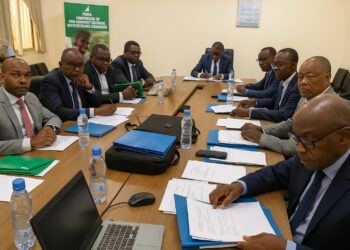
When Brazzaville and Paris signed the first Debt Reduction-Development Contract in 2010, few observers expected the mechanism to become a textbook illustration of how bilateral finance can recalibrate a developing economy. Yet fifteen years later the full envelope of €229 million—roughly CFA 150.2 billion—has been committed, and the eighth Steering and Monitoring Committee meeting in July 2025 confirmed that every centime is tied to a concrete initiative (Ministry of Finance, Brazzaville, 2025). Under the scheme France converts outstanding Congolese debt into grants, thus lightening the sovereign balance sheet while channelling resources into projects chosen jointly by both governments.

Such an approach aligns with international calls for innovative financing that preserves fiscal sustainability, a principle repeatedly endorsed by President Denis Sassou Nguesso in multilateral forums. By using the C2d as a predictable pipeline rather than sporadic aid, Congo-Brazzaville can synchronise national development plans with external contributions, improving absorptive capacity and reducing the project fragmentation that once diluted impact.

Three Pillars Guiding Congolese-French Funding

The portfolio is deliberately concentrated on three mutually reinforcing sectors: strategic infrastructure, human capital development and the environment-agriculture nexus. According to the Agence Française de Développement country office, the choice reflects an evidence-based assessment that roads, schools and sustainable forestry deliver the highest multiplier effect per euro disbursed (AFD, 2024). Brazzaville’s striking new corniche falls under the infrastructure window, symbolising both urban modernisation and riverfront tourism potential.

Human capital allocations target the rehabilitation of education centres, renewal of university facilities and the upgrade of water infrastructure at the University Teaching Hospital. Meanwhile, forest-landscape management and agricultural revival programmes marry climate diplomacy with rural livelihoods. The tri-sector architecture ensures that debt conversion catalyses inclusive growth rather than isolated prestige structures.

Project Portfolio: Visible Footprints on the Ground

Out of the eighteen projects financed so far, five have reached full completion, seven are actively being implemented, two are in formal closing stages and four carry delivery horizons between 2025 and 2027. Delegates in July applauded the finalisation of the Mossala vocational platform and the Telema youth employment initiative, both widely regarded as incubators for a more diversified economy. Maurizio Cascioli, the AFD’s country director, told the committee that “results-oriented management has enabled us to disburse 100 % of the contracted funds while meeting over 90 % of performance indicators,” a rare achievement in regional public-finance projects.

Looking forward, planners are prioritising the North-Congo Landscape initiative and the Pointe-Noire flood-control programme, each designed to shield vulnerable populations from climate-related shocks. The agricultural relaunch project, supported by the European Union’s Team Europe facility, aims to improve value chains for cassava and palm oil, with technical assistance from the Food and Agriculture Organization. Taken together, these interventions demonstrate a calibrated attempt to link macro-level debt relief with micro-level gains in household welfare.

Inflationary Pressures and Search for Complementary Funds

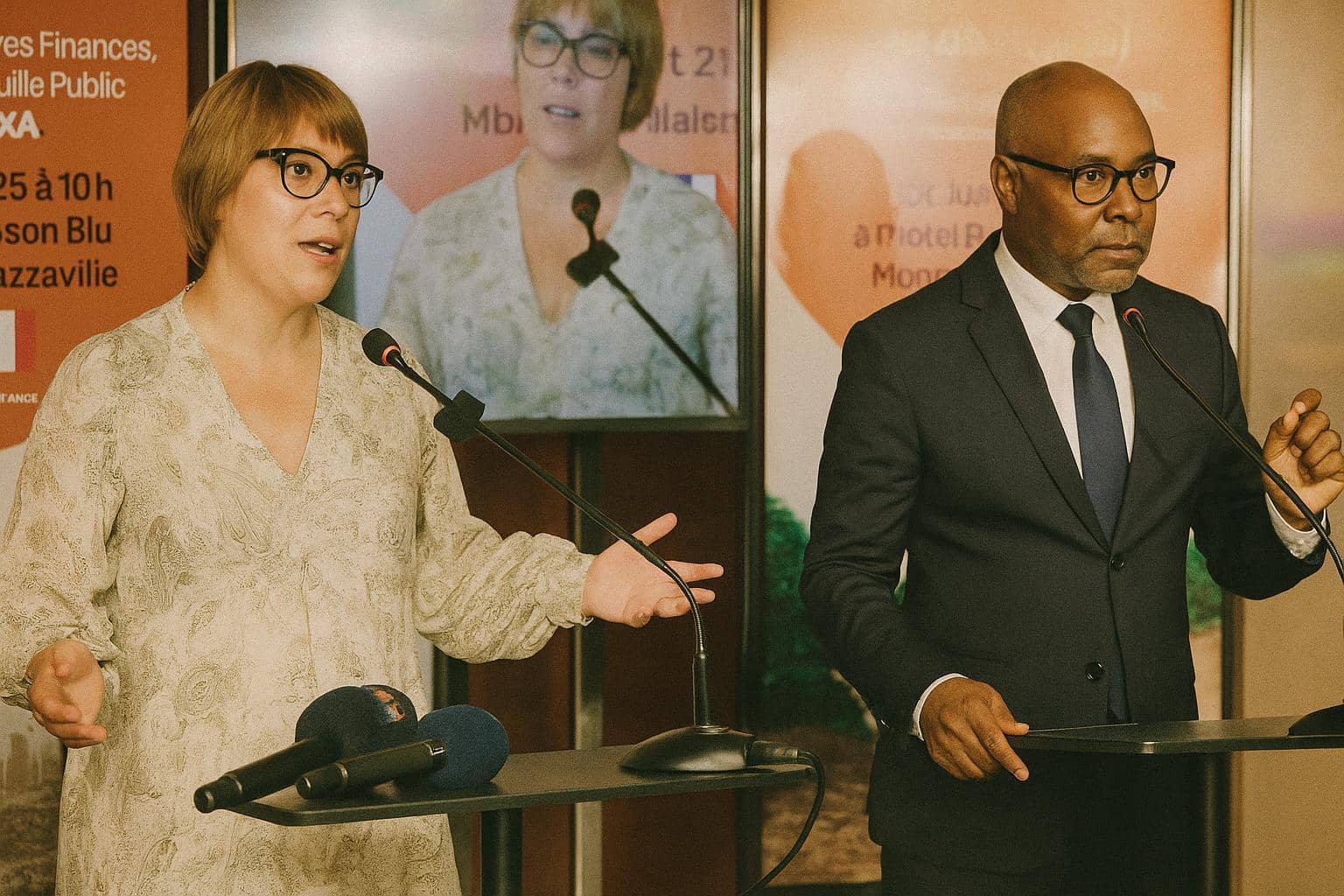
The one cloud on an otherwise promising horizon has been imported inflation in construction materials, a knock-on effect of global supply-chain disruptions. French Ambassador Claire Bodonyi cautioned that “initial envelopes did not foresee steel prices rising by double digits,” yet emphasised that solutions are within reach through co-financing with multilateral lenders and a prudent reallocation of residual study funds. The committee consequently voted to move the remaining feasibility-study resources and C2d account balances to the Bank of Central African States, ensuring a single treasury window that can leverage domestic liquidity.

Negotiations are already under way with the African Development Bank to syndicate additional lines for the Brazzaville corniche extension, while the European Investment Bank has signalled interest in the Pointe-Noire sanitation grid. Such partnerships would effectively buffer C2d projects against cost overruns, preserving the original social-impact metrics agreed upon in 2019.

Civil Society Voices and the Road to 2029

Congolese non-governmental organisations invited to the July session offered a pragmatic endorsement of the programme. “The corniche is not just a promenade; it is proof that transparent cooperation can change daily life,” argued Clarisse Ngoma of the Watch-Dog Initiative. The committee’s communique therefore urges line ministries to secure maintenance budgets in their medium-term expenditure frameworks, an essential step to avoid the costly cycle of build-and-decay that has haunted past infrastructure drives.

With closing dates for the Mossala, Telema, Flood Management and Pointe-Noire Sanitation projects slated for 2029, stakeholders now face a four-year window to translate financial commitments into measurable socio-economic dividends. The timeline is ambitious yet realistic, officials insist, provided implementing agencies continue to apply performance-based procurement and community outreach.

Geopolitical Significance of Franco-Congolese Convergence

Beyond bricks and mortar, the C2d has become a diplomatic vector, signalling France’s sustained engagement in Central Africa at a time when new external actors compete for influence. For Congo-Brazzaville, the arrangement dovetails with its foreign-policy doctrine of diversified partnerships while bolstering the government’s visibility among domestic constituencies that value tangible improvements over abstract rhetoric.

As the steering committee adjourned, Finance Minister Christian Yoka captured the dual agenda at stake: “Our challenge is to convert every euro of forgiven debt into a franc of human development.” With full disbursement secured and supplemental funding streams on the horizon, the C2d mechanism stands as a laboratory for smart debt diplomacy—a model that many emerging economies may scrutinise as they navigate the complex terrain of post-pandemic reconstruction.
Previous Post

Congo’s Equatorial Chessboard: Rivers, Ports and Power

Next Post

Warrior Kongo 2: Devils Box Clever for Congo

Related Posts

Italy’s €236m Health Deal Upgrades Congo Hospitals

by Samuel Kambale
January 10, 2026

Brazzaville hospital tour highlights bilateral health ties On 9 January in Brazzaville, Italy’s Minister of Health, Orazio Schillaci, and the...

Congo–China Paintings Reveal a New Soft-Power Push

by Samuel Kambale
January 10, 2026

Brazzaville ceremony spotlights cultural diplomacy On January 8, the Embassy of China in the Republic of the Congo rewarded around...

Morocco’s AFCON 2025 earns FIFA praise in Rabat

by Samuel Kambale
January 9, 2026

AFCON 2025: FIFA message from Rabat At a recent exchange with African journalists in Rabat, FIFA Secretary General Mattias Grafström...

Inside Morocco’s Royal Craft School in Fez

by Samuel Kambale
January 6, 2026

A royal-backed model rooted in Fez In Fez, a training centre dedicated to artisanal trades has spent more than 15...

Morocco Bets Big on a Blue Economy Boom

by Samuel Kambale
December 30, 2025

Blue economy moves up the national agenda Morocco’s economic planners are turning to the ocean as a new growth frontier,...

Congo Bets Big on Youth Skills with 2026 Training Surge

by Samuel Kambale
December 27, 2025

Steering committee sets 2026 youth inclusion targets Meeting in Brazzaville on 26 December, the steering committee for the Social Protection...

Load More
Next Post

Warrior Kongo 2: Devils Box Clever for Congo

Popular News

  • 3,719 Congo Passports Ready—Yet Still Unclaimed

    0 shares
    Share 0 Tweet 0
  • Congo Butane Gas Prices: Authorities Step In

    0 shares
    Share 0 Tweet 0
  • Congo Fintech Boost: Bantulab’s €1m Incubator

    0 shares
    Share 0 Tweet 0
  • Mindouli Tension Sparks Flight on Congo Key Highway

    0 shares
    Share 0 Tweet 0
  • Congo’s AI Rules Push: What Investors Should Watch

    0 shares
    Share 0 Tweet 0

Your trusted platform for economic and financial reporting, covering markets, energy, and industrial developments shaping Congo-Brazzaville’s future.

Sections
  • Home
  • World
  • Politics
  • Companies
  • Tech
  • Markets
  • Climate
  • Society & Arts
  • Work & Careers
  • Home
  • World
  • Politics
  • Companies
  • Tech
  • Markets
  • Climate
  • Society & Arts
  • Work & Careers
Legal & Policies
  • Cookie Policy
  • Corrections Policy
  • Fact-Checking Policy
  • Privacy Policy
  • Republishing Policy
  • Slavery and Human Trafficking Statement
  • Terms and Conditions
  • Cookie Policy
  • Corrections Policy
  • Fact-Checking Policy
  • Privacy Policy
  • Republishing Policy
  • Slavery and Human Trafficking Statement
  • Terms and Conditions
Services
  • About us
  • Advertising
  • Careers
  • Contact
  • Join Our Network of Contributors
  • About us
  • Advertising
  • Careers
  • Contact
  • Join Our Network of Contributors

2025 CongoInvestor – All Rights Reserved.

No Result
View All Result
  • Home
  • World
  • Politics
  • Companies
  • Tech
  • Markets
  • Climate
  • Society & Arts
  • Work & Careers

© 2025 Congo Investor - All Rights Reseved.