





















• About us
  • Advertising
  • Careers
  • Contact
Congo-Brazzaville
Thursday, January 15, 2026
No Result
View All Result
CONTRIBUTE
Congo Investor
  • Home
  • World

    Italy’s €236m Health Deal Upgrades Congo Hospitals

    Congo–China Paintings Reveal a New Soft-Power Push

    Morocco’s AFCON 2025 earns FIFA praise in Rabat

    Inside Morocco’s Royal Craft School in Fez

  • Politics

    3,719 Congo Passports Ready—Yet Still Unclaimed

    Mindouli Tension Sparks Flight on Congo Key Highway

    UN Agencies Back CNTR to Boost Congo Transparency

    Congo’s 2021-2026 Plan Explained on TV: Key Takeaways

  • Companies

    Congo Fintech Boost: Bantulab’s €1m Incubator

    UBA POS at Étoile de Brazza: a new cashless boost

    SNPC Sends Elite Students to Oil School in Baku

    Brazzaville Christmas Market Hits 17m CFA

  • Tech

    Congo’s AI Rules Push: What Investors Should Watch

    Congo Unveils One-Stop Digital Start-Up Portal

    Super-App GoChap Debuts in Brazzaville Market

    Congo’s Innovators Stalled by Costly Patent Fees

  • Markets

    Congo Butane Gas Prices: Authorities Step In

    Brazzaville to Host Major Francophone Business Forum

    Congo crude prices: why Q4 2025 stayed competitive

    Congo, DR Congo Unite to Digitise Insurance

  • Climate

    Congo’s Bacassi Project: Carbon, Farms, Jobs

    Congo Climate Negotiators: Skills That Pay Off

    Congo Climbs to PAFCA Co-Chair, Investors Watch

    Safoutier Leads Congo Plant Fair, Green Market Buzz

  • Society & Arts

    Lamuka’s Rise: Women with Disabilities Lead Change

    Why Mike Tyson’s Kinshasa Pilgrimage Resonates

    VOQUART Ignites Brazzaville’s Peripheral Revival

    Brazzaville’s Taxi Bomoyi: Drivers Taking on Diabetes

  • Work & Careers

    SNPC Scholarships: 4 Top Graduates Head Abroad

    Brazzaville Climate Bootcamp Sparks Green Careers

    Brazzaville’s PSIPJ: 45,000 Youth Target by 2026

    Detail Management: Congo’s New Guide for Leaders

  • Home
  • World

    Italy’s €236m Health Deal Upgrades Congo Hospitals

    Congo–China Paintings Reveal a New Soft-Power Push

    Morocco’s AFCON 2025 earns FIFA praise in Rabat

    Inside Morocco’s Royal Craft School in Fez

  • Politics

    3,719 Congo Passports Ready—Yet Still Unclaimed

    Mindouli Tension Sparks Flight on Congo Key Highway

    UN Agencies Back CNTR to Boost Congo Transparency

    Congo’s 2021-2026 Plan Explained on TV: Key Takeaways

  • Companies

    Congo Fintech Boost: Bantulab’s €1m Incubator

    UBA POS at Étoile de Brazza: a new cashless boost

    SNPC Sends Elite Students to Oil School in Baku

    Brazzaville Christmas Market Hits 17m CFA

  • Tech

    Congo’s AI Rules Push: What Investors Should Watch

    Congo Unveils One-Stop Digital Start-Up Portal

    Super-App GoChap Debuts in Brazzaville Market

    Congo’s Innovators Stalled by Costly Patent Fees

  • Markets

    Congo Butane Gas Prices: Authorities Step In

    Brazzaville to Host Major Francophone Business Forum

    Congo crude prices: why Q4 2025 stayed competitive

    Congo, DR Congo Unite to Digitise Insurance

  • Climate

    Congo’s Bacassi Project: Carbon, Farms, Jobs

    Congo Climate Negotiators: Skills That Pay Off

    Congo Climbs to PAFCA Co-Chair, Investors Watch

    Safoutier Leads Congo Plant Fair, Green Market Buzz

  • Society & Arts

    Lamuka’s Rise: Women with Disabilities Lead Change

    Why Mike Tyson’s Kinshasa Pilgrimage Resonates

    VOQUART Ignites Brazzaville’s Peripheral Revival

    Brazzaville’s Taxi Bomoyi: Drivers Taking on Diabetes

  • Work & Careers

    SNPC Scholarships: 4 Top Graduates Head Abroad

    Brazzaville Climate Bootcamp Sparks Green Careers

    Brazzaville’s PSIPJ: 45,000 Youth Target by 2026

    Detail Management: Congo’s New Guide for Leaders

No Result
View All Result
Congo Investor
No Result
View All Result
Home Climate

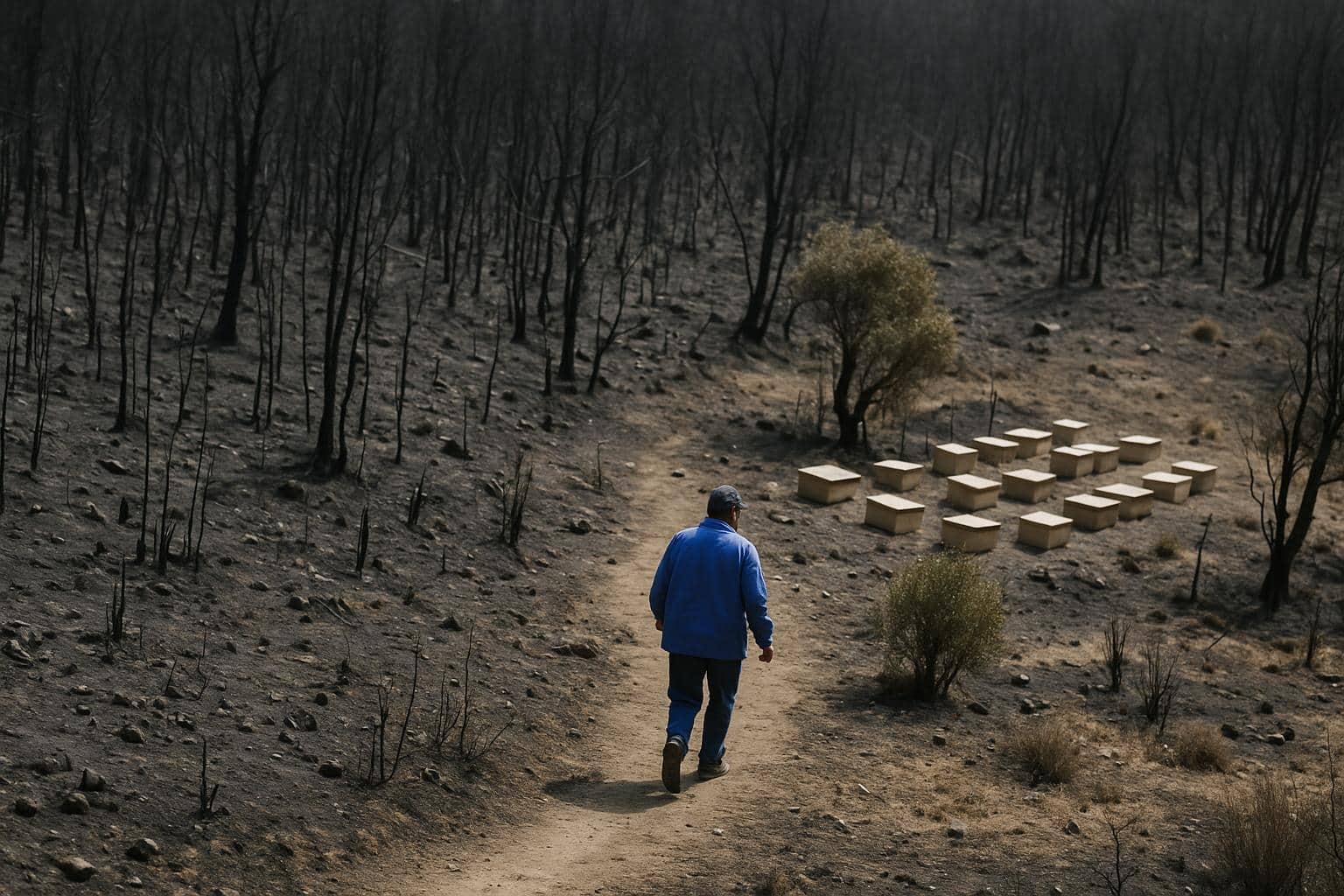
Africa’s Hidden Wildfire Crisis Exposed

by Musa Kasongo
November 2, 2025
in Climate
Reading Time: 3 mins read

Villagers on the front line

A chain of villagers passes brimming buckets across a dusty field in central Zambia, racing a fast-moving bushfire that menaces maize plots and thatched roofs. The smoky tableau, repeated from the Sahel to the Cape, anchors a sobering assessment published in Science in August 2025.

Study pinpoints Africa wildfire epicentre

A consortium led by the United Nations University’s water institute finds that 85 percent of all people directly threatened by vegetation fires now live in Africa, making the continent the unheralded epicentre of a phenomenon often associated with Australia, California or the Mediterranean.

Researchers parsed satellite imagery, demographic grids and the Global Fire Atlas for the 2002-2021 window. They report that global burned area fell 26 percent even as human exposure climbed 40 percent, meaning smaller, harder-to-control fires are now intersecting densely settled frontiers.

Burned area down, exposure up

For Africa the divergence is sharper: surface charred shrank yet an estimated 440 million residents have watched livelihoods, homes or health come under immediate threat within two decades, translating into at least 2,500 direct fatalities, 10,500 injuries and more than 1.5 million annual smoke-related deaths.

Lead author Dr Bianca Lopez calls the situation a paradox: agricultural burning, urban expansion and fragmented savannah mosaics can limit megafire spread, yet place more people, roads and power lines in the path of routine flame fronts, eroding traditional safety buffers.

Climate drivers intensify risk

Compound climate signals intensify the hazard. Prolonged droughts, sharpened by El Niño and rising mean temperatures, desiccate grasslands across the Sudano-Guinean belt and southern Africa, turning everyday clearing fires into fast-propagating sheets of heat that generate their own gusty updrafts.

The same aerosols emitted by these blazes absorb sunlight, suppress rainfall and perpetuate aridity, creating what climatologist Professor Amina Ndlovu describes as a self-reinforcing feedback loop that tightens during each successive dry season.

Five-country hotspot map

Five countries—Democratic Republic of Congo, South Sudan, Mozambique, Zambia and Angola—now account for one-half of all global wildfire exposure. In those states, fire doubles as land-preparation tool, as pasture management practice and, along peri-urban fringes, as an unfortunate by-product of unplanned sprawl.

Invisible fire burden in global media

Yet media lenses and funding pipelines rarely linger. Despite Africa recording 64.3 percent of the world’s burned surfaces, international attention and adaptation finance remain disproportionately low, a gap the authors characterise as the continent’s ‘invisible fire burden’.

Cascade of ecological and economic losses

Consequences cascade beyond charred fields. Recurrent burns remove carbon-rich litter from miombo and rain-forest edges, weakening the Congo Basin’s role as a global carbon sink, altering regional rainfall trajectories, eroding biodiversity corridors and amplifying food insecurity for subsistence households already stretched by commodity price volatility.

Direct economic losses—crop yields, livestock, informal housing, rural clinics—are harder to tally, but study models suggest knock-on damages compound poverty traps and spur periodic displacement, straining municipal budgets and diverting limited capital away from development priorities.

Tech innovation meets funding gap

Start-ups and research institutes are racing to close detection gaps. Low-orbit nanosatellites, early-warning dashboards combining meteorological feeds with real-time thermal anomalies, and lightweight drones that map active fronts are being piloted from Lusaka to Maputo, but deployment still outpaces sustained operational funding.

Experts caution that technology alone will not suffice. Community-based fire brigades, revival of controlled mosaic burning calendars and integration of indigenous knowledge into formal response plans offer cost-effective buffers, provided local authorities receive equipment, insurance cover and clear protocols.

Community and policy pathways

The United Nations and the Food and Agriculture Organization urge a pivot from reactive emergency spending toward proactive risk governance that embeds fire metrics in land-use planning, social protection schemes and nationally determined contributions under the Paris Agreement.

Multilateral banks and carbon-market players eyeing Congo Basin conservation credits are positioned to catalyse that transition through blended finance, contingent on transparent monitoring and equitable benefit-sharing arrangements that keep rural cooperatives at the centre of project design.

Dr Lopez notes that a ten-percent reduction in accidental agricultural burns across the five hotspot states would lower continental exposure by nearly twenty-five percent, underscoring the outsized leverage of targeted behaviour change campaigns.

Investment case for prevention

For investors and policymakers, the finding reframes African wildfire management not as peripheral humanitarian aid but as core infrastructure protection and climate-risk mitigation, with direct implications for sovereign credit ratings, insurance premiums and cross-border power-pool stability.

Back in central Zambia, Joseph still fills his bucket each dry season. Whether the next decade brings better sensors, tailored finance and preventative outreach will determine if that bucket remains a last defense or becomes a symbol of a continent turning the tide on silent fires.
Tags: Africa WildfiresAmina NdlovuClimate RiskCongo BasinEl Niño
Previous Post

Brazzaville Bets on Local Content to Power Growth

Next Post

CEMAC Ministers Approve 2026 Budget Boost

Related Posts

Congo’s Bacassi Project: Carbon, Farms, Jobs

by Emmanuel Kabongo
January 8, 2026

Plateaux Batékés: integrated land management agenda In Brazzaville on January 8, TotalEnergies Nature Based Solutions presented the Bacassi project as...

Congo Climate Negotiators: Skills That Pay Off

by Musa Kasongo
January 3, 2026

Brazzaville climate diplomacy workshop Brazzaville hosted, on 27 December, the second workshop dedicated to training Congolese youth in international climate...

Congo Climbs to PAFCA Co-Chair, Investors Watch

by Emmanuel Kabongo
December 23, 2025

Lusaka summit elevates climate-fiscal agenda Lusaka hosted Africa’s second ministerial on climate-resilient economic policy between sixteen and eighteen December 2025,...

Safoutier Leads Congo Plant Fair, Green Market Buzz

by Musa Kasongo
December 21, 2025

Brazzaville’s 2025 plant fair underscores resilient green economy From 23 November to 19 December 2025, the Jardin des Droits de...

Plant Fair 2025 Draws Crowds, Tests Sales

by Emmanuel Kabongo
December 20, 2025

Rising Footfall Signals Growing Green Appetite Brazzaville’s dense traffic to the 2025 Plant Fair surprised even seasoned exhibitors. Over 4...

Congo Funds Green Startups with CFA21m Boost

by Musa Kasongo
December 18, 2025

UNDP-Government pact unlocks climate capital On 17 December in Brazzaville, the Ministry of Environment, Sustainable Development and the Congo Basin...

Load More
Next Post

CEMAC Ministers Approve 2026 Budget Boost

Popular News

  • 3,719 Congo Passports Ready—Yet Still Unclaimed

    0 shares
    Share 0 Tweet 0
  • Congo Butane Gas Prices: Authorities Step In

    0 shares
    Share 0 Tweet 0
  • Congo Fintech Boost: Bantulab’s €1m Incubator

    0 shares
    Share 0 Tweet 0
  • Mindouli Tension Sparks Flight on Congo Key Highway

    0 shares
    Share 0 Tweet 0
  • Congo’s AI Rules Push: What Investors Should Watch

    0 shares
    Share 0 Tweet 0

Your trusted platform for economic and financial reporting, covering markets, energy, and industrial developments shaping Congo-Brazzaville’s future.

Sections
  • Home
  • World
  • Politics
  • Companies
  • Tech
  • Markets
  • Climate
  • Society & Arts
  • Work & Careers
  • Home
  • World
  • Politics
  • Companies
  • Tech
  • Markets
  • Climate
  • Society & Arts
  • Work & Careers
Legal & Policies
  • Cookie Policy
  • Corrections Policy
  • Fact-Checking Policy
  • Privacy Policy
  • Republishing Policy
  • Slavery and Human Trafficking Statement
  • Terms and Conditions
  • Cookie Policy
  • Corrections Policy
  • Fact-Checking Policy
  • Privacy Policy
  • Republishing Policy
  • Slavery and Human Trafficking Statement
  • Terms and Conditions
Services
  • About us
  • Advertising
  • Careers
  • Contact
  • Join Our Network of Contributors
  • About us
  • Advertising
  • Careers
  • Contact
  • Join Our Network of Contributors

2025 CongoInvestor – All Rights Reserved.

No Result
View All Result
  • Home
  • World
  • Politics
  • Companies
  • Tech
  • Markets
  • Climate
  • Society & Arts
  • Work & Careers

© 2025 Congo Investor - All Rights Reseved.