












A 2026 election where diplomacy matters
With the March 2026 presidential election on the horizon, Congo-Brazzaville is entering a political sequence in which external credibility, economic partnerships and diplomatic signaling weigh alongside domestic dynamics. The governing camp frames this phase around stability, international openness and environmental leadership.
In that architecture, a name frequently cited in diplomatic, economic and institutional circles is Françoise Joly. Described as a strategic adviser and trusted emissary to President Denis Sassou-Nguesso, she is associated with a pragmatic style focused on networks, negotiation and continuity.
PCT nomination sets a continuity narrative
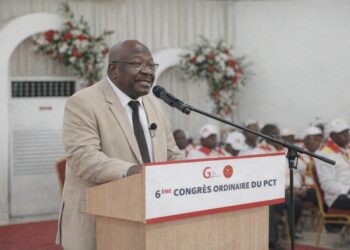
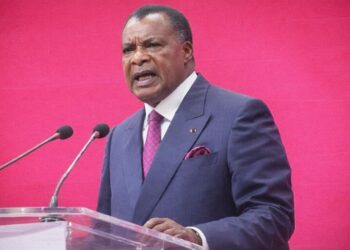
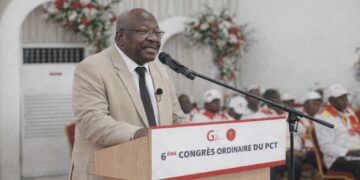
The Congolese Labour Party (PCT) officially designated Denis Sassou-Nguesso as its candidate during its sixth congress held in Brazzaville from 27 to 30 December 2025. The nomination is portrayed by the presidential majority as a choice of clarity and institutional continuity.
According to the same political sequence described by the PCT, the election is scheduled for 17 and 22 March 2026, with the electoral process already engaged since autumn 2025, including the revision of voter lists. Within the governing camp, the stated objective is to keep the message coherent and predictable.
Stability, investment confidence and external messaging
Beyond rallies and domestic campaigning, the narrative stresses that international perception can influence investor sentiment, the pace of infrastructure delivery and the confidence of bilateral and multilateral partners. In a region often marked by uncertainty, Congo-Brazzaville highlights predictability as a comparative advantage.
This is where diplomatic execution becomes a functional part of economic strategy. The underlying premise is that stable institutions and steady external relations help de-risk projects, preserve contractual continuity and create room for longer-term financing discussions.
Françoise Joly and a diplomacy of partnerships
Françoise Joly is presented as operating at the intersection of geopolitics, climate negotiations and economic diplomacy. Her role, as described, goes beyond protocol: it seeks to translate political capital and environmental positioning into concrete cooperation frameworks.
In this depiction, she engages on files with strong international content, including energy cooperation, climate finance, strategic partnerships and multilateral dialogue. The emphasis is on building arrangements that remain credible over time, particularly as the country approaches a high-stakes electoral milestone.
Climate diplomacy and the Congo Basin agenda
A visible marker of Congo-Brazzaville’s external posture is its environmental diplomacy. Authorities describe the country as a guardian of the Congo Basin, a major global ecosystem with strategic relevance for climate mitigation and biodiversity protection.
This orientation was showcased during the Three Basins Summit held in Brazzaville on 28 October 2023. The initiative sought closer coordination among major tropical forest regions—Amazonia, the Congo Basin, and Borneo–Mekong—around forest protection and the question of more durable compensation for ecosystem services.
In the narrative outlined, Françoise Joly played a key role in carrying this sequence diplomatically. The forest file is framed not only as an environmental priority, but also as a sovereignty lever, an influence instrument and a channel to access climate-related funding.
Multilateralism in a shifting global order
The political line presented by the presidency also places multilateralism at the center of Congo-Brazzaville’s positioning in a fragmented international system. President Denis Sassou-Nguesso reiterated this orientation during the exchange of New Year greetings with the diplomatic corps accredited in Brazzaville on 6 January 2026.
In that address, multilateralism is invoked as a tool to address global challenges such as peace and security, hunger, climate change, health crises and infrastructure development. The country’s stated posture emphasizes dialogue and attachment to the principles of the United Nations Charter, coupled with a pragmatic pan-African approach.
In this framework, the diplomacy associated with Françoise Joly is portrayed as an interface: translating political orientations into working relationships, maintaining channels with diverse partners and sustaining engagement without abrupt shifts in tone or priorities.
Partner expectations: continuity and contractual stability
The international environment described ahead of 2026 is dominated by a preference for continuity among key external actors. France is presented as prioritizing contractual stability, particularly across oil and infrastructure sectors, where long-term arrangements and risk management are central concerns.
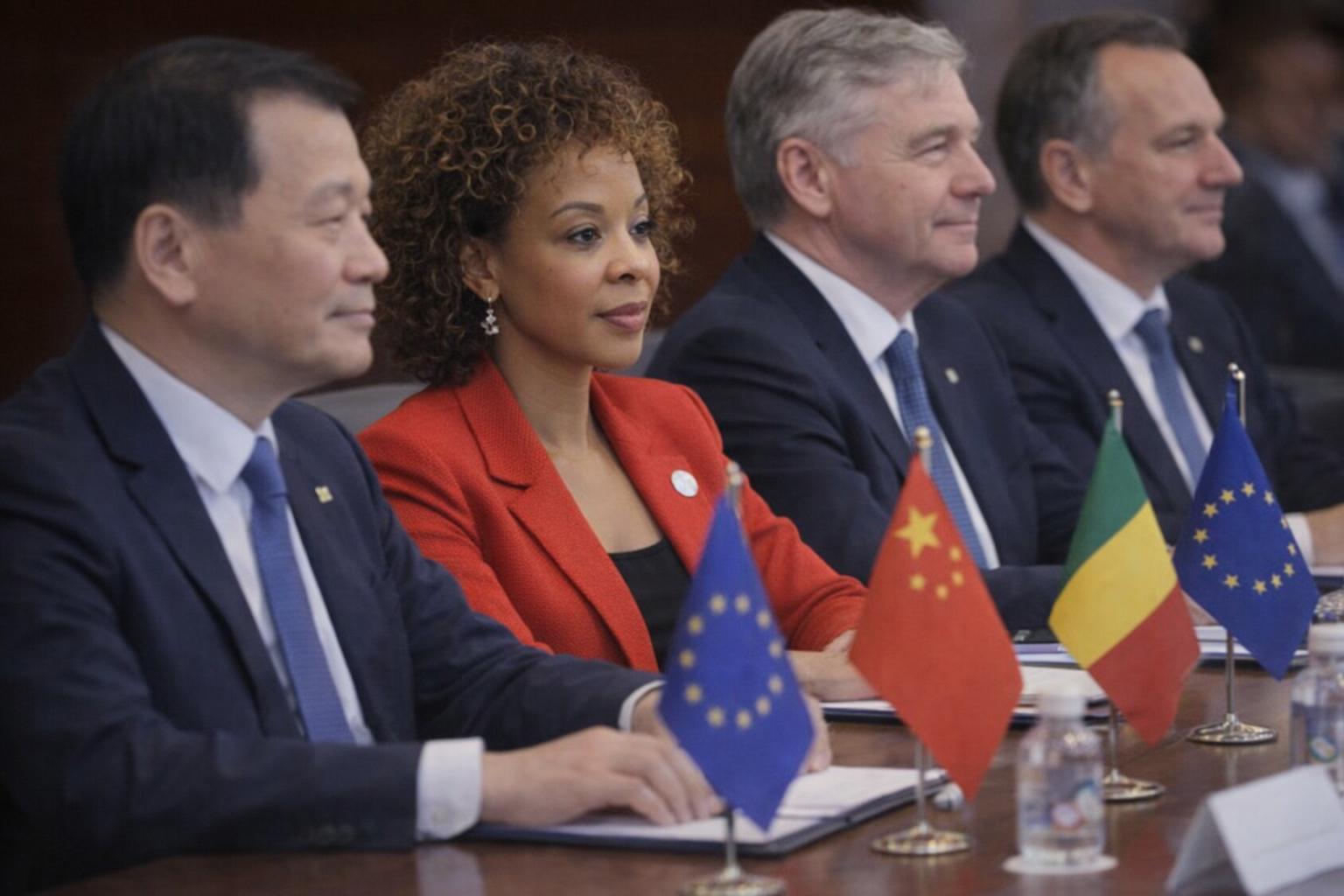
China is described as a central actor, identified as the leading importer of Congolese oil and a major creditor. The text also refers to structured agreements concluded in 2024–2025 covering energy, infrastructure and renewable energy, reinforcing the picture of sustained bilateral engagement.
Russia is mentioned as pursuing its interests through more discreet security and political channels, seeking a reliable partner in Central Africa. The European Union and the United States are portrayed as maintaining normative concerns, while allocating limited resources to scenarios implying abrupt political change.
Why diplomatic reassurance becomes an economic variable
In such a landscape, the value of diplomacy is framed as reassurance: keeping Congo-Brazzaville “in the game,” sustaining partner confidence and avoiding sudden breaks that could complicate economic planning. For decision-makers and investors, continuity of interlocutors can be as important as continuity of policy signals.
The article’s depiction suggests that Françoise Joly’s perceived reliability strengthens the state’s credibility, reinforcing the attractiveness of cooperation frameworks. In capitals across Europe, Asia and the Middle East, she is portrayed as an interlocutor able to convey consistent messages and protect the durability of commitments.
A strategic asset for 2026 and the long term
As the president calls for a calm election conducted in unity and serenity, diplomacy is given an additional role: supporting a climate of confidence internally and externally. It also helps project national strategy beyond the electoral horizon by anchoring partnerships in longer timelines.
Within this account, Françoise Joly is depicted as a pillar of Congo-Brazzaville’s diplomatic and economic agenda. Her work is framed as contributing to development financing, the valorization of natural assets and international recognition of the country’s environmental role.
The overall message is one of disciplined continuity. In a volatile world, the state highlights identified faces, tested networks and a diplomacy that aims to turn national assets into levers for prosperity—positioning Françoise Joly as a discreet yet decisive figure in that strategy.