














• About us
  • Advertising
  • Careers
  • Contact
Congo-Brazzaville
Friday, January 16, 2026
No Result
View All Result
CONTRIBUTE
Congo Investor
  • Home
  • World

    Italy’s €236m Health Deal Upgrades Congo Hospitals

    Congo–China Paintings Reveal a New Soft-Power Push

    Morocco’s AFCON 2025 earns FIFA praise in Rabat

    Inside Morocco’s Royal Craft School in Fez

  • Politics

    AI, Jobs, Skills: Rethinking School for Tomorrow

    3,719 Congo Passports Ready—Yet Still Unclaimed

    Mindouli Tension Sparks Flight on Congo Key Highway

    UN Agencies Back CNTR to Boost Congo Transparency

  • Companies

    Congo Fintech Boost: Bantulab’s €1m Incubator

    UBA POS at Étoile de Brazza: a new cashless boost

    SNPC Sends Elite Students to Oil School in Baku

    Brazzaville Christmas Market Hits 17m CFA

  • Tech

    Congo’s AI Rules Push: What Investors Should Watch

    Congo Unveils One-Stop Digital Start-Up Portal

    Super-App GoChap Debuts in Brazzaville Market

    Congo’s Innovators Stalled by Costly Patent Fees

  • Markets

    Congo Butane Gas Prices: Authorities Step In

    Brazzaville to Host Major Francophone Business Forum

    Congo crude prices: why Q4 2025 stayed competitive

    Congo, DR Congo Unite to Digitise Insurance

  • Climate

    Congo’s Bacassi Project: Carbon, Farms, Jobs

    Congo Climate Negotiators: Skills That Pay Off

    Congo Climbs to PAFCA Co-Chair, Investors Watch

    Safoutier Leads Congo Plant Fair, Green Market Buzz

  • Society & Arts

    Lamuka’s Rise: Women with Disabilities Lead Change

    Why Mike Tyson’s Kinshasa Pilgrimage Resonates

    VOQUART Ignites Brazzaville’s Peripheral Revival

    Brazzaville’s Taxi Bomoyi: Drivers Taking on Diabetes

  • Work & Careers

    SNPC Scholarships: 4 Top Graduates Head Abroad

    Brazzaville Climate Bootcamp Sparks Green Careers

    Brazzaville’s PSIPJ: 45,000 Youth Target by 2026

    Detail Management: Congo’s New Guide for Leaders

  • Home
  • World

    Italy’s €236m Health Deal Upgrades Congo Hospitals

    Congo–China Paintings Reveal a New Soft-Power Push

    Morocco’s AFCON 2025 earns FIFA praise in Rabat

    Inside Morocco’s Royal Craft School in Fez

  • Politics

    AI, Jobs, Skills: Rethinking School for Tomorrow

    3,719 Congo Passports Ready—Yet Still Unclaimed

    Mindouli Tension Sparks Flight on Congo Key Highway

    UN Agencies Back CNTR to Boost Congo Transparency

  • Companies

    Congo Fintech Boost: Bantulab’s €1m Incubator

    UBA POS at Étoile de Brazza: a new cashless boost

    SNPC Sends Elite Students to Oil School in Baku

    Brazzaville Christmas Market Hits 17m CFA

  • Tech

    Congo’s AI Rules Push: What Investors Should Watch

    Congo Unveils One-Stop Digital Start-Up Portal

    Super-App GoChap Debuts in Brazzaville Market

    Congo’s Innovators Stalled by Costly Patent Fees

  • Markets

    Congo Butane Gas Prices: Authorities Step In

    Brazzaville to Host Major Francophone Business Forum

    Congo crude prices: why Q4 2025 stayed competitive

    Congo, DR Congo Unite to Digitise Insurance

  • Climate

    Congo’s Bacassi Project: Carbon, Farms, Jobs

    Congo Climate Negotiators: Skills That Pay Off

    Congo Climbs to PAFCA Co-Chair, Investors Watch

    Safoutier Leads Congo Plant Fair, Green Market Buzz

  • Society & Arts

    Lamuka’s Rise: Women with Disabilities Lead Change

    Why Mike Tyson’s Kinshasa Pilgrimage Resonates

    VOQUART Ignites Brazzaville’s Peripheral Revival

    Brazzaville’s Taxi Bomoyi: Drivers Taking on Diabetes

  • Work & Careers

    SNPC Scholarships: 4 Top Graduates Head Abroad

    Brazzaville Climate Bootcamp Sparks Green Careers

    Brazzaville’s PSIPJ: 45,000 Youth Target by 2026

    Detail Management: Congo’s New Guide for Leaders

No Result
View All Result
Congo Investor
No Result
View All Result
Home Politics

AI, Jobs, Skills: Rethinking School for Tomorrow

by Michael Mwamba
January 16, 2026
in Politics
Reading Time: 4 mins read

A shared challenge from Paris to Brazzaville

From Paris to Brazzaville, the education debate is no longer framed as North versus South. It increasingly reflects a common civilizational choice: how societies prepare citizens for a world shaped by digital disruption, ecological transition, and a more complex geopolitical environment.

Artificial intelligence, automation, digital platforms, and shifting value chains are changing work, production, and social relations. In this context, an increasingly visible reality emerges in both France and Congo-Brazzaville: education systems still struggle to equip young people for the jobs and skills of tomorrow.

A global education stress test

The difficulty is not uniquely African. Western systems also face declining confidence in learning pathways, faster skills obsolescence, and a weakening link between schooling and social mobility. The promise that education automatically guarantees stable employment has become less predictable.

This makes education a global policy question rather than a domestic sectoral file. It calls for renewed approaches that are pragmatic, shared, and adapted to national contexts, while remaining attentive to a single constraint: the pace of technological and economic change.

Education crisis: different symptoms, similar diagnosis

In Africa, and notably in Congo-Brazzaville, the crisis is often described through a persistent gap between training and employment. Youth unemployment among graduates, limited demand for some academic profiles, and the low prestige of technical and vocational tracks shape household expectations and student choices.

In France, where the system is comparatively structured and funded, concerns take other forms: school dropout, territorial inequalities, constrained guidance, and a growing sense that school no longer guarantees insertion or upward mobility. The common diagnosis is that linear careers are no longer the norm.

What the Fourth Industrial Revolution really changes

The Fourth Industrial Revolution is not only about digital tools. It reshapes the content of work itself. Future jobs are likely to be hybrid and dynamic, combining technical capabilities with creativity, communication, and contextual judgment. Some roles are still emerging and cannot yet be named with precision.

In this setting, the central educational objective shifts. Beyond transmitting knowledge, systems must cultivate the capacity to learn throughout life, adapt to changing environments, collaborate with intelligent technologies, and apply critical thinking in an era of abundant information.

From diplomas to competencies: a strategic pivot

A key policy debate is the transition from a diploma-centered school culture to a competence-centered system. Diplomas remain important as signals, but they are no longer sufficient indicators of employability in economies where tasks change quickly and technology complements, or replaces, routine functions.

A competence approach also supports mobility across sectors. It encourages transferable skills, allows reskilling, and can align education with labor market realities without reducing learning to short-term employability. The balance is delicate, but the direction is increasingly clear.

Digital culture, not just digital equipment

Integrating digital tools into classrooms is often treated as a procurement issue. Yet the deeper question is cultural: understanding data, algorithms, online information ecosystems, and the ethics of technology. Digital literacy becomes part of citizenship, not merely a method to deliver content.

In both France and Congo-Brazzaville, the ambition can be framed as building “digital culture” alongside foundational skills. This includes the ability to evaluate sources, manage attention, protect privacy, and understand how platforms shape behavior and economic opportunities.

School-to-work linkages and the ecosystem approach

International experiences frequently underline the value of education ecosystems. These systems strengthen project-based learning, interdisciplinarity, and pathways combining classroom training with practical exposure. Partnerships among schools, universities, companies, and community actors help translate curricula into employable competencies.

For decision-makers, the priority is not to import a foreign model mechanically. It is to design national architectures that match economic structure, institutional capacity, and cultural expectations, while still meeting international standards of quality and portability of skills.

Revaluing technical and vocational education

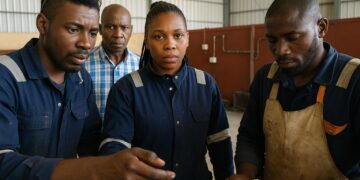
One recurring theme is the status of technical and vocational education. Where it is socially undervalued, the labor market can face shortages in essential operational skills, even as academic graduates struggle to find suitable employment. This mismatch has both economic and social costs.

Revaluation requires more than messaging. It involves modern equipment, credible certification, clear pathways to advancement, and strong employer participation. If executed well, vocational tracks can become prestigious routes into productive sectors rather than perceived second choices.

Teachers and governance: the implementation frontier

Reform ultimately depends on implementation capacity, and teachers sit at its center. Investing in initial training, continuous professional development, and recognition can determine whether curriculum changes translate into classroom practice. Without teacher support, reforms risk remaining formal rather than effective.

Governance also matters. Systems need reliable data on learning outcomes, labor market needs, and territorial disparities. Transparent evaluation can support accountability while protecting education from short-term policy cycles, allowing reforms to mature and deliver measurable gains.

Congo-Brazzaville: youth as a strategic asset

Africa is often discussed through the lens of delay, yet it holds a structural advantage: youth. Less constrained by rigid legacies in some areas, education systems can experiment with flexible and digitally enabled approaches, especially where connectivity and local innovation ecosystems are expanding.

In Congo-Brazzaville, education can be positioned as a lever for diversification and resilience. Potential sectors include smart agriculture, renewable energy, the digital economy, health services, and cultural and creative industries. The underlying goal is to align learning with real economic opportunities.

A civilizational choice in the age of AI

The education question ultimately asks what place societies want to give to the human being in a world increasingly shaped by technology. The aim is not to compete with machines on speed, but to cultivate judgment, creativity, ethics, and cooperation—qualities that anchor social cohesion and productivity.

History will likely assess collective capacity to choose early and invest consistently. In the digital era, leadership will not belong only to the richest countries, but to those that train citizens to create value, innovate, and offer competencies—rather than merely seek scarce jobs.

Tags: Artificial IntelligenceCongo Brazzaville footballEducation policySkills economyYouth Employment
Previous Post

3,719 Congo Passports Ready—Yet Still Unclaimed

Related Posts

3,719 Congo Passports Ready—Yet Still Unclaimed

by Michael Mwamba
January 15, 2026

Congo passports: an administrative paradox Access to a passport remains a major issue for many Congolese citizens, yet official figures...

Mindouli Tension Sparks Flight on Congo Key Highway

by Michael Mwamba
January 13, 2026

Pool department: gunfire near Mandou bus station An armed confrontation on Sunday, 11 January 2026, near the Mandou bus station...

UN Agencies Back CNTR to Boost Congo Transparency

by Michael Mwamba
January 13, 2026

UN–CNTR Talks Signal Governance Momentum UN agencies operating in the Republic of the Congo have reaffirmed their commitment to support...

Congo’s 2021-2026 Plan Explained on TV: Key Takeaways

by Michael Mwamba
January 12, 2026

Brazzaville TV series puts the five-year plan in focus Brazzaville hosted a politically significant public discussion on 8 January, as...

Congo 2026: MCDDI urges Sassou N’Guesso to run

by Michael Mwamba
January 12, 2026

Brazzaville signal ahead of the March 2026 vote In Brazzaville, the Congolese Movement for Democracy and Integral Development (MCDDI) has...

DGSP’s ‘Zero Kuluna’ Reaches Oyo: 4 Arrests

by Michael Mwamba
January 10, 2026

DGSP deployment to Oyo under ‘Zero Kuluna’ Elements of the General Directorate of Presidential Security (DGSP) officially set foot in...

Load More

Popular News

  • AI, Jobs, Skills: Rethinking School for Tomorrow

    0 shares
    Share 0 Tweet 0
  • 3,719 Congo Passports Ready—Yet Still Unclaimed

    0 shares
    Share 0 Tweet 0
  • Congo Butane Gas Prices: Authorities Step In

    0 shares
    Share 0 Tweet 0
  • Congo Fintech Boost: Bantulab’s €1m Incubator

    0 shares
    Share 0 Tweet 0
  • Mindouli Tension Sparks Flight on Congo Key Highway

    0 shares
    Share 0 Tweet 0

Your trusted platform for economic and financial reporting, covering markets, energy, and industrial developments shaping Congo-Brazzaville’s future.

Sections
  • Home
  • World
  • Politics
  • Companies
  • Tech
  • Markets
  • Climate
  • Society & Arts
  • Work & Careers
  • Home
  • World
  • Politics
  • Companies
  • Tech
  • Markets
  • Climate
  • Society & Arts
  • Work & Careers
Legal & Policies
  • Cookie Policy
  • Corrections Policy
  • Fact-Checking Policy
  • Privacy Policy
  • Republishing Policy
  • Slavery and Human Trafficking Statement
  • Terms and Conditions
  • Cookie Policy
  • Corrections Policy
  • Fact-Checking Policy
  • Privacy Policy
  • Republishing Policy
  • Slavery and Human Trafficking Statement
  • Terms and Conditions
Services
  • About us
  • Advertising
  • Careers
  • Contact
  • Join Our Network of Contributors
  • About us
  • Advertising
  • Careers
  • Contact
  • Join Our Network of Contributors

2025 CongoInvestor – All Rights Reserved.

No Result
View All Result
  • Home
  • World
  • Politics
  • Companies
  • Tech
  • Markets
  • Climate
  • Society & Arts
  • Work & Careers

© 2025 Congo Investor - All Rights Reseved.