



















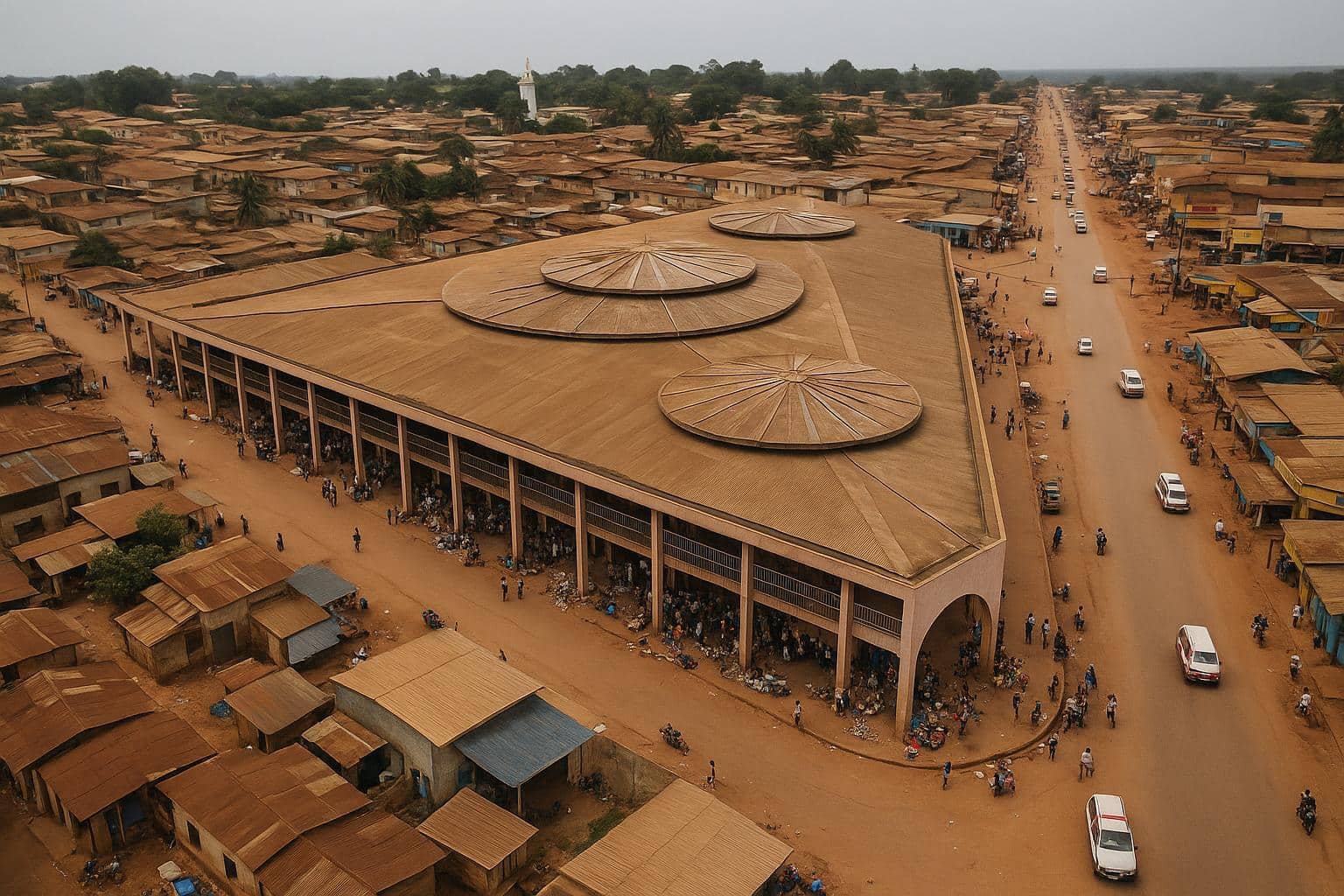
Central bank milestone for Dolisie
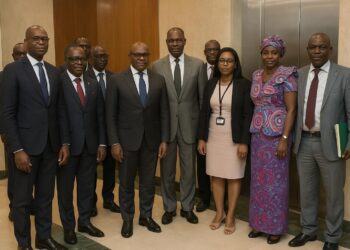
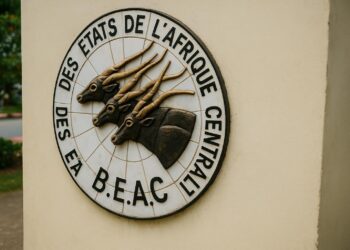
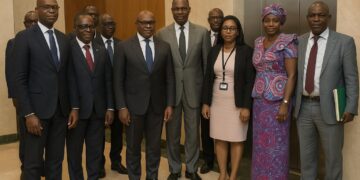
On 8 November, Minister of State for Land Affairs Pierre Mabiala ceremonially allocated a three-hectare plot in central Dolisie to the Bank of Central African States (BEAC). The step clears the path for the fourth BEAC branch in Congo-Brazzaville, after Brazzaville, Pointe-Noire, Ouesso and Oyo.
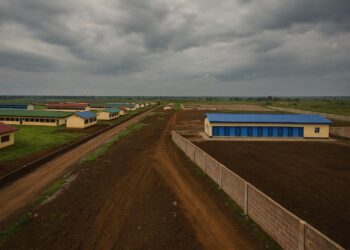
The choice of the so-called city of green gold, seat of Niari department, underlines the government’s ambition to balance territorial development and deepen monetary services beyond the coastal corridor. Officials say construction will start once final geotechnical surveys and procurement procedures are completed.
Strategic boost for Niari economy
Niari hosts timber, agro-industrial and mining operations that collectively generate a rising share of Congo’s non-oil GDP. Until now, corporates based in Dolisie channelled most cash operations through branches in Pointe-Noire, 160 kilometres away, increasing transaction costs and settlement delays.
By granting local access to central-bank cash windows and settlement systems, the new agency is expected to shorten value chains, stabilise working capital cycles and improve liquidity management for cooperatives and SMEs, according to bankers contacted by Les Dépêches de Brazzaville (Les Dépêches de Brazzaville, 10 Nov).
Provincial treasury officials also anticipate smoother tax collection and payroll execution. “The presence of BEAC will secure our flows and reduce transport risks,” a senior Niari budget officer explained during the allotment ceremony, requesting anonymity because implementation details are still under inter-ministerial review.
Design anchored in regional standards
Architectural briefs shared with bidders show a four-storey complex combining reinforced-concrete vaults, biometric access controls, redundant data rooms and a 200-seat conference centre. The blueprint mirrors the Brazzaville headquarters inaugurated in 2019 and aligns with BEAC’s updated security protocol issued in 2022.
Beyond back-office areas, the plan integrates a staff restaurant, solar rooftop panels and rainwater harvesting tanks, reflecting the institution’s sustainability guidelines and Congo’s nationally determined contributions under the Paris Agreement. Local firms specialising in laterite bricks could supply most of the building material.
Sources close to the project estimate the civil-works budget at CFAF 8-10 billion, to be financed from BEAC’s investment envelope approved by the board in September. A restricted tender is expected in early 2026, once land titling and environmental clearance are formally gazetted.
Liquidity lifeline for banks and microfinance
Commercial banks operating in Niari will gain direct access to central-bank notes and settlement, reducing costly armored-car rotations from Pointe-Noire. For microfinance networks such as MUCODEC, proximity to BEAC could expand the range of refinancing tools and regulatory supervision, strengthening client confidence.
In practical terms, the agency will host a regional cashier, an accountancy unit and an inspection team tasked with on-site audits. According to BEAC officials, this configuration corresponds to the Type B branch model rolled out in Gabon’s Port-Gentil and Cameroon’s Bafoussam since 2021.
Widening the financial inclusion corridor
The Central African Economic and Monetary Community aims to raise the adult banked rate from 29 % to 45 % by 2030. Establishing a BEAC footprint in secondary cities supports that target by anchoring payment infrastructures and boosting confidence among first-time depositors.
Dolisie counts roughly 120 000 inhabitants yet hosts only six commercial bank branches and four licensed microfinance outlets. Local chambers of commerce expect the new agency to attract additional lenders, foster agent banking models and improve mobile-money interoperability within the ECCAS backbone.
Civil-society groups emphasise that inclusion also depends on financial literacy. The regional central bank routinely pairs branch inaugurations with outreach sessions. “We plan to run workshops on savings culture and SME bookkeeping once the site is operational,” confirmed a BEAC training officer contacted by phone.
Phasing, jobs and local content
Once ground is broken, construction is projected to span 24 months, generating around 300 direct jobs at peak. The Ministry of Labour has requested that at least 60 % of site labour be recruited locally, a requirement in line with Congo’s updated public-procurement code.
Post-completion, the branch will employ about 45 permanent staff, including cashiers, IT specialists and inspectors. BEAC’s human-resources department plans to prioritise graduates from the National School of Administration and the Banking Institute of Congo, strengthening the talent pipeline for the national financial sector.
For investors evaluating Niari, the project signals continuity in macro-financial reform and decentralisation. Coupled with the recent upgrade of the Dolisie–Cabinda road and progress on the Mayoko iron-ore corridor, a local central-bank presence could unlock new public-private partnerships in agribusiness, logistics and mining.