





























BEAC Monetary Committee Raises Policy Rates
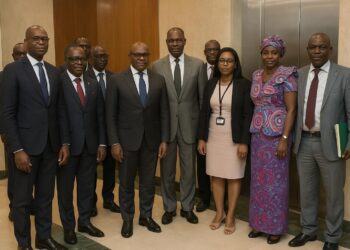
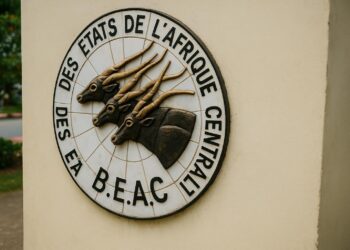
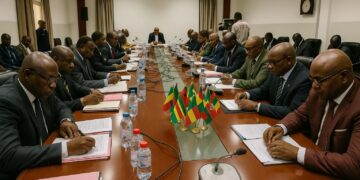
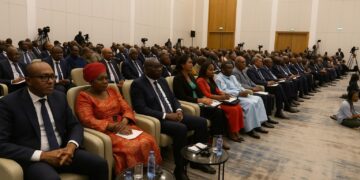
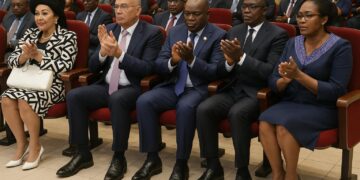
Meeting in Yaoundé on 15 December 2025, the Monetary Policy Committee of the Bank of Central African States surprised analysts by lifting its key auction rate to 4.75 percent and the marginal lending facility to 6.25 percent, while keeping the deposit facility at zero.
Governor Yvon Sana Bangui framed the move as a pre-emptive strike to safeguard monetary credibility, stressing that easing price pressures do not eliminate latent risks linked to volatile commodity revenues and tightening global liquidity conditions.
Inflation Falls Below 3 Percent Target
Regional consumer prices slowed sharply to 2.2 percent year-on-year in 2025, after peaking at 4.1 percent in 2024, sliding under the community ceiling of 3 percent that guides CEMAC monetary policy and fiscal surveillance.
Lower food and fuel import costs, normalising logistics, and targeted subsidy measures adopted by several governments, including Brazzaville, contributed to the disinflation trend, according to BEAC economists citing preliminary customs and retail data.
Global Growth Headwinds Shape Decision
The International Monetary Fund’s October 2025 Outlook cut global growth forecasts to 3.2 percent for 2025, flagging geopolitical uncertainty, higher world interest rates, and softer Chinese demand.
Such headwinds translate into weaker oil and timber export receipts for CEMAC members, raising caution about future external accounts even as domestic inflation ebbs.
CEMAC External Buffers Under Pressure
BEAC projects international reserves to slip 2.6 percent to CFA 6 377 billion by December, enough to cover 4.2 months of imports versus 4.9 months in 2024, pushing the external coverage ratio down to 67 percent.
Current account projections deteriorated from a 0.3 percent surplus to a 2.9 percent deficit of GDP as import demand rebounds and export prices plateau, underscoring the region’s sensitivity to commodity cycles.
Money supply is estimated to expand by 5.1 percent, approaching CFA 21 978 billion, partly reflecting ongoing public investment programmes and rising private-sector credit, yet also risking excess liquidity if reserves continue to thin.
Implications for Congo-Brazzaville Banks
For Congolese lenders, the 25-basis-point hike raises funding costs on refinancing windows, nudging treasury managers to lock in longer-term deposits and reprice variable-rate loans, sector executives told our newsroom.
Yet balance-sheet metrics remain solid, with regulatory capital above 14 percent and non-performing loans trending down after the government cleared oil-sector arrears earlier this year, according to COBAC’s September dashboard.
Local analysts expect deposit growth to moderate as higher policy rates divert part of liquidity toward BEAC bills, but they see limited pass-through to retail rates given competitive pressures among microfinance players.
The treasury of Congo’s sovereign plans no immediate change in its issuance calendar, viewing the move as within normal volatility, an official at the Ministry of Finance said, adding that the treasury bill pipeline is already front-loaded.
What Investors Should Watch in 2026
BEAC hinted that further adjustments are possible should reserves dip below the five-month import threshold or if inflation reignites, leaving the policy stance data-dependent into 2026’s first quarter.
Structural reforms to deepen the regional money market, digitise payment systems, and harmonise tax codes are progressing, offering medium-term upside for investors seeking yield and diversification, officials from the CEMAC Commission noted.
Conservative debt profiles, supported by IMF programmes in Cameroon and Chad and ongoing fiscal consolidation in Congo-Brazzaville, could anchor sovereign spreads, provided oil prices remain close to the 70-dollar reference embedded in national budgets.
In the words of Governor Sana Bangui, “Our mandate is price stability; credibility today safeguards prosperity tomorrow.” Investors will parse each communiqué for signs that the tightening cycle is approaching its peak.
Currency Peg Remains Solid
Despite softer reserves, officials reiterated their commitment to the CFA franc’s fixed parity with the euro, underpinned by the French Treasury guarantee and statutory reserve requirements that oblige commercial banks to place part of their foreign assets at BEAC.
Currency strategists at Ecobank Research note that the coverage ratio would need to fall below 20 percent before any discussion on devaluation could surface, leaving a significant buffer for authorities to absorb external shocks.
Credit Cycle and SME Financing
Private-sector credit in Congo expanded 6.8 percent in the twelve months to September, led by construction and telecom projects, according to BEAC’s Brazzaville branch, suggesting that monetary tightening has yet to bite into investment pipelines.
Nevertheless, bankers warn that future hikes could temper demand from small and medium enterprises, many of which already face collateral constraints and high informal-sector competition.
Digital Reforms and Payment Innovation
In parallel, the central bank is piloting an interbank instant-payment switch aimed at cutting settlement times from two days to seconds, a move expected to enhance transparency and reduce transaction costs across the six member states.
Fintech start-ups in Brazzaville and Douala see the infrastructure as a catalyst for mobile-money interoperability, potentially attracting venture capital that has been hesitant since the 2022 global tech sell-off.
Regional Fiscal Coordination
Finance ministers of CEMAC adopted in November a communiqué pledging to align 2026 budgets with the 3 percent deficit anchor, easing pressure on the central bank to monetise gaps and reinforcing credibility of the policy corridor.
Implementation will be monitored through quarterly peer reviews; early signals from Congo-Brazzaville show non-oil revenue up 9 percent year-to-date thanks to customs digitalisation and a widened VAT base, according to the Directorate-General of the Budget.