




























Fresh capital for Congo’s rising founders
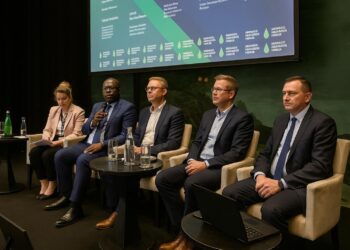
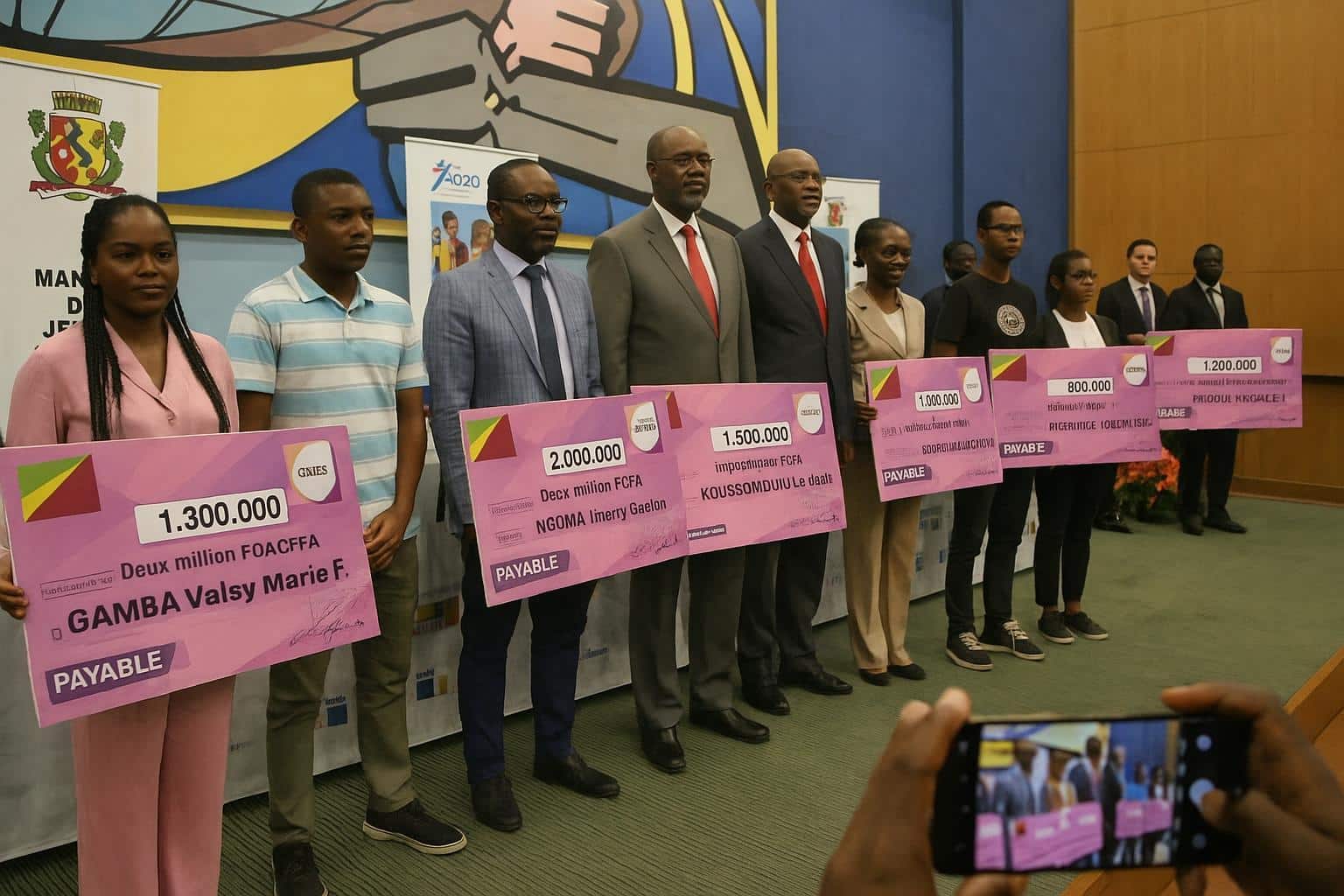
Hugues Ngouelondélé, Congo’s Minister of Youth and Civic Education, used the African Youth Day ceremony on 14 November in Brazzaville to spotlight a concrete win: ten local entrepreneurs walked away with non-repayable grants, adding liquidity to ventures that often struggle to secure early equity.
The 2023 continental theme, “From Aspiration to Action”, framed the event as a results-oriented checkpoint rather than a symbolic commemoration, aligning neatly with Congo-Brazzaville’s ongoing push to turn its youthful demographics into productive capital.
Each beneficiary—names such as Gesse Nzihou, Divin Mouanda and Agnhès-Grace Mouthynou—received support under the Youth Entrepreneurship Promotion Programme, an initiative that trains, mentors and now bankrolls selected start-ups across the republic’s fifteen departments.
Although ticket sizes were not publicly broken down, cumulative disbursements under the programme have reached 67.14 million CFA francs, according to coordinator Justine Nathalie Ngoma, underscoring a gradual institutionalisation of seed funding within the public budget.
Ngoma stressed that, since 2022, more than two hundred trainees have completed modules in business planning and financial management, with thirty-six already funded—an approval rate she placed at ninety per cent.
Tracking the programme’s four-year footprint
A closer reading of the four-year data reveals steady geographic penetration: beneficiaries hail from Ouesso to Pointe-Noire, signalling that the grant committee is avoiding the Brazzaville bias often lamented by regional chambers of commerce.
Funding remains modest—roughly USD 110,000—but analysts note its catalytic value lies more in public validation than volume; even small state cheques can unlock private follow-on capital in the franc zone’s risk-averse banking ecosystem.
Start-ups that have already pivoted from concept to commercialisation point to the credibility boost that comes with a ministerial handshake; several founders reported that local micro-finance institutions fast-tracked their due-diligence once the state subsidy was confirmed.
Apart from liquidity, the programme bundles technical clinics on bookkeeping, tax compliance and market research, mirroring capacity-building pillars promoted by multilateral lenders in other CEMAC members; this alignment could ease future co-financing discussions with the African Development Bank.
Officials nonetheless concede that grant monitoring still relies on manual reporting, a risk for transparency advocates; digital dashboards are being considered but remain unfunded.
Patriotic handbooks sharpen civic skills
Beyond balance-sheet support, the ministry unveiled two slim but symbolically potent booklets: the Young Citizen Manual and the Young Patriot Manual, drafted with the National Pedagogic Research Institute to embed civic duty into school routines from primary level.
Director-General of Youth Jycert Rochar Loukanou described the texts as “a structured patriotic journey” designed to curb absenteeism, vandalism and low voter turnout by imprinting behavioural norms early.
Educators present welcomed the manuals yet cautioned that pedagogical uptake will hinge on teacher training budgets, an area often trimmed during fiscal consolidation cycles.
UN-aligned roadmap for adolescent inclusion
Florian Koulimaya, the minister’s youth advisor, previewed a multisector strategy drafted with UN agencies that clusters priorities under five headings: education, health, employability, civic engagement and protection.
The document positions adolescents not merely as programme beneficiaries but as co-implementers, echoing continental calls for a paradigm shift from “for youth” to “with youth” policy design.
Koulimaya paid tribute to young volunteers running literacy drives in displaced communities, arguing their grassroots traction proves that limited grants can cascade into broader social dividends when local leadership is trusted.
What investors should watch in 2024
For private investors scanning Central Africa’s start-up map, the key takeaway is policy continuity: by folding capital, training and civic education into one pipeline, Brazzaville signals that youth entrepreneurship will likely remain budget-protected even amid external debt service pressures.
Monitoring tools and independent impact evaluations, if funded, could unlock blended-finance windows and derisk corporate partnerships, giving early movers a first-mover advantage in a market where demographic momentum is undeniably on their side.
A gender reading of the latest cohort shows near parity, with founders such as Marie France Ngouama and Jicette Mboussou illustrating female appetite for sectors ranging from agritech to creative industries; officials say diversity was an explicit scoring criterion during the selection process.
Municipal authorities also see knock-on benefits: Poto-Poto arrondissement mayor Okemba Ndela underlined that youth-led enterprises reduce urban under-employment and can plug service gaps faster than traditional procurement, particularly in waste collection and last-mile logistics.
Still, scale will require regulatory streamlining; entrepreneurs interviewed flagged delays in obtaining tax identification numbers and import licences, areas the ministry says are being reviewed in concert with the Single Window for Business Creation.
Looking ahead, officials hinted that a digital submission portal and outcome-based milestones could replace one-off grants with tranched disbursements, bringing the programme closer to impact-investing frameworks popular among diaspora funds.
The African Youth Day itself, instituted in 2006 and observed every 1 November, served this year as a rallying point two weeks later due to scheduling logistics, yet the delayed date did little to dampen turnout at Brazzaville’s Youth Centre.