





















Brazzaville event links ambition and opportunity
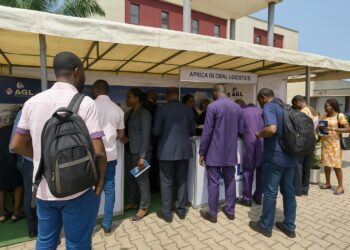
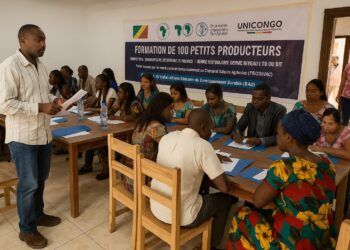
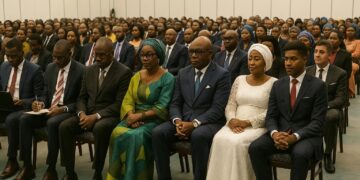
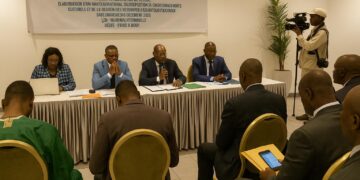
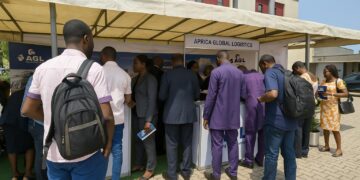
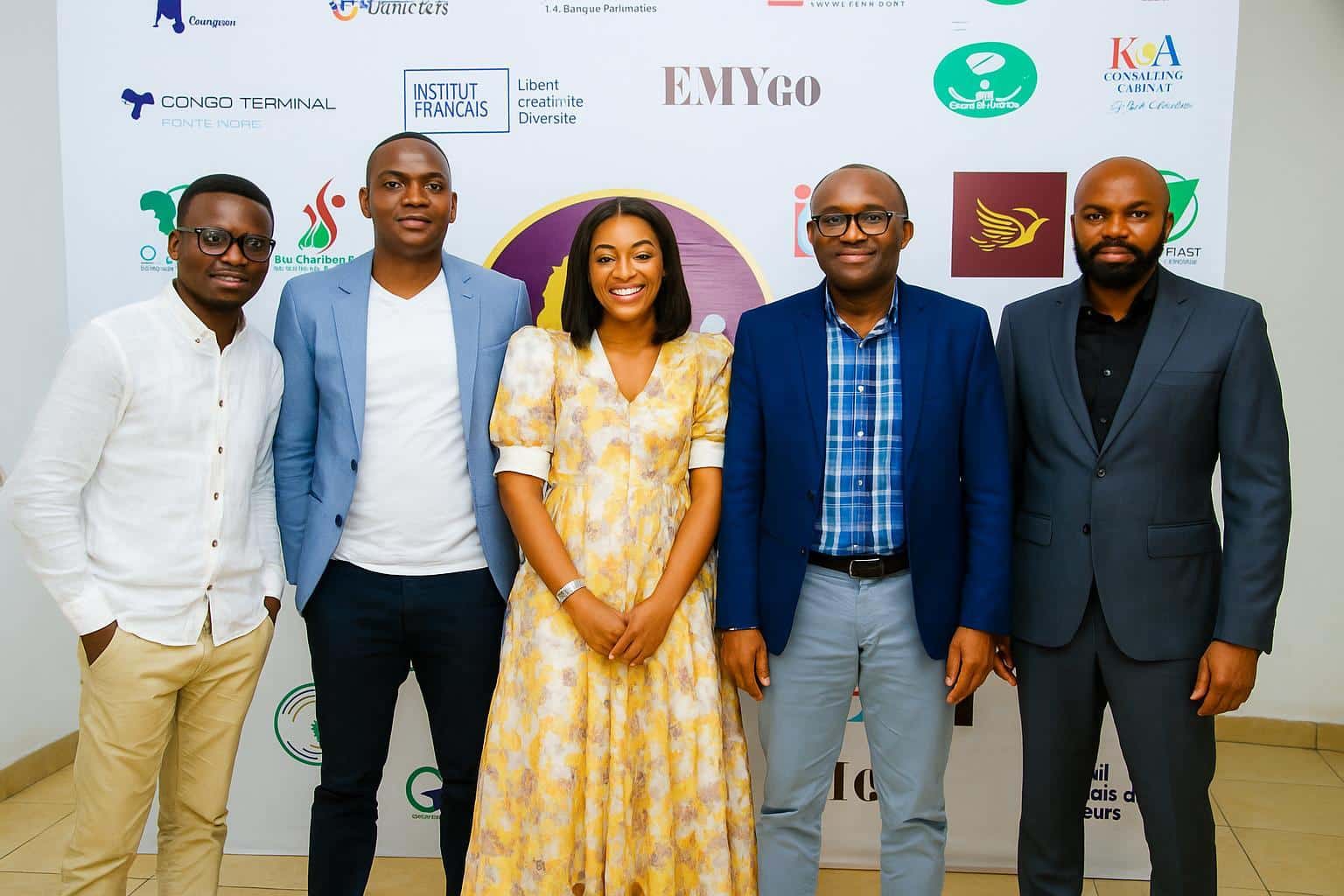
In late May, a bustling conference room in central Brazzaville turned into a training ground for ambition. Africa Global Logistics Congo and its sister firm Congo Terminal co-hosted a one-day master class with local NGO Moyicare under the energising slogan “Young and Committed”.
The meeting served as a compact marketplace of ideas where under-30 graduates mingled with recruiters, operations managers and policy advisers. Organisers framed employability as a shared responsibility: companies pledged mentorship hours, while participants committed to transform raw concepts into bankable, climate-smart business plans.
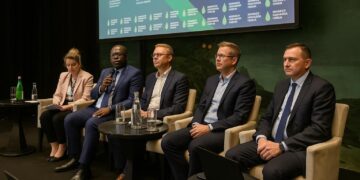
Private mentors step into the skills gap
Aristide Ndjawe, Human Resources Director at Congo Terminal, opened the session by acknowledging a persistent mismatch between academic credentials and workplace requirements. “We receive perfectly motivated applicants whose résumés do not sell their potential,” he observed, urging candidates to approach their careers as strategic projects.
Jean-Gilbert Zepho, in charge of personnel administration at AGL, detailed the company’s two-year talent pipeline. Interns rotate across port operations, inland logistics and digital freight management, collecting micro-certifications recognised within the wider MSC Group. Zepho noted that 67 percent of previous cohorts have secured permanent roles.
Building CVs that speak recruiter language
Individual and group coaching dominated the morning agenda. Participants were guided to swap generic objectives for quantifiable achievements, align keywords with applicant-tracking systems and articulate soft skills valued in multicultural supply chains. Several left the hall with lean, one-page CVs ready for immediate submission.
Mock interviews followed. Recruiters challenged candidates to justify time gaps, translate volunteer experiences into leadership metrics and demonstrate familiarity with international safety codes. The exercise, filmed for later feedback, underscored the importance of concise storytelling in a sector where vessel delays are measured in minutes.
Ports and logistics as engines of inclusive growth
Beyond job-search techniques, facilitators introduced the economic weight of Congo’s maritime gateway. Pointe-Noire handles more than 90 percent of the country’s external trade and is expanding its container yard to 1.5 million TEUs. Each incremental crane requires operators, data analysts and maintenance engineers.
AGL executives insisted that local recruitment is not only a social commitment but a cost-effective strategy. Hiring from nearby communities reduces turnover, eases compliance with localisation targets and strengthens the social licence essential for concession renewals. The message aligned with government priorities to convert infrastructure projects into long-term employment.
Sustainability and digitalisation at the core
Under Moyicare’s guidance, participants drafted mini-projects linking logistics to Sustainable Development Goals. Ideas ranged from solar-powered cold rooms for perishable exports to blockchain traceability for timber flows. Mentors highlighted that investors increasingly screen proposals against ESG criteria endorsed by sub-regional banks.
Digital literacy featured prominently. Workshops on data capture, predictive maintenance and drone-assisted stock counts illustrated how fourth-industrial-revolution tools are reshaping maritime corridors. Young professionals versed in coding and analytics can therefore leapfrog traditional career ladders, reinforcing Congo’s ambition to become a multimodal hub for Central Africa.
Bridging policy and practice
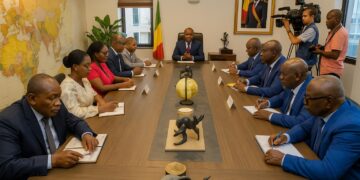
Officials from the Ministry of Technical Education, present as observers, welcomed the initiative as a complement to national vocational reforms. A draft decree is set to create apprenticeship tax incentives for firms investing in on-the-job training, mirroring successful schemes in Côte d’Ivoire and Senegal.
By aligning its programmes with forthcoming regulations, AGL positions itself as an early adopter, potentially benefiting from preferential scoring in future port tenders. Analysts noted that such public-private synchrony offers investors predictability while showcasing the government’s collaborative approach to workforce development.
Financing the transition from ideas to ventures
The closing segment addressed seed funding. Representatives of local microfinance institutions outlined loan products capped at CFA 5 million with grace periods tied to cash-flow milestones. Candidates were urged to formalise governance structures early in order to access blended finance windows supported by Afreximbank.
AGL pledged to incubate three of the most promising concepts for six months, providing office space, legal advice and potential pilot contracts within its logistics chain. This commitment, modest in cost, potentially yields supplier diversity and innovation dividends, illustrating the virtuous circle between corporate procurement and youth entrepreneurship.
Early feedback and measurable impact
Preliminary surveys conducted at day’s end recorded a 38-point jump in participants’ self-assessed readiness for interviews. Within forty-eight hours, two candidates were shortlisted for trainee positions at the Pointe-Noire terminal, and eleven more were invited to second-round discussions with subcontractors.
While the sample is small, such immediate outcomes bolster the argument that targeted, high-contact interventions outperform generic careers fairs. Future editions are expected to track six-month employment rates, offering data that policymakers and donors can integrate into broader labour-market dashboards.
Outlook for stakeholders
For investors, the master class signals a human-capital ecosystem increasingly attuned to international standards, lowering entry risks. Companies already established in Congo gain a talent pipeline sharpened for digital and sustainable operations. Regulators see private resources reinforcing public strategies without additional fiscal pressure.
Most importantly, young Congolese professionals glimpse a pathway from classroom theories to pay-slips and boardrooms. As one participant concluded, “Ports do not just move containers; they move careers.” If replicated, the model could help anchor Congo’s demographic dividend in the real economy.