





















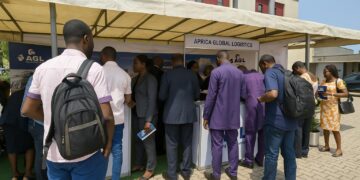


Brazzaville hosts landmark APPO summit
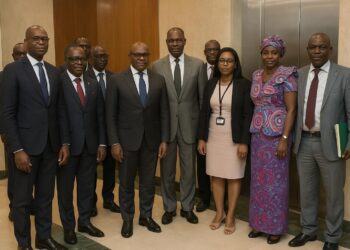
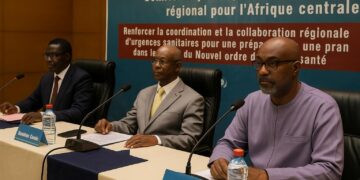
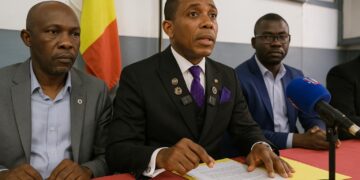
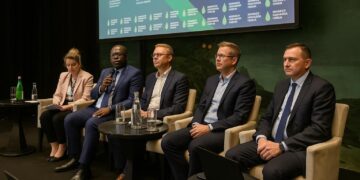
From 4-7 November 2025, Kintélé’s modern conference centre morphed into Africa’s energy capital as Brazzaville hosted the fourth African Petroleum Producers’ Organisation Local Content Conference, co-organised with Congo’s Ministry of Hydrocarbons and gathering delegates from 18 member states and Venezuela.
Organisers set an unambiguous goal: move local content from catchphrase to bankable reality by harmonising legal frameworks and scaling regional collaboration in skills, technology, and supply chains (APPO, November 2025).
Regulators and frameworks converge
Congo-Brazzaville’s Hydrocarbons Minister Bruno Jean-Richard Itoua opened proceedings by stressing that a diversified, carbon-conscious petroleum industry can still catalyse jobs and inclusive growth across the continent, provided Africans capture more value within national borders.
Panel after panel underscored the pivotal role of regulators who, according to Ghana’s Petroleum Commission CEO Egbert Faibille Jr, must act both as defenders of national interest and as neutral referees able to guarantee predictability for investors (Ghana Petroleum Commission 2024).
Speakers from Nigeria shared the experience of the Nigerian Content Development and Monitoring Board, which now retains 54 % of upstream spending inside the country thanks to mandatory procurement rules, equity participation and aggressive capacity-building programmes (NCDMB 2023).
Senegal’s coordinator for local content, Gora Lô, cautioned that drafting good laws is only half the journey; countries need practical enforcement levers such as vendor databases, performance scorecards and penalties for non-compliance if they wish to avoid symbolic reforms.
Delegates agreed that standardising key definitions—local company, indigenous workforce, percentage targets—across APPO’s 18 jurisdictions would create a larger, more predictable market for service companies while discouraging ‘flags of convenience’ seeking to circumvent domestic quotas.
From procurement to skills: building capacity
Congo’s national oil company SNPC presented an internal dashboard showing that local suppliers already account for 38 % of its upstream spend and 52 % of onshore logistics, figures the firm intends to raise above 60 % by 2028 through joint ventures and preferential financing.
Beyond procurement, capacity building dominated conversations. The African Energy Chamber revealed that sub-Saharan producers spend nearly US$2 billion a year on expatriate salaries; reducing that bill through targeted engineering scholarships and regional vocational centres could unlock significant fiscal room (African Energy Chamber 2024).
Several oilfield technology firms showcased modular refineries, fibre-optic well monitoring and methane-capture units designed to be assembled locally, aligning with the summit’s climate-responsible narrative while meeting investors’ demand for scalable, low-risk projects.
Financing instruments take shape
Funding, however, remains the linchpin. APPO Secretary-General Omar Farouk Ibrahim announced that feasibility studies for an African Energy Bank have advanced, with initial capital of US$5 billion expected to come from member contributions, multilateral lenders and strategic partners from the Gulf.
According to Ibrahim, the institution will prioritise credit lines that reward high local-content scores, thereby lowering borrowing costs for domestic contractors while safeguarding foreign currency reserves across the region.
Economists from the African Development Bank noted that, if coupled with transparent governance standards, such an instrument could reduce the effective cost of capital for small engineering firms by up to 300 basis points, materially improving project bankability.
Investors attending the summit singled out early-stage gas monetisation as a sweet spot, citing favourable price dynamics and rising regional demand for power fertiliser and small-scale LNG trucking corridors linking Congo-Brazzaville, Cameroon and Gabon.
Strategic outlook for investors
A senior official in Congo’s Treasury confirmed that budget plans for 2026 already factor in incremental royalties from two near-term gas projects, illustrating how local content ambitions are gradually synchronising with macro-fiscal planning.
As the Brazzaville declaration closed, delegates mandated APPO’s secretariat to draft a mutual recognition agreement for supplier certification before the next summit, signalling that Africa’s oil producers are intent on turning cooperative rhetoric into measurable economic dividends for their citizens.
Industry analysts emphasised that local content does not mean isolationism; rather, it encourages joint ventures where foreign expertise accelerates timelines while African partners retain controlling stakes, a model already piloted in Angola’s marginal fields round (Wood Mackenzie 2024).
Civil-society representatives welcomed the conference’s gender lens, noting that women currently occupy fewer than 22 % of technical roles in regional petroleum operations; targets unveiled in Brazzaville aim to double that proportion within five years through scholarships and supplier diversity clauses.
With global investors increasingly scrutinising ESG metrics, the summit’s closing communiqué reaffirmed commitments to routine gas flaring elimination by 2030 and adoption of ISO-aligned disclosure standards, positioning African producers as proactive partners in the energy transition dialogue.