













Congress opts for continuity
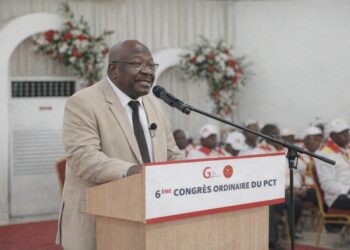
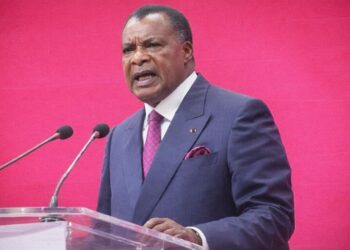
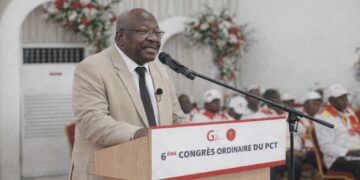
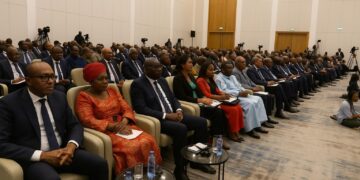
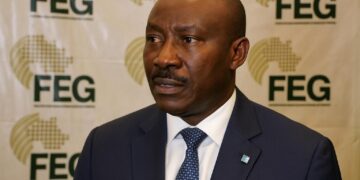
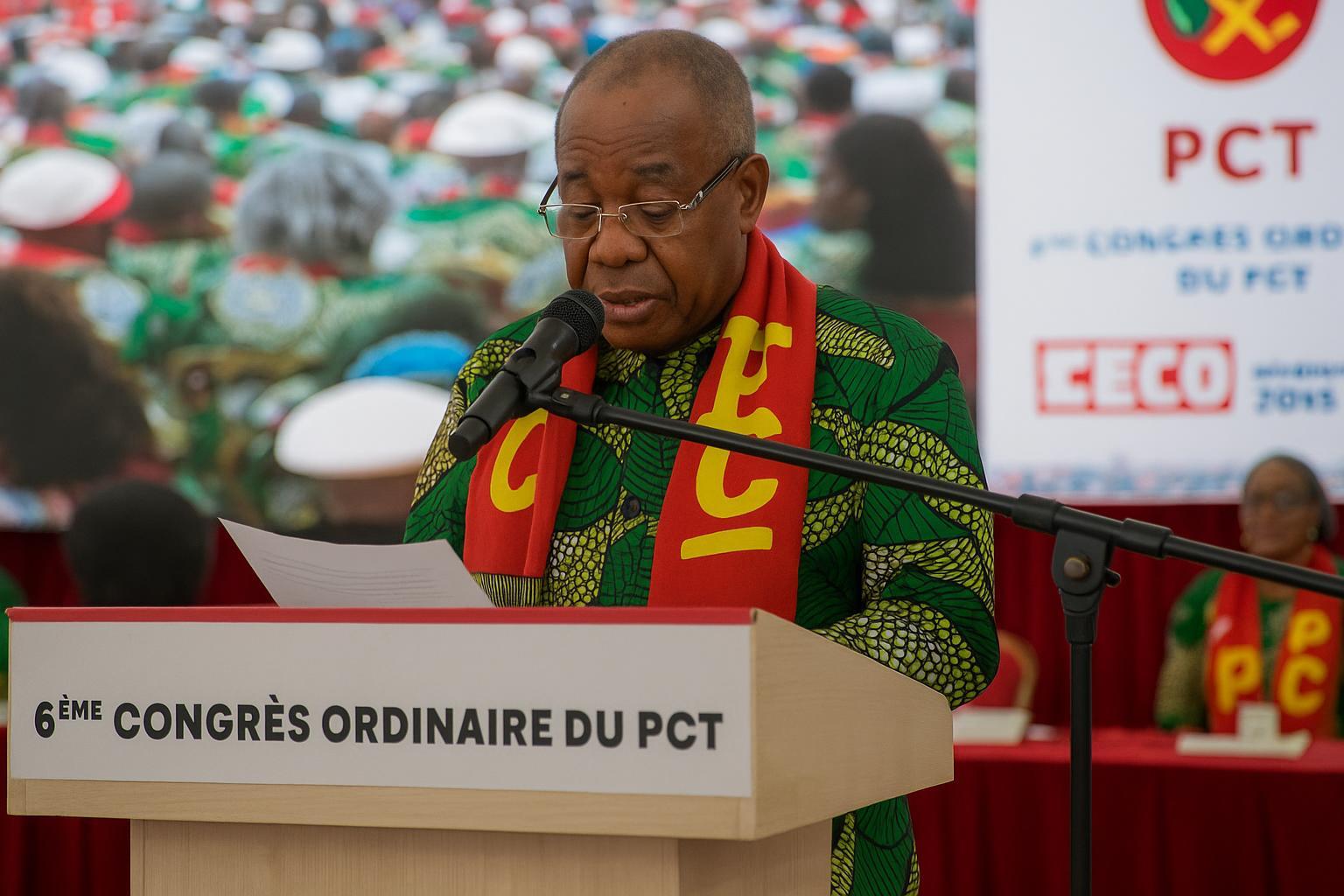
Delegates filing out of Brazzaville’s Palais des Congrès late Wednesday knew the suspense had ended: the Congolese Labour Party, PCT, renewed Pierre Moussa’s mandate as secretary-general until 2031. The octogenarian economist prevailed after two days of deliberation that repeatedly paused the sixth ordinary congress.
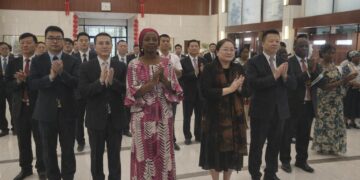
More than 3,000 delegates from all districts and the diaspora attended, reflecting the party’s reach across business, public administration and local chieftaincies. Their choice signals a preference for stability as Congo-Brazzaville approaches a fresh electoral cycle that could shape economic reforms and regional positioning.
A veteran with fiscal credentials
Moussa, 85 this year, served continuously in cabinet between 1997 and 2012, steering Planning, Economy and Finance portfolios during oil-fuelled booms and debt relief talks with the IMF. Observers still recall his role in coordinating the 2006 Heavily Indebted Poor Countries completion point negotiations.
After leaving government, he chaired the CEMAC Commission from 2012 to 2017, overseeing customs-union convergence criteria and a rescue facility that helped Cameroon and Chad weather the crude price slump. That regional exposure has bolstered his credibility among investors eyeing cross-border corridors and payment systems.
Balancing factions behind closed doors
Congress sources say three other heavyweight names circulated until late afternoon: former finance minister Gilbert Ondongo, veteran diplomat Rodolphe Adada and Denis Christel Sassou Nguesso, the minister for International Cooperation. Negotiators weighed generational renewal against the need for a tested hand during an uncertain macro cycle.
Insiders argue the final compromise safeguards internal cohesion while keeping doors open for younger cadres to ascend through the politburo. “We preferred someone without grievances,” one delegate confided, echoing a concern that visible fault lines might distract from 2024 budget debates and debt re-profiling talks.
Continuity signals for fiscal and energy policy
For investors, Moussa’s renewal suggests policy continuity in key areas such as non-oil revenue mobilisation, production-sharing contracts and the gas master plan under preparation with the World Bank. Analysts at two regional brokerages said the announcement “removes near-term political noise” from calculations on sovereign issuance.
Market participants await the 2025 mid-term expenditure framework, where Brazzaville is expected to clarify carbon-credit monetisation and public-private partnership pipelines in ports and electricity transmission. Continuity at the PCT secretariat is viewed as helpful for synchronising ministry roadmaps with the presidency’s Development Plan 2022-2026.
Credit outlook and debt dynamics
Congo’s eurobond maturing 2029 traded virtually flat after the congress news, according to Bloomberg composite pricing, suggesting investors had largely priced in an incumbent bias. Fitch currently rates the sovereign at CCC+, citing high hydrocarbon dependence; any perception of smoother policymaking could ease discussions on a rating trajectory.
The treasury’s external refinancing requirement averages 6% of GDP through 2027, manageable if the planned timber-value-chain tax reform lifts non-oil receipts. Officials note that Moussa retains strong ties with Beijing creditors and the Afreximbank, relationships likely to matter should commodity prices turn less favourable.
Diaspora, youth and talent mobilisation
Delegates from Paris, Abidjan and Johannesburg chapters pushed for larger representation of professionals trained abroad in the party’s executive. Moussa promised to create a permanent forum on skills transfer, a step welcomed by technology start-ups looking for quicker approval of fintech sandboxes and open-data standards.
At street level, student unions at Marien Ngouabi University cautiously applauded the plan but urged timelines. One economic history lecturer argued that converting diaspora remittances into productive investment “needs strong political signals”, adding that stable party leadership can provide such signals if matched by credible monitoring metrics.
CEMAC and regional cooperation
The PCT congress communiqué reaffirmed Congo’s commitment to CEMAC macro-convergence and the upcoming switch to a unified payment switch. Moussa’s experience in the regional commission is seen as an asset for finalising aviation liberalisation and harmonising mining codes, issues closely watched by aluminium and gold juniors.
Neighbouring Gabon, currently reviewing its own party statutes, sent an observer team. A senior member noted that Brazzaville’s decision “prolongs a line of dialogue we understand”, hinting that regional heads of state may coordinate positions ahead of the 2025 CEMAC summit on currency cooperation.
Election season on the horizon
The congress also proclaimed President Denis Sassou Nguesso, 82, as the party’s flag-bearer for the next presidential race, expected in 2026. Political scientists view the double endorsement as a cohesive strategy: steady hands at the party helm while the head of state concentrates on diplomatic outreach.
Notably, campaign finance rules may tighten under a draft electoral bill now in parliament. Continuity in the secretariat is likely to accelerate internal compliance mechanisms, giving candidates and donors earlier clarity on disclosure thresholds, according to a legal adviser involved in the drafting process.
For boardrooms monitoring Central Africa, the message emerging from Brazzaville this week is one of predictable stewardship. Whether that translates into swifter project execution, especially in power interconnection and agribusiness, will occupy investors’ dashboards in the quarters to come.