































SITEC 2023 draws young innovators
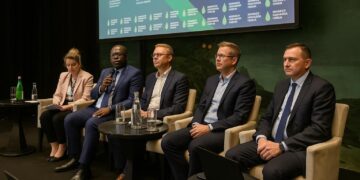
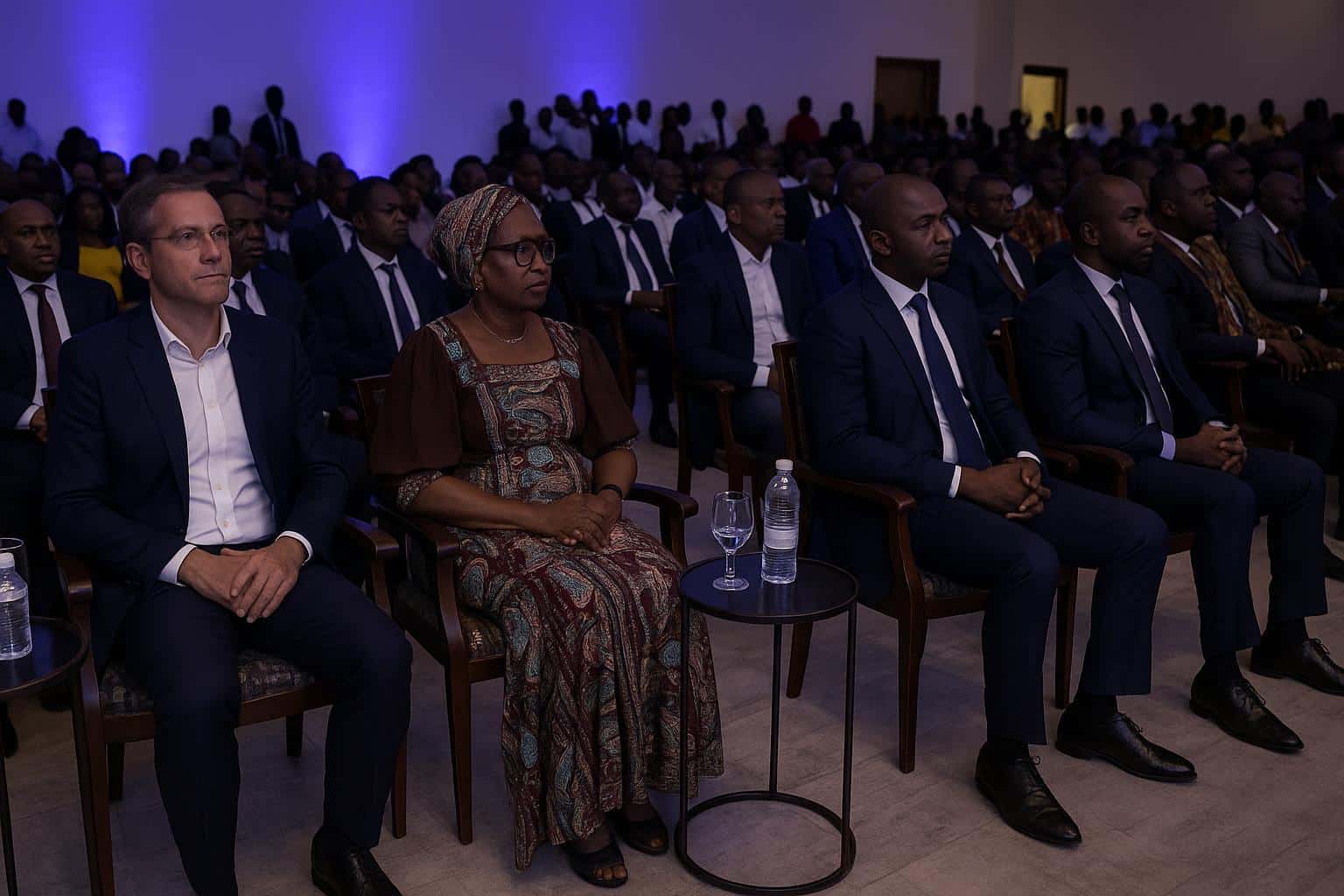
On 11 November in Brazzaville, the second Salon of Innovation, Technology and Entrepreneurship in Congo, better known as SITEC, opened its doors to hundreds of aspiring founders eager to connect with investors, mentors and policy makers shaping the country’s nascent digital economy.
Launching the event, Minister of Scientific Research and Technological Innovation Rigobert Maboundou urged young Congolese to maximise networking opportunities, arguing that no public programme can replace the power of personal alliances for scaling businesses and converting prototypes into marketable solutions.
His message resonated across packed panels where software developers, agritech engineers and fintech designers traded ideas under the theme ‘Harnessing Innovation for Inclusive Growth’, echoing regional ambitions outlined by the Economic Community of Central African States.
Youth demographics and national strategy
Demographers estimate that citizens under 25 now account for roughly 76 percent of Congo-Brazzaville’s 5.9-million inhabitants, a youthful majority the government describes as its foremost natural resource and the linchpin of the 2022-2026 National Development Plan.
Yet urban unemployment remains stubbornly high at 26.8 percent according to the 2021 Labour Force Survey, with new entrants often locked out by experience requirements and limited exposure to professional networks critical for securing seed capital.
By convening corporates such as MTN, TotalEnergies and the developmental finance arm of Afreximbank, SITEC organisers hope to shorten that distance between talent and opportunity, reinforcing objectives set in the Digital Congo 2025 masterplan.
Networking as catalyst for scale
Maboundou framed networking as a growth accelerator, noting that Silicon Valley’s rise was sparked less by subsidies than by dense communities exchanging feedback over coffee.
To simulate similar chemistry, the ministry arranged curated ‘match-making hours’ where selected start-ups pitched in ten-minute bursts to venture funds active from Lagos to Kigali while receiving live due-diligence tips from Deloitte’s regional office.
International mentors including French AI researcher Aurélie Jean and Cameroonian e-commerce pioneer Rebecca Enonchong stressed that cross-border collaboration can offset a small domestic market, enabling Congolese apps to scale across the francophone belt.
Bridging skills and education gaps
However, skill mismatches still hamper competitiveness, as curricula remain weighted toward theory rather than project-based learning, a gap highlighted by UNESCO’s recent Science Report on Central Africa.
Several Congolese universities have responded, signing memoranda with Google Africa and the African Institute for Mathematical Sciences to embed coding bootcamps and data-science labs within engineering faculties.
‘Entrepreneurship must graduate from buzzword to classroom discipline,’ insisted Vérone Mankou, founder of BantuHub and promoter of SITEC, adding that today’s education system still funnels graduates toward public-sector jobs rather than venture creation.
Financing hurdles and policy levers
Statistics from BantuHub show that although half of new businesses registered in 2022 were launched by entrepreneurs under 35, nearly two thirds ceased operations within five years, mostly because of cash-flow strains and limited managerial training.
Early-stage finance remains scarce; the World Bank’s 2023 Enterprise Survey found that only 11 percent of Congolese SMEs obtained a bank loan or line of credit, compared with 23 percent in Côte d’Ivoire.
Commercial lenders cite collateral gaps, yet some are piloting risk-sharing schemes underwritten by the African Guarantee Fund, while microfinance institutions test revenue-based repayment models suited to digital firms with irregular cash cycles.
Regulatory momentum and regional integration
Regulatory signals also point toward a friendlier ecosystem: in August the government exempted start-ups younger than three years from corporate tax, and the telecom regulator announced upcoming sandboxes for blockchain and mobile-money pilots.
Analysts at McKinsey Central Africa believe such incentives, combined with regional harmonisation efforts led by the Economic and Monetary Community of Central Africa, could lift the contribution of the digital sector to four percent of GDP by 2026.
For now, Maboundou’s closing remark captured cautious optimism: ‘The state can prepare the soil, but only your collaborations will make the seeds grow.’ With SITEC promising annual continuity, many founders left convinced the next harvest may arrive sooner than expected.
Diaspora funding and continental markets
Diaspora investors are emerging as an influential funding stream. The Congolese Professionals Network in Paris recently launched a €2-million angel vehicle focusing on health-tech and ed-tech, promising ticket sizes up to €100,000 and strategic introductions across Europe.
Remittance flows, already topping US$250 million annually according to the Central Bank, could be partly redirected into crowd-equity platforms once the forthcoming fintech bill authorises regulated peer-to-peer investment portals.
Market reach is also widening. Through the African Continental Free Trade Area, Congolese start-ups may export digital services tariff-free to 53 countries, provided they meet data-protection benchmarks being finalised by the African Union’s specialised agency.
Sector observers caution that international compliance adds cost, but argue it will ultimately raise product quality and investor confidence, unlocking larger Series-A cheques that remain rare in Central Africa to date.
Several speakers pointed toward carbon-credit accounting tools as an emerging vertical where Congo’s vast forests offer founders both data and differentiation.