















A consultative moment of rare breadth
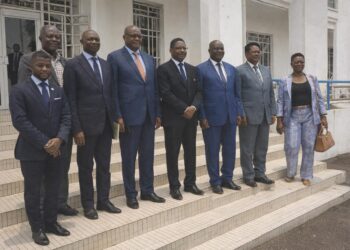
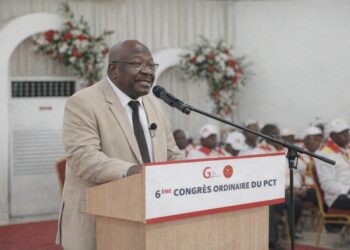
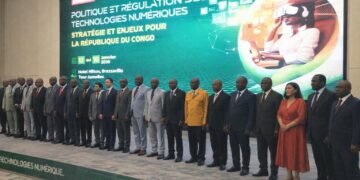
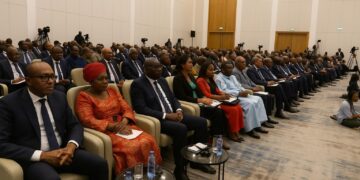
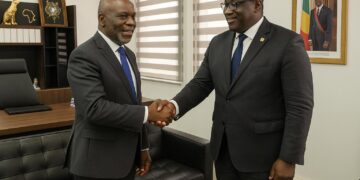
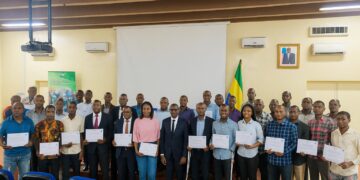
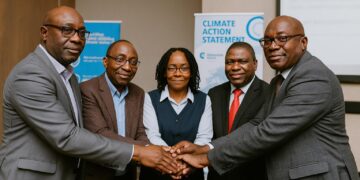
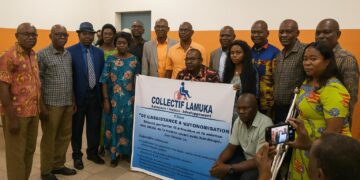
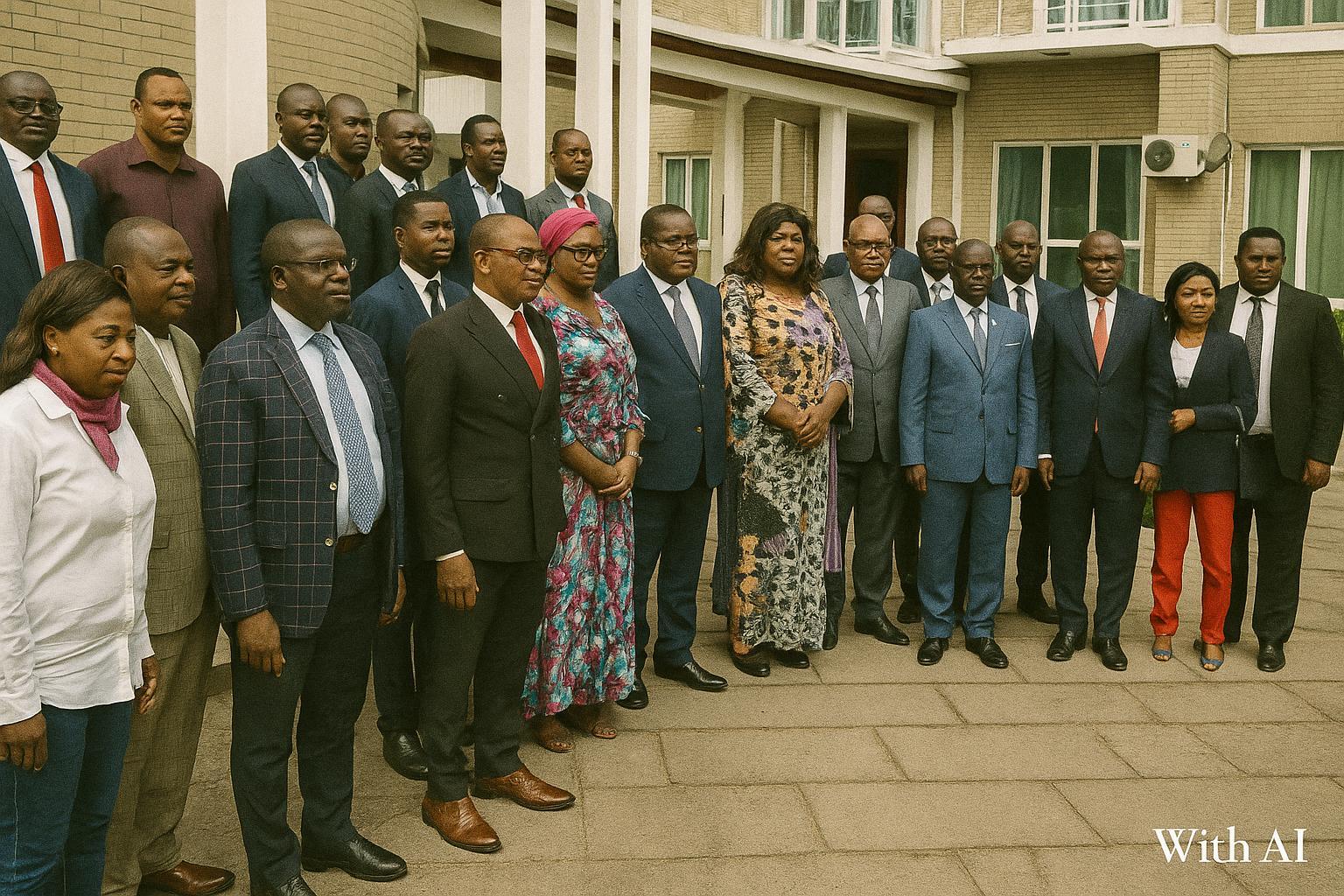
Well before the latest fluctuations in Brent prices rekindled anxiety across hydrocarbon-dependent states, Brazzaville’s policy community had begun to weigh the long-term opportunity costs of continued reliance on oil revenues. That intellectual ferment took institutional shape during the consultative round-table convened on 10–11 July 2025 under the aegis of the Rencontre pour la paix et les droits de l’homme. More than fifty delegates from government ministries, technical directorates, development agencies, diplomatic missions and media outlets occupied the same conference hall, an uncommon coalition in the capital’s policy calendar. The presence of interim Director General for Sustainable Development Rosine Olga Mayela Ossombi alongside prominent civil-society figure Christian Mounzéo lent the gathering a legitimacy that transcended sectoral affiliation and signalled tacit official blessing.
The nine-axis architecture of post-oil ambition
Deliberations coalesced around a framework of nine strategic axes, ranging from scaled deployment of hydroelectric, solar and biomass solutions to heightened territorial equity and transparent governance. While none of those themes is entirely novel, their consolidation into a draft national roadmap marks the first attempt to synchronise disparate pilot projects with fiscal and regulatory reform. According to participants, the blueprint draws on lessons from the International Energy Agency’s Africa Energy Outlook (2024) and aligns with the African Development Bank’s Country Diagnostic for Congo (2023), both of which stress that access to affordable power and institutional predictability are decisive preconditions for industrial diversification.
Political economy of an orderly transition
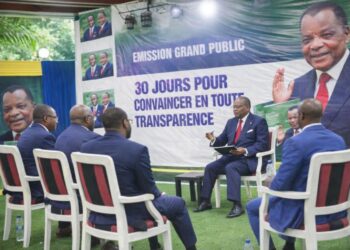
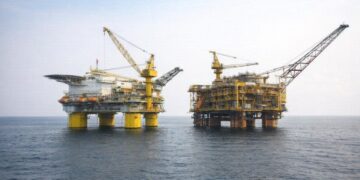
President Denis Sassou Nguesso has on several occasions, including at the 2023 Brazzaville International Energy Forum, reiterated the imperative of converting oil windfalls into long-term productive capital. The new consultative process reflects that vision while acknowledging the delicate balance between fiscal stability and reformist zeal. Revenues from offshore crude still represent close to 60 percent of public receipts, according to the Ministry of Finance, a statistic that tempers the pace at which subsidies can be reallocated toward renewables or agribusiness. Delegates therefore argued for a graduated approach that secures macroeconomic buffers even as it catalyses green investment, a stance consistent with IMF Article IV recommendations issued in early 2025.
Financing the green pivot
Securing concessional capital emerged as a leitmotif of the two-day dialogue. Representatives of multilateral climate funds recalled that Congo-Brazzaville harbours the second-largest tropical peatland on the planet, an ecological asset that could underpin innovative carbon-finance instruments (UN-Environment Programme, 2024). Participants suggested that a national green bond, benchmarked against regional CFA-denominated issuances, might mobilise private capital while respecting debt-sustainability thresholds. European development-finance institutions present in the room appeared receptive, provided that forthcoming feasibility studies offer robust baselines and that procurement rules adhere to OECD integrity standards.
Institutional capacity as the hinge variable
Beyond capital flows, the debate frequently circled back to administrative bandwidth. Several directors lamented the paucity of engineers and energy economists within line ministries, noting that scholarship schemes launched in partnership with the French Development Agency remain under-subscribed. To bridge the skills gap, the draft roadmap calls for a dedicated National Centre for Energy Transition, mandated to coordinate data collection, scenario modelling and monitoring-and-evaluation. Such a body would, proponents argue, anchor policy continuity irrespective of cabinet reshuffles, thereby reassuring investors who often cite regulatory volatility as the primary deterrent to greenfield projects.
Social inclusion and territorial equity
Speakers from the northern Sangha region and the Atlantic industrial corridor reminded the audience that any post-oil paradigm has to resonate beyond Brazzaville’s urban elite. They advocated for decentralised energy cooperatives and community-owned mini-grids, echoing findings of the UNDP Congo Human Development Report (2023) linking electrification to reductions in rural poverty. The roadmap therefore embeds gender-sensitive and youth-oriented employment targets, aligning with the government’s 2024 National Development Plan. By doing so, the drafters seek to pre-empt distributional grievances that have complicated energy reforms elsewhere on the continent.
Diplomatic convergence and regional leverage
Observers from neighbouring Central African states attended as silent guests, a signal that Brazzaville’s choices could ripple across regional power pools. The Economic Community of Central African States is currently finalising an interconnection protocol that would allow surplus hydroelectricity from the Congo River basin to be exported to energy-deficit economies. Aligning national strategy with that protocol would not only monetise renewable assets but also bolster Congo-Brazzaville’s diplomatic weight. As a senior official confided off record, regional grid diplomacy could become a twenty-first-century analogue to the crude-pipeline politics of the past, yet with a lower carbon footprint and higher reputational dividends.
From consultative echo to executable policy
The round-table ended with a communiqué tasking a drafting committee to present the pre-roadmap to the Council of Ministers within ninety days. The timeline is ambitious but not unprecedented; the government moved with similar alacrity in 2022 while adopting the Forestry Transparency Code. Implementation, however, will hinge on three intertwined variables: sustained political endorsement, credible monitoring by civil society and predictable multi-year financing. None is assured, but the very fact that the consultation placed oil exit at the centre of elite discourse marks a qualitative shift in policy imagination. Should the momentum be maintained, Congo-Brazzaville could position itself as an early mover among Central African hydrocarbon exporters pivoting toward a low-carbon development model.
A cautiously optimistic horizon
In diplomatic circles the takeaway is nuanced yet unmistakably forward-looking. The post-oil conversation is no longer confined to academic seminars but is edging toward the cabinet table. International partners, for their part, see in Brazzaville a government willing to couple rhetorical commitment with structured stakeholder engagement. Turning that openness into bankable projects will be the litmus test. If the nine-axis blueprint graduates into law and survives the budget cycle, Congo-Brazzaville could well translate its abundant natural capital and political stability into a diversified, climate-resilient economy, thereby offering a constructive precedent in a region still tethered to the vicissitudes of fossil markets.