





























Citizen health drive hits the streets
On 4 December, the non-profit Marcher Courir pour la Cause launched the “Taxi Bomoyi” contest at the TotalEnergies station inside Brazzaville’s Sports Centre. The programme turns ordinary taxi rides into micro-campaigns against diabetes, a condition the group describes as an escalating public-health priority across Congo.
By placing trained drivers between passengers and medical information, MCPLC hopes to reach commuters who seldom attend formal health sessions. Each journey becomes a conversational checkpoint, subtly blending mobility and prevention without extending travel time or raising fares.
From steering wheels to awareness wheels
MCPLC chose taxis because their high turnover of short trips reflects the daily rhythm of Brazzaville. Drivers often greet dozens of customers per shift, giving them a cumulative audience that traditional billboards, radio spots and clinics struggle to capture with equal frequency.
The disease discussion is framed as a friendly chat, covering risk factors, symptoms, and the value of regular exercise. Organisers insist that guidance remains strictly informational, steering clear of prescribing drugs or criticising medical services, thereby aligning with existing national health messaging.
Scoring system fuels driver motivation
At the end of each ride, passengers can send a free text message to a dedicated number rating the driver’s engagement. The central server compiles scores in real time, creating a transparent leaderboard and encouraging friendly competition among the city’s nearly omnipresent green-and-yellow cabs.
Rodrigue Dinga Mbomi, MCPLC president, explains that the ranking will be updated publicly. Weekly recognition ceremonies are planned at partner stations, with small fuel vouchers and branded shirts offered to the leading teams, reinforcing both visibility and sustainability of the message.
TotalEnergies backs the campaign
The oil and gas major contributes five strategically dispersed service stations—Centre Sportif, Kizito, Mazala, Loutassi and Château d’Eau—as contact points. Each site doubles as a briefing hub where drivers collect posters, windshield stickers and refresher tip sheets before heading back onto the road.
Twenty prepaid fuel cards, valued at fifteen thousand CFA francs per day, give winning drivers up to twenty litres of petrol or twenty-five litres of diesel. Organisers argue that tying performance to direct operational savings is more persuasive than abstract certificates or medals.
Grass-roots logistics and targets
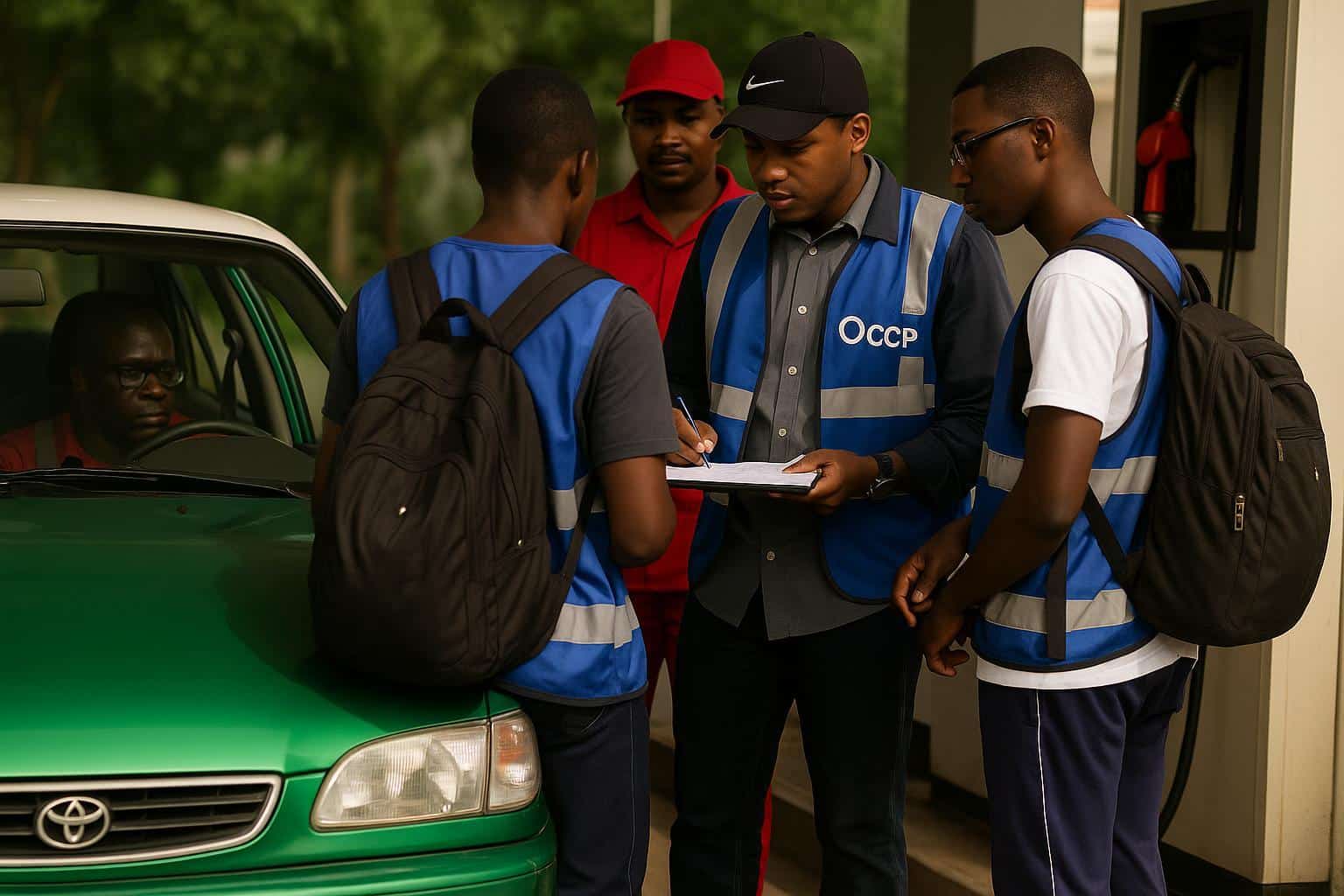
Seven field surveyors criss-cross the capital in branded vests, persuading at least ten drivers each to enrol daily. Their mandate is to recruit five hundred participants by 24 December, a figure summarised in a rollout tracker displayed at MCPLC’s coordination office.
The geographic sweep extends from Madibou in the south to Kintélé in the north-east, ensuring peri-urban corridors are not left behind. Organisers note that some suburban routes record longer trip times, offering extended windows for dialogue inside otherwise congested vehicles.
Early passenger sentiment
Preliminary text samples collected during the first week reveal curiosity and appreciation rather than fatigue. Passengers reportedly value actionable tips such as switching sugary beverages for water or walking short distances, according to anonymised extracts shared by MCPLC staff.
Drivers, for their part, mention that the exercise bridges a conversational gap, turning idle time at traffic lights into purposeful engagement. Some have asked for laminated cue cards to ensure consistency, prompting MCPLC to prepare a second print run.
Implications for business and policy
For investors watching Congo’s consumer market, healthier commuters imply long-term gains through reduced absenteeism and better productivity. While the contest is modest in budget, it signals a pragmatic public-private formula that could be replicated in other wellness domains.
Regulators may also view the SMS-based audit trail as a soft template for future community data collection, sidestepping costly household surveys. Data protection remains safeguarded; messages contain only driver codes and qualitative feedback, not personal health records.
What happens after 24 December
Once the first edition closes on Christmas Eve, MCPLC plans to publish aggregated results, including a heat map of participation by neighbourhood and a table correlating message volume with station incentives, offering measurable insights for sponsors.
TotalEnergies representatives hint that continued support will depend on post-project review rather than fixed calendar cycles. A favourable assessment could see the initiative extended to Pointe-Noire or adapted for other non-communicable diseases, keeping the wheel of prevention turning.
MCPLC’s broader roadmap
The association, best known for mass jogging events, now portrays itself as an agile connector between civic energy and corporate resources. By linking transport workers with health messaging, it refines a blueprint blending sports, mobility and awareness into a single platform.
Success here could inspire other grassroots accelerators that align with national development plans, reinforcing the vision of inclusive growth championed by authorities. For now, Brazzaville’s commuters need only hail a cab to receive a timely reminder that health starts in motion.
Data dashboard at a glance
Organisers promise an open dashboard, updated daily, displaying total kilometres covered, cumulative passenger reach and average quiz scores. The visual summary, slated to appear on MCPLC’s social channels, is intended to maintain momentum and offer third-party analysts raw indicators for future cost-benefit studies.