






























Reserve slide raises alarm
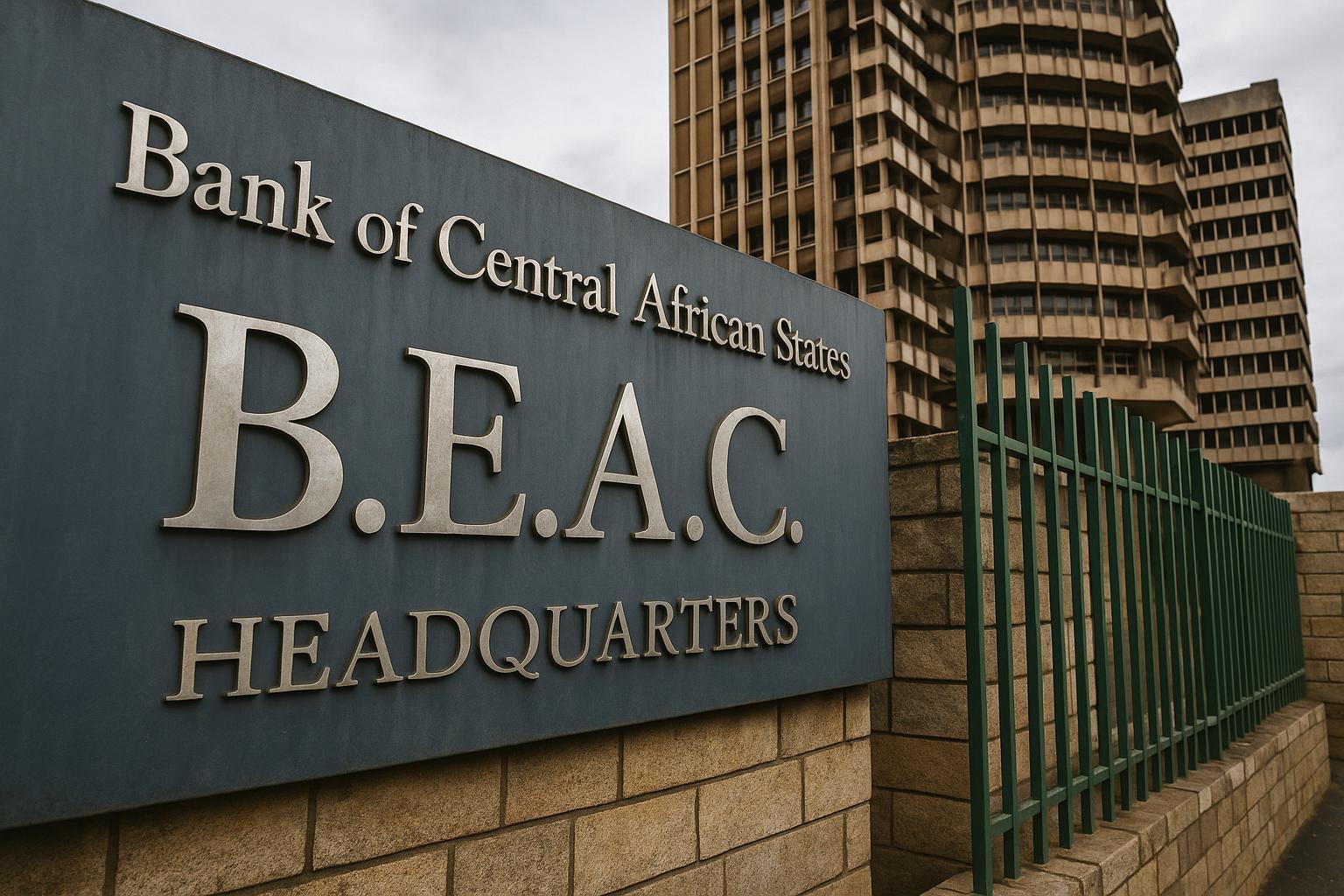
Foreign-exchange cushions across Central Africa are under renewed scrutiny. By 31 October 2025, CEMAC reserves slipped to CFA 6.203 trn, down CFA 146 bn year-on-year and CFA 1.133 trn since December 2024, according to the Bank of Central African States (BEAC).
Although the headline figure still covers 3.9 months of regional imports, the downward trend since March has alarmed policymakers who remember the 2016 liquidity crunch. Then, forced import compression hit government investment plans across Cameroon, Congo-Brazzaville and Gabon, and rattled private-sector confidence.
Trade, oil and payments dynamics
The present slippage stems from net negative transfers approaching CFA 1.3 trn, softer oil prices, and larger payments on external liabilities (BEAC daily bulletin, 25 Nov 2025). Currency-area trade balances remained in deficit despite resilient timber and manganese exports from Gabon and Equatorial Guinea.
Domestic supply shocks added pressure. Cameroon accelerated imports of refined fuels after pipeline outages, while Gabon’s prolonged refinery shutdown forced costly spot purchases, draining an estimated CFA 150 bn from reserves between July and October (industry officials in Libreville, November 2025).
Generalised dividend outflows by multinational telecom and banking groups further tightened liquidity. Mobile-money settlements leaving the zone climbed 18 percent year-on-year, reflecting both profit repatriation and a post-pandemic rebound in cross-border transfers by the diaspora, BEAC data show.
Fiscal factors and debt service
On the fiscal side, several sovereigns front-loaded hard-currency spending to service Eurobonds and official loans. Congo-Brazzaville redeemed CFA 85 bn equivalent on its 2029 notes in October, preferring to preserve domestic liquidity and comply with IMF programme targets, finance ministry officials indicate.
Policy toolkit deployed
BEAC has reacted with a calibrated mix of prudential and monetary tools. Since August it has raised the tender rate by 50 basis points to 5 percent and tightened foreign-exchange surrender requirements for oil producers from 60 to 70 percent of export proceeds.
The central bank is also sterilising excess CFA liquidity via weekly deposit auctions, attracting record participation from Congo-Brazzaville lenders eager to park short-term cash. Officials argue the approach supports the peg to the euro and mitigates inflationary pass-through from imported goods.
Regional finance ministers, meeting in Brazzaville on 3 November, endorsed a temporary 10 percent cap on discretionary spending growth for 2026 budgets. The measure aims to reduce external borrowing needs while safeguarding social and infrastructure allocations considered vital for post-COVID recovery.
Market participants broadly welcomed the signal. ‘Coordinated fiscal prudence should give BEAC space to rebuild buffers without choking growth,’ observes Aristide Ndzana, chief economist at Douala-based brokerage Financia Capital. He expects the policy mix to stabilise reserves near CFA 6.4 trn by mid-2026.
Recovery scenarios and risks
BEAC’s baseline scenario, published in its November monetary policy report, projects a rebound to CFA 6.566 trn next year, equivalent to 4.15 months of import cover, assuming Brent averages USD 85 and non-oil exports grow 7 percent.
Under the same outlook, reserves could reach CFA 6.983 trn in 2027 and top CFA 7 trn in 2028, restoring the pre-pandemic cushion of 4.2 months of imports. The forecast hinges on sustained fiscal consolidation and timely disbursement of concessional loans from multilaterals.
Risks nevertheless remain. A sharper-than-expected Chinese slowdown could hit metals demand, while geopolitical tensions may inject volatility into oil prices and transport routes. Climate-related shocks, notably flooding in northern Congo and Cameroon, could also widen current-account deficits by disrupting agriculture and logistics.
Investor and corporate takeaway
For investors, the near-term tightening in hard-currency liquidity warrants closer attention to counterparty risk and settlement timelines. Local-currency treasury bills offer yields above 4 percent in real terms, yet secondary-market depth remains modest, especially in Congo-Brazzaville and the Central African Republic.
Corporate treasurers have begun staggering import orders to match cash-flow projections. Several retail chains in Pointe-Noire now hedge up to three months of inventory using forward contracts with regional banks, a practice virtually absent five years ago. The derivative desks report growing enquiries from SMEs.
Congo-Brazzaville’s authorities view the episode as an incentive to accelerate economic diversification and deepen the local capital market. ‘Our objective is to reduce reliance on oil-linked flows and expand export earnings from agro-industry and digital services,’ notes Budget Minister Ludovic Ngatsé.
If policymakers maintain collective discipline and reform momentum, the current tension on reserves could prove a temporary correction rather than a structural slide. For now, the spotlight remains on monthly BEAC bulletins, the ultimate barometer of Central Africa’s macro-financial resilience.
External partners and safety nets
Paris and the IMF continue to monitor developments closely, given the CFA franc’s peg to the euro and the ongoing Extended Credit Facility programmes in Cameroon and Congo. Technical missions in October recommended faster customs digitalisation to curb leakage and reinforce the external position.
Meanwhile, BEAC is finalising a repo line with the French Treasury that could provide up to EUR 500 m in temporary liquidity if external shocks intensify. Officials stress the facility is precautionary and unlikely to be tapped under the current baseline, but it reassures markets.