































Brazzaville meeting sets the scene
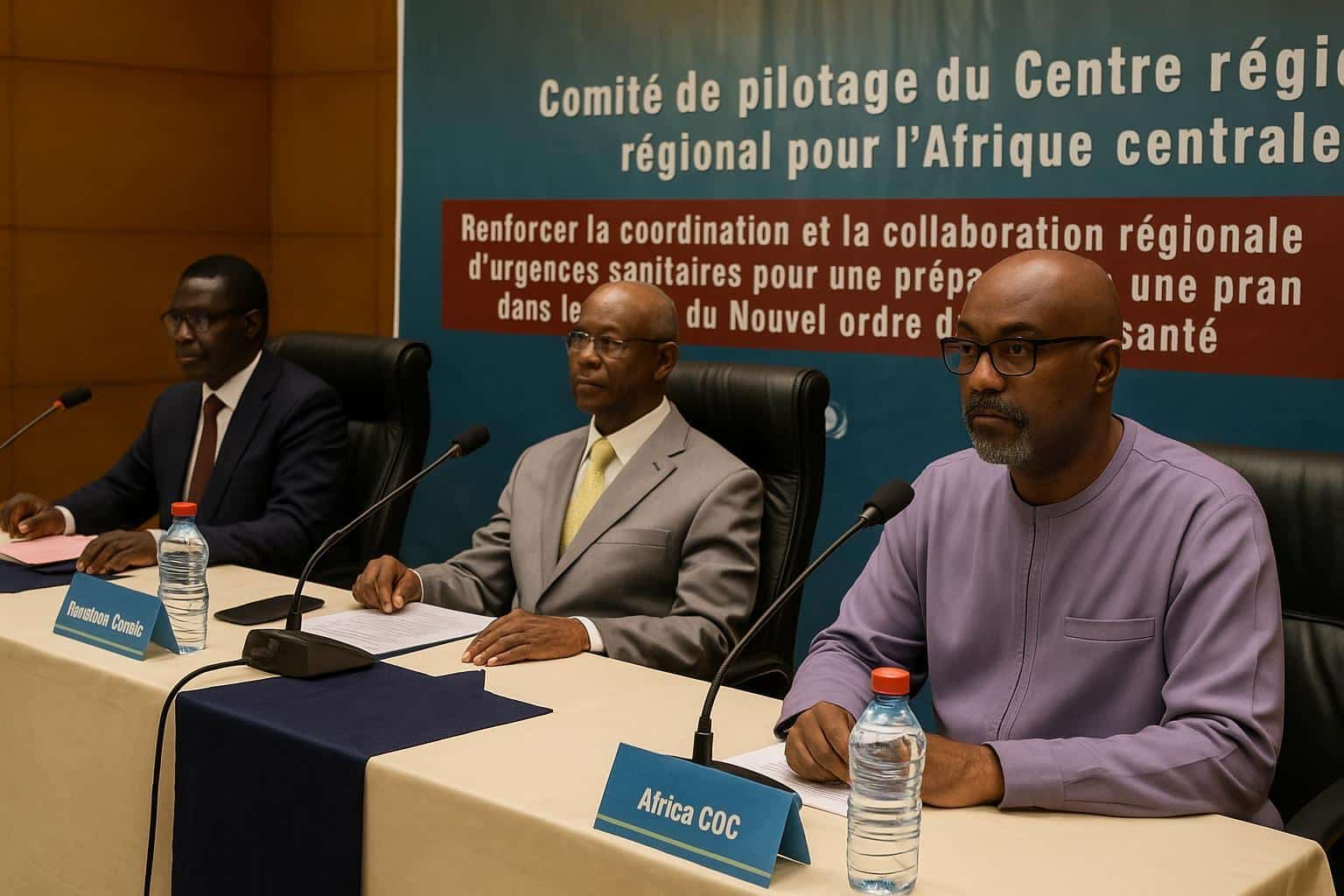
Health ministers and senior officials from eleven Central African countries gathered in Brazzaville on 2 December for the second steering-committee session of the Africa CDC regional coordination centre. With Ebola flare-ups and COVID-19 aftershocks fresh in mind, delegates sought a sturdier collective armour against future outbreaks.
The forum was mandated to turn lessons from recent health crises into a permanent operating model. Participants emphasised that porous borders, mobile populations and uneven laboratory capacity expose the sub-region to recurring epidemiological shocks that no state can handle alone.
Resolutions anchor a new architecture
The communiqué adopted at the close calls for a solid regional architecture of preparedness and response. Governments committed to reinforce national surveillance systems, equip emergency operations centres and harmonise incident-management protocols so that alerts, resources and experts move swiftly across jurisdictions.
Dr Brice Bicaba, regional director of the Africa CDC hub, summarised the ambition as “building a reliable shield proportionate to the persistent epidemics we face”. He argued that only a calibrated framework, stress-tested jointly, can guarantee timely containment and lessen the economic toll of health scares.
Data sharing and sample logistics
Delegates placed particular weight on faster sample transport and secure information flows. A regional courier network, backed by agreed bio-safety standards, is seen as critical for early pathogen confirmation and real-time genomic sequencing.
Congolese Health Minister Professor Jean Rosaire Ibara reminded colleagues that an Africa CDC–member state data-sharing accord remains “an essential condition for effective surveillance, stronger coordination and optimal risk anticipation”. He urged legal departments to expedite signature so that dashboards mirror facts on the ground instead of estimates.
Financing the next line of defence
Sustainable funding surfaced as both challenge and opportunity. Delegations endorsed larger domestic budget envelopes and “innovative” instruments to cushion emergency spending. Options under review include regional catastrophe bonds and levies on high-profit extractive projects earmarked for public-health contingencies.
Parallel to financing, Africa CDC’s continental target of manufacturing sixty percent of medical supplies in Africa by 2040 resonated strongly. Members agreed that vaccine fill-and-finish plants, diagnostic-kit assembly lines and personal-protective-equipment workshops should progressively migrate from imports to local industrial parks.
Unity of purpose voiced by experts
Representing the Africa CDC Director-General, Professor Yap Boum II hailed the converging positions: “By pooling our strengths we can craft a Central Africa capable not only of reacting to crises but of getting ahead of them.” His remarks drew nods from public- and private-sector attendees.
Industry observers noted that regional self-sufficiency could also shorten supply chains, create skilled jobs and position Central Africa as a credible supplier during global shortages, reinforcing sovereignty while feeding diversification agendas championed in several national plans.
Steering baton passes to Chad
A symbolic hand-over marked the session’s end as Congo transferred the committee chairmanship to Chad. The incoming lead promised continuity and energy. “Chad will act as facilitator and catalyst so that this mandate bears fruit,” declared Ambassador Abdel-Kerim Ahamadaye Bakhit, adding that means must match ambition.
Rotational leadership, officials insisted, embeds collective ownership. Each chair is expected to convene quarterly reviews, mobilise bilateral partners and track milestone delivery, ensuring the roadmap survives political cycles and remains anchored in measurable indicators.
Priority actions distilled
Before dispersing, members listed priority activities: finalise the data-sharing protocol; operationalise the sample-transport strategy; allocate seed funding for frontline laboratories; and launch a feasibility study on regional bulk-purchase mechanisms for medical inputs.
Professor Ibara encouraged delegates to brief home ministers swiftly and advocate for tangible budget lines. “We have identified and ranked the steps required to fortify our shared health security,” he said, calling for early wins to maintain momentum and public confidence.
Outlook for implementation
Observers expect the next semester to reveal whether political will translates into equipment orders, legal instruments and joint simulation exercises. Regular scorecards, to be published by the Africa CDC hub, will track progress and flag gaps.
While hurdles such as logistics costs and competing fiscal pressures remain, the Brazzaville resolutions signal a region moving from ad-hoc crisis meetings toward a predictable, rules-based health-emergency regime. Stakeholders believe that shift could ultimately cushion economies, reassure investors and safeguard the well-being of roughly 200 million citizens.