




























Government vision for food sovereignty
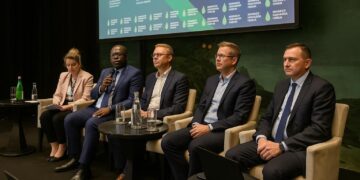
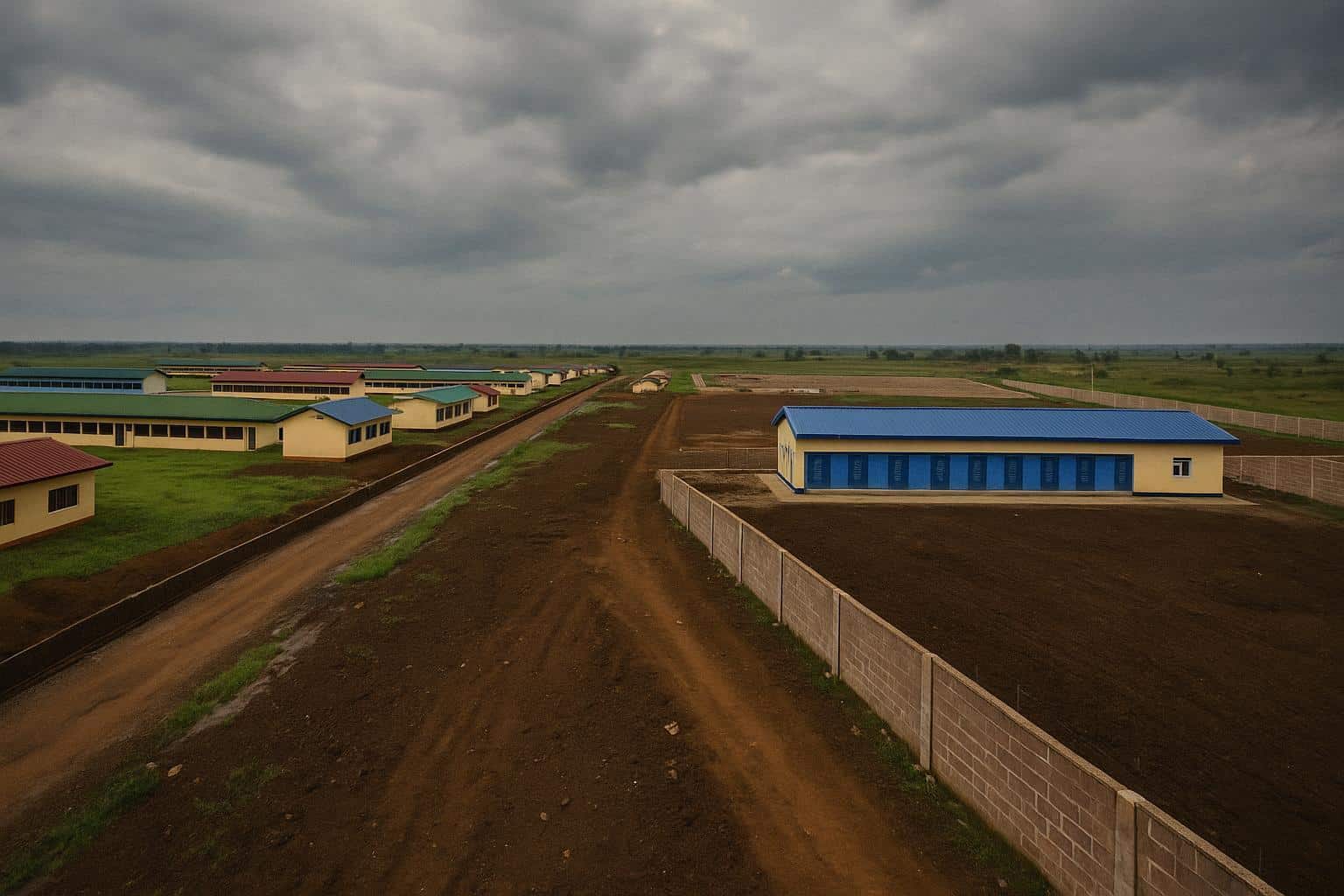
Standing before newly painted sheds in Bambou Mingali, Agriculture, Livestock and Fisheries Minister Paul Valentin Ngobo outlined a strategic pivot: transforming poultry from an import-dependent niche into a pillar of Congo-Brazzaville’s food security agenda through an integrated production hub.
The project, situated eighty kilometres north of Brazzaville in the district of Ignié, responds to a presidential call for greater self-reliance in staple proteins as regional supply chains remain exposed to logistics shocks and fluctuating forex costs.
Infrastructure of the Integrated Poultry Hub
At the core lies a high-capacity hatchery capable of delivering day-old chicks on a scale previously satisfied mostly by imports from Europe and South Africa.
Adjacent grow-out complexes, labelled Bambou 1 and Bambou 2, employ automated feeding, ventilation and real-time health monitoring, while a modular abattoir can process up to ten thousand birds daily under Hazard Analysis and Critical Control Point standards, ensuring uniform quality for retail and hospitality clients.
Scalable Capacity and Phase-Up
The initial production window was modeled on cohorts of twenty thousand broilers every forty-five days, yet civil works completed this quarter have doubled housing area, lifting theoretical output toward fifty thousand birds per cycle without altering the all-in feed conversion targets.
Minister Ngobo described the phase-up as ‘scalable by design’, noting that concrete foundations already accommodate extendable roofs, and the electrical backbone was sized for future cold storage, biogas recovery and solar hybrids, thereby curbing incremental capital expenditure.
De-risked Investment Framework
Beyond bricks and mortar, the model de-risks entry for small and midsize growers through a cluster approach: operators can source chicks on site, rent bio-secure barns, access standardized feed and book slaughter slots, converting fixed costs into predictable service fees.
The Ministry underscores that concessional credit from state-backed banks will be ring-fenced for working capital, while customs rebates on vaccine inputs remain in place, aligning with the broader National Development Plan 2022-26 that prioritises agro-industrial value chains.
Domestic Market Outlook
Congo’s per-capita poultry consumption stands near four kilograms, half the Sub-Saharan average, leaving ample headroom for domestic suppliers once unit prices undercut imports that currently land at Brazzaville port around CFA 1 900 per kilo, according to trade-warehouse operators.
Graphic 1, presented during the site visit, mapped a break-even of CFA 1 450 per kilo at present feed and energy costs, suggesting margin space of roughly 24 %, contingent on sustained maize supplies from the Cuvette harvest corridor.
Jobs and Skills Pipeline
Early operations have created 120 direct jobs, ranging from veterinary technicians to cold-chain mechanics, and the National School of Livestock is crafting a tailored internship stream to scale a workforce capable of meeting OIE certification standards.
Ngobo expects the multiplier effect across input dealers, transporters and informal traders to reach an additional 400 livelihoods, an outlook supported by baseline modelling from the Ministry’s Directorate of Statistics shared during the briefing.
Environmental and Biosecurity Measures
To address community concerns on waste, the hub channels litter into a covered composting yard, where temperatures neutralise pathogens before residue is sold as organic fertiliser to nearby cassava cooperatives.
Veterinary services emphasise strict biosecurity: access roads are gated, delivery trucks undergo citric-acid fogging, and visitor traffic follows a colour-coded zoning to prevent cross-flock contamination, practices that align with regional preparedness against avian influenza.
Governance and Future Roll-Out
Looking ahead, the Ministry plans quarterly performance audits covering feed conversion ratios, mortality profiles and grid-energy intensity, data that will feed into a public dashboard aimed at attracting institutional investors seeking ESG-compliant assets.
A second site has been earmarked near Pointe-Noire’s port hinterland, subject to feasibility work on groundwater availability; if approved, combined national output could meet 70 % of domestic demand by 2026, further insulating households from import-driven price spikes.
Financing Structure and Terms
Project financing blends treasury allocations with a syndicated facility led by BGFIBank Congo, whose agribusiness portfolio grew 18 % last year; the bank views the hub as collateral-friendly because revenue streams span hatchery, grow-out, slaughter and by-products.
According to the term sheet shared with reporters, the debt component carries a grace period matching the first three production cycles, while interest subsidies derive from the government’s Guarantee Fund for Small and Medium Industries, lowering the annualised cost to single digits.
Regional Trade Prospects
Once domestic demand is met, excess chilled cuts could target Cabinda and southern Cameroonian towns, both accessible by road within 24 hours; negotiators are already exploring veterinary equivalence protocols with ECCAS peers to streamline export certification.
Digital Traceability Edge
Each flock will be tagged through a QR-based ledger that records hatch date, vaccination batch and feed formula; retailers can scan labels, a transparency feature the Ministry believes will differentiate Congolese poultry in urban supermarkets increasingly crowded by imported brands.
Voices from the Field
For now, Minister Ngobo’s message to entrepreneurs is unambiguous: ‘Every chick that hatches here is a CFA franc kept within our borders; the window is open for partners who share that vision’.
Local farmer Marie-Claire Moutsinga summarised the mood: ‘With chicks and slaughter in one place, we can finally plan cashflow’.