





















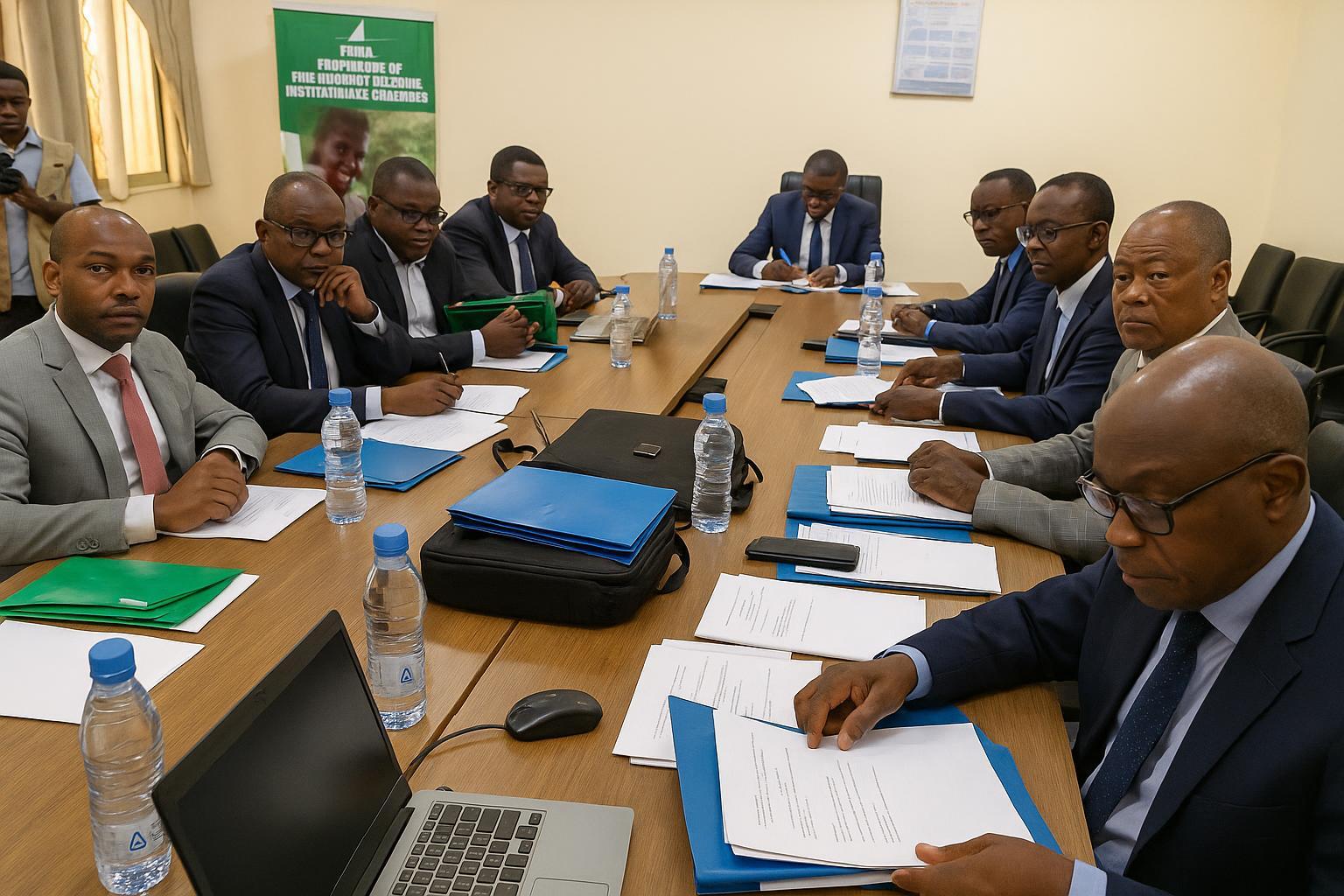
Steering committee sets 2026 youth inclusion targets
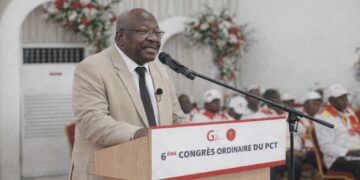
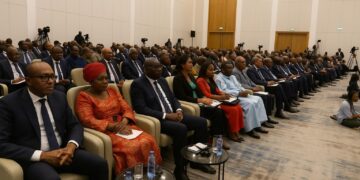
Meeting in Brazzaville on 26 December, the steering committee for the Social Protection and Productive Inclusion of Youth Project, PSIPJ, endorsed the 2026 workplan. The session, chaired by Sylvain Lekaka from the Ministry of Economy, validated a CFA 44.1 billion envelope aimed at accelerating youth employment.
Under the new roadmap, 40,000 Congolese aged 18–35 will enter auto-entrepreneurship tracks and a further 5,000 will learn high-demand trades. The programme also confirms conditional cash transfers for 12,212 vulnerable households, deepening the social safety net already rolled out in 2025 (World Bank briefing).
World Bank financing and budget envelope
PSIPJ, formerly known as the Lisungi project, is financed by a World Bank credit designed to blend social protection with jobs creation. The 2026 budget lists 58 activities, ranging from skills curricula to monitoring systems, reflecting a broader shift from emergency transfers toward productivity-driven growth.
Lekaka reminded participants that every franc has to generate measurable inclusion outcomes. “This project is vital for our youth and our society; I count on the engagement of everyone,” he stated, underscoring the importance of disciplined execution in a tight external financing environment.
From safety nets to productive inclusion
The original Lisungi scheme focused on transfers to cushion households against shocks. PSIPJ keeps that function yet adds coaching, mentoring and start-up grants so beneficiaries can graduate from welfare to self-employment. International observers view the blend as consistent with World Bank guidance on ‘Adaptive Social Protection’.
Four of the project’s six components are already operational: expansion of Lisungi, system strengthening, project management with monitoring and evaluation, and productive inclusion for vulnerable youth. Two additional components—shock response and contingency—are slated for activation if macro conditions deteriorate.
Ambitious training pipeline: 45,000 young beneficiaries
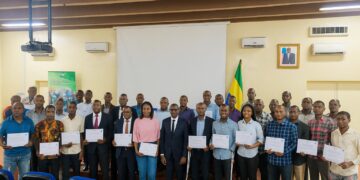
By 2026 the scheme will have supported 45,000 young Congolese, almost ten times the cohort trained in 2025. Participants will pass through accredited centres in Brazzaville, Pointe-Noire, Dolisie, Ouesso and secondary cities, diversifying the geographic footprint and easing urban migration pressures.
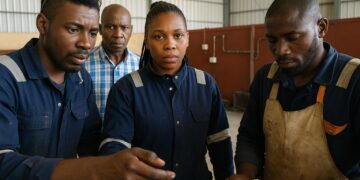
Training modules combine hard skills—such as welding, agribusiness processing and digital services—with soft-skill coaching on market research and bookkeeping. Graduates may access micro-grants or link to commercial banks that are designing youth-friendly credit windows under BEAC guidance.
Digital single social registry: cornerstone for scale
Central to the 2026 agenda is the completion of a unified social registry that verifies identity, tracks benefits and prevents overlap. The software has reached user-acceptance testing, but integration with civil-status databases must still be finalised before mass onboarding can start.
Once deployed, the registry will streamline targeting and unlock real-time dashboards for policymakers. Development partners argue that data clarity will, in turn, reassure investors looking at apprenticeship placement or fintech-enabled payments, creating a virtuous circle between social and commercial actors.
Logistics and disbursement hurdles to solve
Delays in transport and meal allowances during the 2025 pilot exposed weaknesses in last-mile payment channels. Procurement of training kits also lagged, forcing centres to improvise with rented equipment. Management insists these bottlenecks are being fixed through framework contracts and prepaid cards.
Stakeholders note that early resolution is essential, as reputational issues could deter youth enrolment. Yet the high attendance rate recorded once allowances reached accounts shows that young Congolese remain eager to learn when support mechanisms work as intended.
Procurement plan opens door to local suppliers
The 2026 procurement schedule comprises 43 contracts, including 15 consultancy mandates, 11 supply orders, three civil-works packages and 14 service agreements. Local SMEs in logistics, catering and ICT view the tender pipeline as an entry point into public procurement, underpinned by transparent World Bank guidelines.
For construction firms, small-scale renovation of training facilities offers steady demand before larger infrastructure projects revive. Consultancy briefs on curriculum design or monitoring could also attract diaspora professionals keen to contribute expertise while securing remunerated assignments.
Progress recorded in 2025 rollout
During the first operational year, PSIPJ disbursed CFA 1.26 billion in conditional transfers to 10,581 households and enrolled 4,926 youths in courses. Brazzaville trained 1,358 learners, with Pointe-Noire, Dolisie and Ouesso hosting the remainder. Completion rates topped 80 percent, according to internal progress notes.
The figures, though modest compared with national demand, provided proof-of-concept. They also demonstrated administrative capacity to handle multi-disciplinary interventions, a prerequisite for scaling to the 2026 targets.
Opportunities for investors and training providers
Private operators eye the entrepreneurship track as a pipeline for franchising, subcontracting or supplier-development schemes, especially in agrifood, maintenance services and digital platforms. Fintech companies can pilot instant stipends and micro-loans, while telecom firms may bundle connectivity with e-learning content.
Donor representatives stress that the programme’s success will rely on robust public-private collaboration, keeping the policy vision anchored in Brazzaville yet leveraging market know-how. For investors looking at long-term returns in Congo-Brazzaville, a skilled and motivated youth base is arguably the most valuable collateral.