
































Industrialisation Week Signals Momentum
Across Africa, the International Week of Industrialisation closed in Kampala on 21 November, yet its messages still echoed in Brazzaville. Ministers, investors and development partners debated how basic infrastructure can shift the continent from resource exports toward diversified, technology-enabled production.
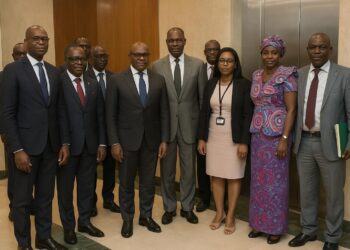
Speaking for Congo-Brazzaville, Industrial Development and Private Sector Promotion Minister Antoine Thomas Nicéphore Fylla De Saint-Eudes reiterated that Sustainable Development Goal 9 will remain out of reach unless every community accesses reliable power, roads, water, and high-speed data networks.
Closing Africa’s Infrastructure Gap for SDG 9
His call aligns with the African Union’s 2015 decision to prioritise resilient infrastructure, inclusive industrialisation and innovation, a policy framework now embedded in the Programme for Infrastructure Development in Africa and in the African Continental Free Trade Area’s emerging industrial pillars.
Yet capital needs are steep. The African Development Bank estimates an annual infrastructure financing gap between US$68 billion and US$108 billion; Congo-Brazzaville alone must mobilise roughly 20 percent of GDP yearly to maintain and expand its transport and energy backbones (AfDB data).
Congo-Brazzaville’s Investment Blueprint
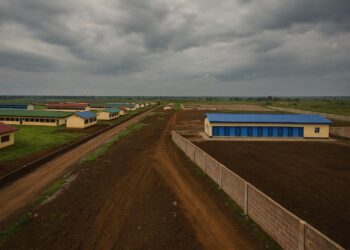
Brazzaville’s industrial strategy, updated this year, seeks to crowd-in private investors through public-private partnerships, tax incentives under the 2022 investment code, and a pipeline of special economic zones in Maloukou-Tréchot, Ignié and Ouesso, each positioned near river or rail corridors.
Officials say engineering tenders for the Maloukou dry port, co-financed by the World Bank, will be published before mid-2024, while feasibility studies on a 100-megawatt solar farm to feed the zone are already under review by Power Africa advisors.
Digital and Low-Carbon Enablers
Beyond logistics, Minister Fylla De Saint-Eudes stresses digital connectivity. Mobile broadband penetration in Congo-Brazzaville stands near 50 percent, yet rural fibre backhaul remains patchy. The government eyes satellite-enabled 4G infill and shared-tower models to lift coverage while lowering operators’ carbon footprints (GSMA Intelligence).
Cleaner grids represent another pillar. Congo’s electricity mix is already 64 percent hydropower thanks to the Inga-like Bouenza River cascade; new mini-hydro and gas-to-power schemes aim to stabilise supply for industrial parks while aligning with the country’s updated Nationally Determined Contribution.
Jobs, Productivity and Comparative Data
The ministry argues that manufacturing’s share of national GDP could rise from the current 8 percent to 20 percent by 2030 if infrastructure bottlenecks ease. Each percentage point of manufacturing value-added historically correlates with 25,000 direct jobs in the local context, according to INS statistics.
Yet continental comparisons underline the urgency. Industrial output per African inhabitant averages US$700, versus US$2,500 in Latin America and US$3,400 in East Asia. Low technology intensity also means 80 percent of exports in several oil producers still come from unprocessed resources, limiting resilience.
Scaling Value Chains and Regional GDP
Economists at the United Nations Industrial Development Organization note that upgrading supply chains from extraction to refinement could add US$1 trillion to regional GDP within a decade, provided energy reliability and trade facilitation improve (UNIDO African Industrialization Report 2022).
Financing Instruments in the Pipeline
Funding remains the crux. Congo plans to float its first local-currency infrastructure bond in 2024, targeting CFA 150 billion for roads and substations. Officials are in dialogue with the Central African Securities Exchange to secure listing terms mirroring Cameroon’s 2023 climate bond.
Development finance institutions have also scaled up. The African Export-Import Bank approved a US$500 million industrial parks facility for Congo and Gabon in July, while the French Development Agency pledged €60 million for digital skilling and last-mile electrification in pool departments.
Frameworks for Downstream Mining
Policy coherence is another requirement. The forthcoming revision of the Mining Code will include incentives for onshore smelting and battery-grade metals processing, dovetailing with electric-vehicle supply chains eyed by Asian and European automakers searching for low-carbon cathode materials.
Sustainability and Forest Protection
Environmental watchdogs welcome the alignment with Congo’s Forest Cover Vision 2025, arguing that industrial clustering around existing corridors may curb pressure on the Congo Basin rainforest. The government has pledged to integrate deforestation risk screening into every new energy or transport concession.
AfCFTA and Market Access Advantages
Regional integration offers scale. Under the AfCFTA, firms operating in Congo’s zones could source inputs in neighbouring Cameroon or the Central African Republic and still qualify for preferential tariffs, an incentive that lowers break-even volumes for agro-processing and light engineering.
Investor Safeguards and One-Stop Services
Investors already surveying the market underline three watchpoints: clarity on land titling inside the zones, timely VAT refunds on imported machinery, and swift dispute resolution. Authorities respond that a dedicated one-stop window and an arbitration chamber will be operational by April.
Skills Supply from the Diaspora
For the diaspora and young professionals, the message is equally direct. Technical universities in Pointe-Noire and Oyo will launch dual curricula with German and Singaporean institutes next year, aiming to supply 5,000 technicians annually to industrial tenants, a measure donors deem critical for competitiveness.
Measured Optimism on Execution
Congo-Brazzaville’s push does not pretend to erase decades of under-investment overnight, yet the combination of foundational infrastructure, greener power, digital backbone and regional trade incentives sketches a roadmap that investors and policymakers alike can quantify—and, increasingly, finance.