


























Reform roadmap unveiled at VoxEco Forum
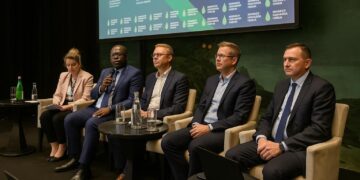
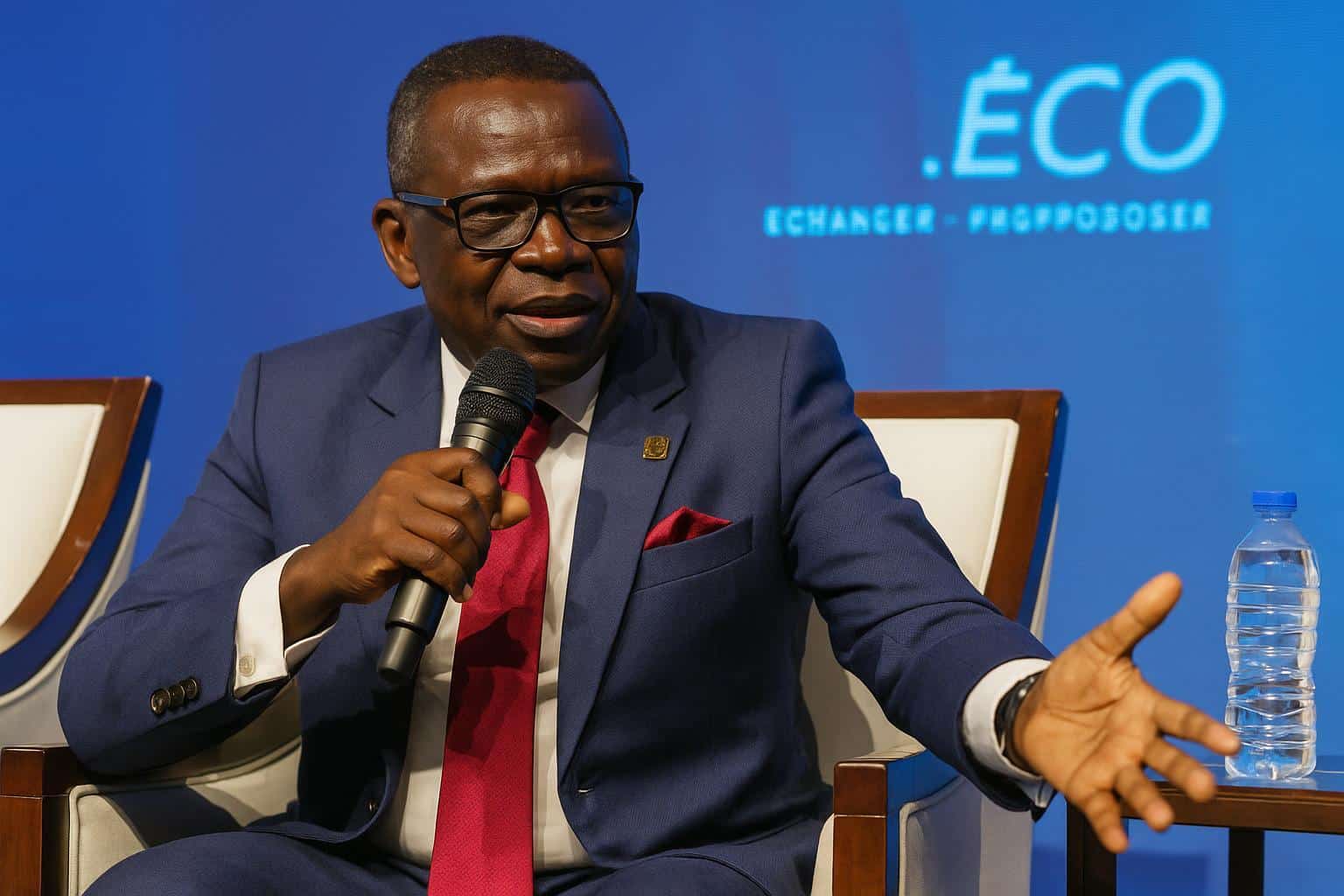
Speaking before policy makers and financiers at the third VoxEco Forum in Brazzaville, Minister of Economy, Plan and Regional Integration Ludovic Ngatsé laid out the government’s most detailed roadmap to date for shifting Congo-Brazzaville away from its long-standing dependence on crude revenues.
Framing the discussion around the motto “diversify, digitise, deliver”, he presented a sequence of structural reforms touching public finances, energy, mining, agriculture and services, all synchronised with CEMAC convergence targets and designed to lift medium-term growth beyond the symbolic ten-percent threshold.
Observers noted that the tone was pragmatic rather than triumphalist, acknowledging infrastructure gaps and a heavy debt burden while insisting that the current window of stable oil prices and improving regional ties offers an opportunity to anchor a more resilient, opportunity-rich economic model.
Fiscal discipline and hunt for new resources
Ngatsé conceded that fiscal space remains tight after successive external shocks, with public debt hovering near the seventy percent-of-GDP mark despite recent rescheduling efforts with multilaterals and private creditors. He stressed that every reform is screened through a sustainability lens to avoid repeating past cycles of boom and bust.
The ministry’s short-term agenda therefore prioritises revenue mobilisation through enhanced tax administration and a gradual phase-out of inefficient subsidies, while protecting pro-poor spending lines that support health, education and climate adaptation commitments.
Digital treasury: from opacity to real-time control
Central to the reform package is the ongoing digitalisation of public finances, built around a single treasury account, e-procurement portals and the automation of budget execution, which officials argue will curb leakages, accelerate supplier payments and provide investors with clearer visibility on state liquidity.
Ngatsé indicated that early pilots in customs and tax offices have already lifted compliance, and that a nationwide roll-out slated for year-end will integrate mobile payment options for small taxpayers, widening the formal base without raising headline rates.
Power infrastructure: pipelines and electrons
Energy reliability remains the foremost bottleneck cited by manufacturers, and the government hopes that constructing strategic gas pipelines alongside grid upgrades will secure baseload electricity for mines, agro-processing and digital hubs.
Feasibility studies have been aligned with CEMAC’s regional energy master plan to pool costs and maximise cross-border demand, an approach officials believe can reduce tariff volatility and underpin the operational viability of forthcoming special economic zones.
Special economic zones and regional corridors
The Pointe-Noire special economic zone, already hosting petrochemical and timber processors, is presented as a template for replicable clusters focused on value addition rather than raw exports, with land earmarked near Oyo and Ouesso to capture agriculture and forest-based supply chains.
Authorities project that once backbone infrastructure is in place, non-oil output could climb into double digits, unlocking jobs for the growing urban youth cohort and providing the diaspora a platform to test tech-enabled agro solutions under preferential tax regimes.
Regulatory modernisation to lure private investors
Revisions to the Investment Charter, Company Code and dispute-resolution mechanisms are being drafted with technical support from the World Bank to cut incorporation times, digitise land titles and clarify local-content thresholds, elements repeatedly flagged by chambers of commerce as key to de-risking projects.
Ngatsé emphasised that the reforms are rooted in predictable, rules-based governance, not discretionary incentives, stating that a clear playing field is the quickest way to attract blended finance and green bonds aligned with Congo’s vast forestry assets.
Investor sentiment: glass more than half full
The minister pointed to recent oversubscription of sovereign issues on regional capital markets as evidence that international investors are already reassessing country risk, interpreting the reform timetable as a credible signal of political commitment.
While credit-rating agencies still assign a speculative grade, analysts attending the forum argued that visible execution could narrow spreads, especially if transparency gains are sustained and the pipeline of bankable public-private partnerships moves from memorandum to financial close.
Human capital and inclusivity
Beyond macro indicators, the diversification agenda banks on upgrading skills through vocational institutes co-run with private employers, aiming to align curricula across welding, coding and agronomy with the real hiring plans of upcoming industrial parks. Scholarships are also being targeted at young women to boost inclusion.
Officials note that demographic dividend will only materialise if education pipelines feed productive sectors, hence incentives for firms that commit to on-the-job training and for diaspora mentors who transfer expertise through short summer programmes.
Climate and forestry finance
Congo’s status as a key pillar of the Congo Basin rainforest features prominently in the narrative, with policymakers framing carbon markets and results-based conservation funding as complementary engines of diversification that can coexist with sustainable timber and agroforestry ventures.
The finance ministry is collaborating with environment counterparts to structure a pipeline of jurisdictional REDD+ credits that could be securitised in upcoming green instruments, thereby deepening capital markets while monetising the country’s ecological endowment.
Ngatsé reaffirmed that any carbon-related proceeds will be channelled through the single treasury account, ensuring transparency and earmarking a share for community forestry projects that create local value and reinforce social licence for reform.