

















Government-led curriculum drive
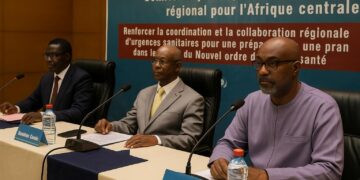
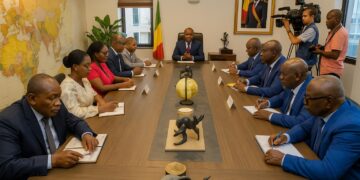
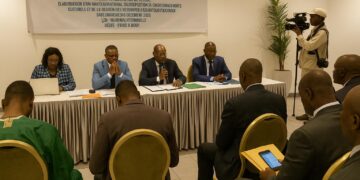
Brazzaville’s policymakers and academics gathered on 26 November to scrutinise a draft training module on climate adaptation and water resource management. The initiative, steered by the Republic of Congo with backing from the French Development Agency, seeks to anchor climate literacy in universities and professional schools nationwide.
Stakeholders emphasise that climate volatility already disrupts rain cycles, agriculture and urban water supply, leaving little margin for delay. By institutionalising specialised courses, authorities aim to produce a cadre of local experts able to design adaptation projects, secure funding and advise both public bodies and private operators.
The move echoes President Denis Sassou Nguesso’s pledge at recent climate forums to match global commitments with domestic capacity-building, reinforcing the Congo’s positioning as a custodian of Congo Basin forests and a reliable partner for green investment.
Field evidence shapes the syllabus
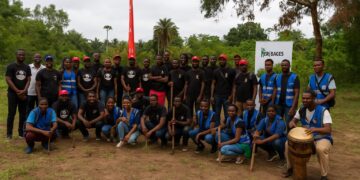
Consultancy Resallience led fieldwork in Brazzaville and Pointe-Noire, gathering hydrological data, interviewing communities and mapping gendered exposure to water stress. Lead author Abla Edjossan-Sossou argues that tailoring content to observable risks increases student engagement and eases the future replication of the module in other vulnerable sectors.
Her team views the study as a strategic entry point able to seed curricula in agronomy, public health and urban planning, all sectors where climate pressures intertwine with water availability. Detailed baselines collected now will, she notes, facilitate later monitoring of learning outcomes and project impacts.
Capacity building and certification
Participants converged on the need for a robust train-the-trainer scheme. Without lecturers versed in hydrology, modelling and socio-economic assessment, warns Edjossan-Sossou, the best-designed syllabus would remain a paper exercise. A forthcoming certification system is therefore expected to safeguard quality and attract regional recognition.
Under discussion is a tiered credential that aligns with national qualification frameworks, enabling universities, technical colleges and even vocational centres to adopt the module incrementally. Officials indicate that digital resources will complement classroom teaching, widening access for remote provinces and members of the diaspora keen to upskill.
Gender perspective takes centre stage
The project embeds gender analysis from the outset. Women, particularly in rural districts, shoulder the bulk of water collection and are disproportionately affected by drought or contamination. Integrating case studies on female-led coping strategies aims to foster inclusive solutions and to encourage more women to enter climate professions.
Speakers highlighted that gender-responsive budgeting by line ministries could complement the academic endeavour, ensuring that adapted infrastructures, such as solar-powered pumps, reach communities where the educational module identifies priority needs. Such coordination, they said, would maximise return on donor funds and reinforce the Congo’s national adaptation plan.
From pilot to national rollout
A university committee led by Professor Bernard M’Passi Mabiala used an iterative co-validation workshop and a pilot class to fine-tune teaching materials. Feedback from students on clarity, workload and local relevance has been fed into a final draft that will be submitted to the Higher Education Council.
Once endorsed, the Ministry of Higher Education, in concert with the AFD, plans a phased deployment across public and private universities. Officials envisage integrating the module into existing bachelor tracks while offering standalone certificates for professionals in ministries, utilities, NGOs and agribusiness seeking targeted skills.
Implementation costs are expected to be modest compared with infrastructure-heavy adaptation projects. Printed manuals, digital platforms and workshops comprise the bulk of expenditure, making the initiative appealing to bilateral partners looking for high impact at limited budgetary risk, particularly in the context of constrained public finances.
Implications for investors and donors
Analysts note that a stronger domestic talent pool lowers execution risk for private operators eyeing irrigation, renewable energy or climate-smart agriculture ventures in Congo. Familiarity with local hydro-climatic data can speed up feasibility studies, compliance with environmental standards and engagement with licensing authorities.
Donors, for their part, view capacity-building as a condition for unlocking larger adaptation finance envelopes. The AFD’s support for curriculum development fits its broader Sahel-Congo strategy of combining technical assistance with concessional loans for resilient infrastructure, thereby maintaining momentum as global climate funding architectures evolve.
Professor Mabiala stresses that the module’s real success will be measured not only by graduate numbers but by tangible community benefits, from reduced borehole failures to improved watershed governance. He envisages partnerships where students conduct field assignments that directly inform municipal adaptation plans and corporate water stewardship.
If replicated in secondary schools, as he suggests, the programme could nurture an environmentally literate generation crucial for sustaining the Congo’s development trajectory while safeguarding its vast forest and water assets. For policymakers and investors alike, that prospect offers both risk mitigation and compelling long-term value.
Next steps and timeline
Authorities target the next academic year for initial rollout, subject to final budget clearance. Draft implementation guidelines envisage June lecturer workshops, July material printing and an August awareness campaign. Monitoring indicators, including gender balance in enrolment, will be published quarterly to maintain transparency and attract additional partners.