




























Market Stabilisation After Butane Price Shock
Congo-Brazzaville’s authorities have moved to contain a recent increase in butane gas prices that raised concern among households. The stated objective is to restore order in a sensitive, regulated market and safeguard purchasing power, in line with existing ministerial pricing rules (Journal de Brazza).
The episode has drawn attention to how quickly retail energy costs can translate into social and macroeconomic pressure. For policymakers, butane pricing is not only a consumer issue, but also a governance test for compliance across the downstream petroleum value chain (Journal de Brazza).
Downstream Petroleum Regulator Convenes Distributors
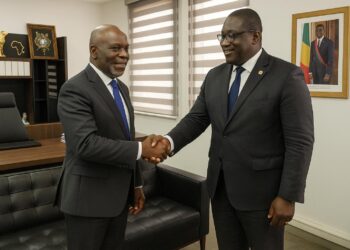
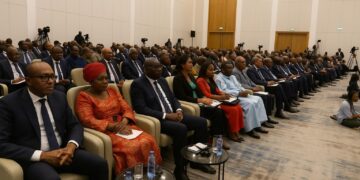
A strategic meeting was chaired by Richard Ngola, Director General of downstream petroleum. Companies involved in the distribution and commercialisation of butane gas were convened to clarify the circumstances of the price increase and to reiterate the rules that frame this segment of the energy market (Journal de Brazza).
According to the account of the meeting, the focus was both diagnostic and corrective. Authorities sought to understand the operational basis for the adjustment, while stressing that changes to consumer-facing prices cannot be handled through unilateral corporate decisions in a regulated environment (Journal de Brazza).
FAAKI Congo Notice Criticised as Regulatory Breach
At the centre of the discussions was a service note issued by FAAKI Congo, presented as the trigger for the price surge. Richard Ngola reportedly described the document as a “flagrant violation” of the regulations governing the sector, signalling an enforcement posture anchored in written texts (Journal de Brazza).
Authorities also pointed to several non-compliance issues in the contract linking FAAKI Congo to Wing Wah. In response, the Minister of Hydrocarbons put in place a team of experts tasked with harmonising contracts among sector participants, aiming for clearer and more consistent commercial arrangements (Journal de Brazza).
Immediate Measures: Withdrawal Order and Sales-Point Review
Following the meeting, a set of measures was decided. FAAKI Congo was instructed to publish, as quickly as possible, an official note cancelling the one linked to the increase in butane gas prices. This requirement reflects the priority given to rapid market signalling and price normalisation (Journal de Brazza).
An interministerial consultation is expected to rule on the reopening of the company’s sales points, which were closed as a precautionary measure. The approach suggests that operational continuity is being weighed alongside regulatory compliance and consumer protection objectives (Journal de Brazza).
In parallel, an official notification is set to record the regulatory violation. Discussions are also expected with all distributors to establish a new supply mechanism, including talks involving Wing Wah, indicating a preference for sector-wide coordination rather than isolated corrective action (Journal de Brazza).
Supply Architecture: Domestic Sources and Imports
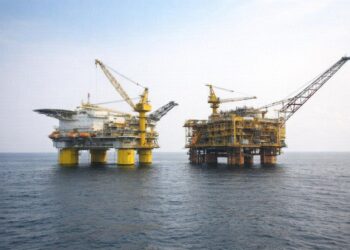
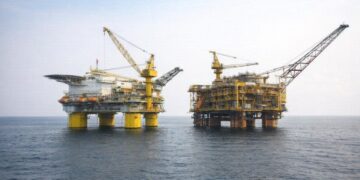
Authorities reiterated their intention to strengthen the main supply sources serving the national market. According to the information provided, Congo-Brazzaville currently sources butane from the Nkossa II terminal operated by Trident Energy Congo, the Banda Kayo site operated by Wing Wah, the Congolaise de raffinage, and imports (Journal de Brazza).
This mapping of supply points highlights a mixed model combining domestic production and imported volumes. For investors and operators, such a configuration typically raises practical questions around logistics, storage, continuity of supply, and the contractual allocation of risks between upstream sources and retail distribution networks (Journal de Brazza).
Regulated Pricing: The Reference Levels Reaffirmed
Richard Ngola recalled that butane gas prices are strictly governed by a ministerial order. The framework sets the distribution price at 200 FCFA per kilogram and the final consumer price at 512 FCFA, providing a reference that authorities appear determined to enforce across the market (Journal de Brazza).
For market participants, the reaffirmation of these price points serves as a compliance benchmark. It also frames forthcoming discussions on supply mechanisms and contract harmonisation, since the commercial viability of distribution depends on how operators manage costs within a capped end-user tariff (Journal de Brazza).
What This Signals for Investors and Operators
Beyond the immediate reversal of a price increase, the sequence underscores a broader policy signal: the state is positioning itself as an active coordinator of downstream hydrocarbons governance. The use of expert review to harmonise contracts suggests a preference for clearer rules to reduce friction between operators (Journal de Brazza).
In practical terms, the coming interministerial decision on reopening closed points of sale and the planned supply-mechanism discussions will be closely watched. They may shape expectations on enforcement consistency, operational predictability, and the balance between consumer affordability and supply resilience (Journal de Brazza).
FAQs for Households and Businesses
What changed on prices? Authorities ordered FAAKI Congo to cancel the internal note associated with the butane price increase, and reminded the market that prices are fixed by ministerial order at 200 FCFA/kg for distribution and 512 FCFA for final consumers (Journal de Brazza).
Will the company’s sales points reopen? The information indicates that an interministerial consultation will decide on the reopening of FAAKI Congo’s points of sale, which were closed as a precautionary step, after the cancellation notice is issued (Journal de Brazza).
Where does Congo-Brazzaville get its butane? Supplies were described as coming from Nkossa II (Trident Energy Congo), Banda Kayo (Wing Wah), the Congolaise de raffinage, and imports, reflecting multiple channels feeding the domestic market (Journal de Brazza).
Dashboard: Reference Prices and Supply Points
Butane price reference in Congo-Brazzaville: 200 FCFA per kilogram at distribution level; 512 FCFA for final consumers. Date: not specified in the source. Source: ministerial order as cited by the downstream petroleum administration (Journal de Brazza).
Key supply points mentioned: Nkossa II terminal (operator: Trident Energy Congo), Banda Kayo site (operator: Wing Wah), Congolaise de raffinage, and imports. Date: not specified in the source. Source: downstream petroleum administration as reported (Journal de Brazza).