






Brazzaville ceremony spotlights cultural diplomacy
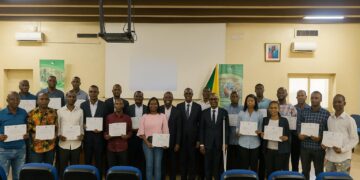
On January 8, the Embassy of China in the Republic of the Congo rewarded around twenty winners of a painting competition titled “Image of Sino-Congolese Cooperation.” The initiative was organized by the Association of Chinese Enterprises, in partnership with the Poto-Poto Painting School, a key incubator of young Congolese talent.
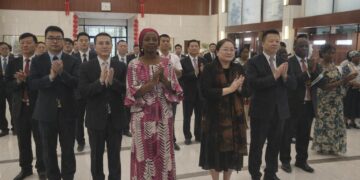
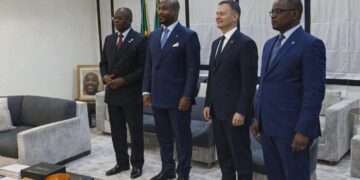
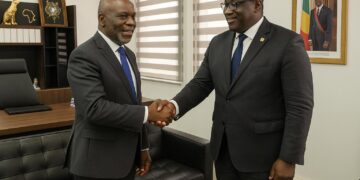
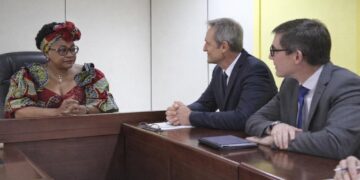
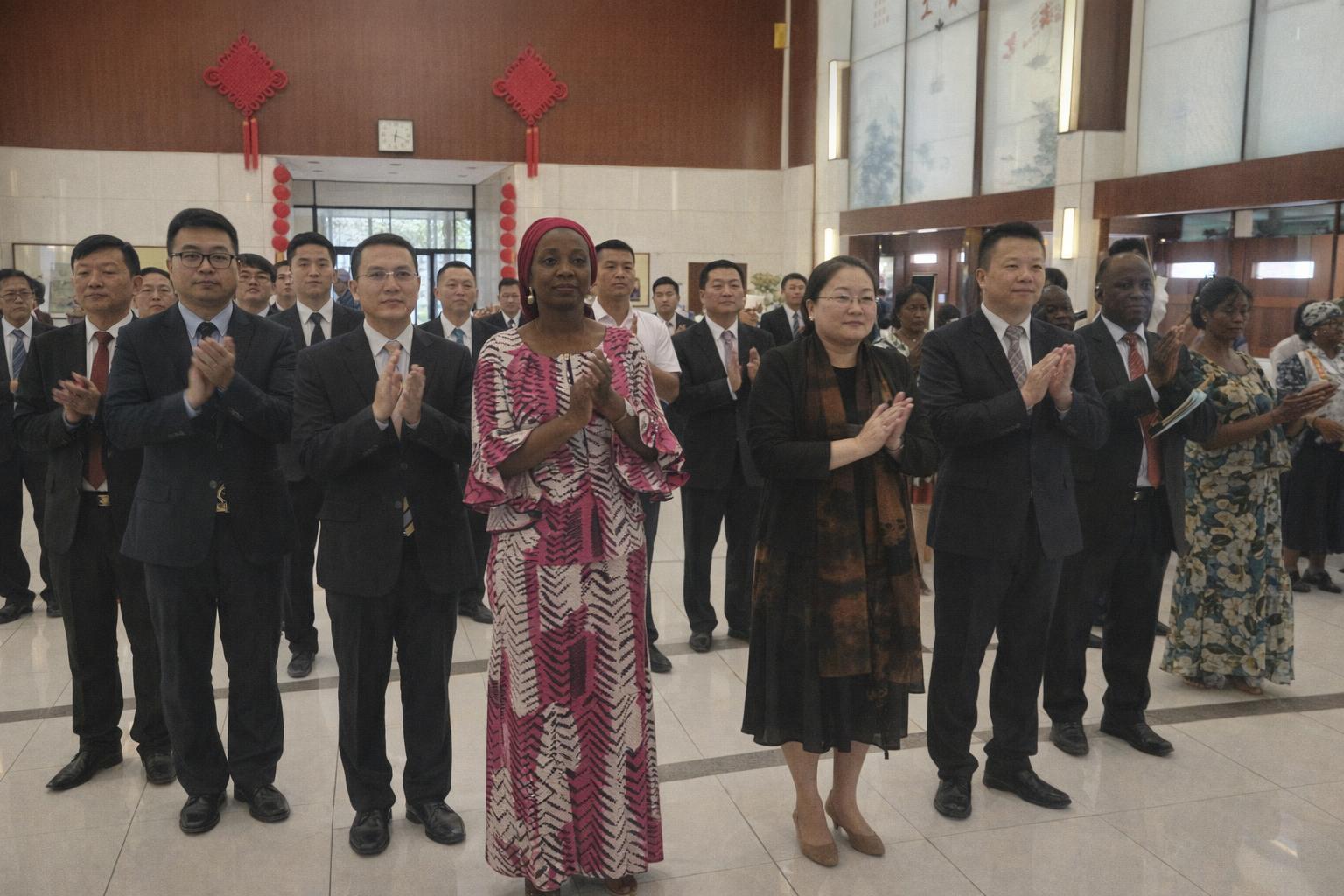
The prize ceremony was co-chaired by Lydie Pongault, Minister of Cultural Industries, and An Qing, China’s ambassador to Congo. The event was also paired with the launch of an exhibition called “Shared Future Community,” adding a broader diplomatic framing to an artistic celebration.
2026 Sino-African people-to-people exchanges set the tone
The ceremony took place as the 2026 Sino-African year of people-to-people and cultural exchanges opened the same day in Addis Ababa. Within that context, the Brazzaville gathering was presented as a concrete local expression of a wider agenda that emphasizes cultural links alongside economic cooperation.
Minister Lydie Pongault described the moment as recognition of young Congolese artists and, at the same time, a sign of a “living and fruitful” cooperation between the Republic of the Congo and the People’s Republic of China. She underlined culture as a universal language that can make partnerships more sincere and lasting.
A contest designed to translate infrastructure into images
According to the minister, the embassy had initiated the competition in May, with an objective to promote dialogue, mutual understanding, and friendship through artistic creation. The choice of painting as a medium invited participants to interpret cooperation beyond technical descriptions and bring it into the realm of lived experience.
The competition focused on reproducing, on canvas, infrastructure built by China within the framework of Sino-Congolese cooperation over several decades. In this approach, roads, energy assets, and public buildings become visual symbols, offering the public a different way to read development trajectories.
Projects depicted: energy, transport, industry, health
The paintings illustrated well-known projects cited during the ceremony: the headquarters of the Sino-Congolese Bank for Africa, the Nouvelle Société des Ciments du Congo, the Imboulou hydroelectric power plant and the Moukoukoulou dam, and the Edith-Lucie-Bongo-Ondimba General Hospital in Oyo.
Other works referenced transport and strategic connectivity, including National Road No. 1, the Agostinho-Neto airport in Pointe-Noire, the Corniche viaduct in Brazzaville, and an aeronautical maintenance center under construction at Maya-Maya airport. The Soremi polymetallic project was also among the themes portrayed.
Selection process anchored in professional training
Winners were selected after an evaluation of the artworks by the Poto-Poto Painting School, which is recognized for supporting the professionalization of young creators. By positioning the school at the heart of the assessment process, organizers signaled an emphasis on standards and mentorship, not only on symbolic recognition.
This institutional role also reflects a practical dimension of cultural policy: competitions can serve as platforms to identify emerging artists, connect them with sponsors, and broaden visibility. For investors and cultural operators, it suggests how art ecosystems can be structured through partnerships.
Official statements emphasize mutual understanding
Ambassador An Qing said the contest resonated with artists from both countries and generated many “remarkable” works marked by sincere emotions. She framed each painting as a “multicolored window” through which audiences can feel friendship rooted in pragmatic cooperation across infrastructure, agriculture, health, education, and culture.
In her view, the paintings recorded solidarity between Congolese and Chinese communities and offered a vivid illustration of bilateral cooperation. The diplomatic message was carefully calibrated: the creative process is presented not as decoration, but as a complementary channel for long-term relations.
Winners highlight iconic sites and new construction
The first prize was awarded to Arthur Bogade Bantsimba Bikoumou and Gerly Mpo. Their paintings represented, respectively, the Ketta–Ntam road and the Sino-Congolese Bank for Africa, two subjects that embody both territorial linkage and institutional presence within the cooperation narrative.
Second prize went to Aimé Mbilampassi Batoula and Ovie Elga Koud for reproductions of the Moukoukoulou hydroelectric dam and installations of the Nouvelle Société des Ciments du Congo. Third prize was awarded to Lionnel Tololo Mboko and Rolvie Kivouelé for works on the Imboulou dam and the aircraft maintenance center being built at Maya-Maya airport in Brazzaville.
FOCAC agenda points to a busy 2026 calendar
Beyond the awards, the officials argued that the achievements of Congo–China cooperation are not limited to projects and sectoral deliverables. In this reading, the deeper foundations are people-to-people exchanges that reinforce trust and familiarity, and can outlast political and economic cycles.
Ambassador An Qing said these exchanges form the most dynamic and durable chapter of Sino-African friendship, able to transcend language and borders. Within the FOCAC framework, she announced that hundreds of people-to-people and cultural exchange events are expected throughout 2026.
Embassy plans exhibitions, seminars, dialogues, film events
The embassy also plans to organize a series of activities including exhibitions, seminars, dialogues, and film festivals during 2026, according to the ambassador. The stated objective is to deepen mutual inspiration between civilizations while strengthening popular support for the Congo–China relationship.
For decision-makers, the sequence illustrates how cultural diplomacy can be organized as a policy toolkit: prizes and exhibitions anchor visibility, while seminars and dialogues can shape networks. In Brazzaville, the painting contest suggests that soft power and development narratives are increasingly managed together, through carefully staged public events.