



























Congo hydrocarbons pricing meeting in Pointe-Noire
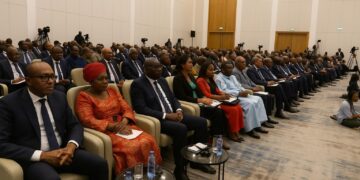
The meeting to determine prices for crude hydrocarbons produced in the Republic of the Congo and marketed in the fourth quarter of 2025 was held in Pointe-Noire from 7 to 9 January. The session brought together the State and contracting parties to align on applicable reference prices.
Organized by Eni Congo, the meeting followed the contractual framework set out in production sharing contracts. Under the relevant provisions, the parties convene after each quarter to establish, by mutual agreement, the price applicable to each crude quality for the months already completed (Journal de Brazza).
Global oil market context: consolidation and tighter spreads
Discussions took place in an international environment described as demanding, with oil markets in a consolidation phase. In such conditions, maintaining predictable differentials and a credible pricing methodology is often as important as headline prices for both operators and public finance planners.
During the quarter, observed differentials reportedly ranged from -3.950 to 1.835 US dollars per barrel. For market participants, this interval signals the usual interplay between grade quality, freight economics, regional demand, and benchmark movements rather than a single directional trend (Journal de Brazza).
Pricing mechanisms used for Congolese cargoes
Cargoes were negotiated using several mechanisms referenced during the meeting. These included the pricing period approach, the five-day Bill of Lading method, and monthly averages. Each mechanism can shift timing exposure to benchmarks and can influence realized differentials.
For decision-makers, the key is that these mechanisms help anchor transactions in transparent references while allowing flexibility to reflect cargo-specific terms. This procedural clarity contributes to commercial predictability and reinforces the credibility of official price determination exercises (Journal de Brazza).
Q4 2025 weighted averages: Djeno, Nkossa, Yombo
The weighted quarterly averages paid to producers were reported by crude grade. Djeno Blend averaged 60.665 dollars per barrel, with a differential of -2.344 dollars versus dated Brent, a pattern consistent with a discount reflecting grade characteristics and market positioning.
Nkossa Blend averaged 63.663 dollars per barrel with a near-neutral differential of 0.005 dollar to dated Brent. Yombo averaged 63.507 dollars per barrel, with a differential of -0.200 dollar, indicating a slightly discounted but broadly benchmark-aligned performance (Journal de Brazza).
LPG streams: butane and propane benchmarks
Beyond crude, the meeting also covered associated liquefied petroleum gas streams. Nkossa-Butane was set at 49.986 dollars per barrel, with no differential relative to Butane North West Europe cargoes, aligning the valuation with a widely observed regional reference (Journal de Brazza).
Nkossa-Propane was valued at 24.675 dollars per barrel, with a differential of -1.618 dollars compared with Propane Mont Belvieu. In practice, these benchmark linkages help align export realizations with established pricing centres while reflecting logistics and market conditions.
Fiscal reference price: a key input for public revenues
The quarterly average of fiscal hydrocarbon prices for Q4 2025 was set at 62.612 dollars per barrel. The quarter-on-quarter differential was reported at -0.846 dollar, suggesting limited adjustment rather than a structural break in the fiscal valuation framework (Journal de Brazza).
For Congo-Brazzaville’s macroeconomic and budget stakeholders, such a fiscal reference matters because it informs revenue projections, cash-flow planning, and the calibration of oil-linked fiscal parameters. A stable reference can support disciplined execution even amid external price volatility.
Official message: competitiveness and national interest
Professor Macaire Batchi, chief of staff to the Minister of Hydrocarbons, stated that the work confirmed the need for a realistic and forward-looking approach. He emphasized a careful reading of market conditions and a coherent defense of national interests in a competitive environment (Journal de Brazza).
He added that the weighted average of 62.612 dollars per barrel “confirms the competitiveness and robustness of our basket in a competitive and volatile environment.” The statement frames the outcome as both commercially credible and institutionally consistent with the State’s objectives.
Governance of price setting under production sharing contracts
The article notes that the meeting is provided for in contracts, with parties meeting within months after each quarter to fix, by common agreement, the applicable price for each hydrocarbon quality produced. This governance is designed to reduce disputes and anchor valuations in a shared process (Journal de Brazza).
Such periodic determination can also strengthen coordination between technical market realities and fiscal administration needs. For investors, the existence of a formal and recurring price-setting framework can be read as a sign of procedural continuity in sector management.
Next timetable: April session already scheduled
The next price determination meeting was announced for 8 to 10 April. This forward calendar is consistent with the quarterly rhythm described in the contractual provisions and signals an effort to keep valuation and settlement processes regular and timely (Journal de Brazza).
For market participants operating across West and Central African crude flows, the scheduling also provides a practical reference point for planning commercial documentation, reconciliation cycles, and internal reporting around Congo-Brazzaville’s officially determined pricing outcomes.