
















Resilient Growth Outlook
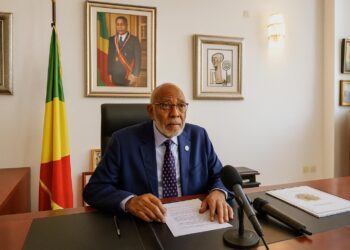
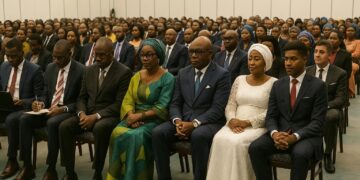
President Denis Sassou Nguesso used his annual State of the Nation address on 28 November to announce that Congo-Brazzaville’s economy is set to regain momentum after several difficult years, signalling to lawmakers that the macro-recovery plan is “slow but reassuring”.
The president forecast real GDP growth of about 3.6 percent in 2026, crediting renewed dynamism in non-oil activities ranging from agribusiness to construction; the oil sector, while still dominant, is expected to contribute more modestly as diversification efforts mature.
Sassou Nguesso framed the projection as proof of resilience, noting that “it is encouraging for an economy restructuring at a gentle but certain pace”. Multilateral observers such as the IMF have previously described Congo’s modest rebound as contingent on rigorous fiscal discipline and structural reforms.
Inflation and Debt Metrics
Inflation remains above the regional CEMAC ceiling of 3 percent, yet the head of state highlighted a clear deceleration over recent quarters. Authorities attribute the slowdown to tighter monetary coordination with the Bank of Central African States and targeted measures on food distribution corridors.
Debt dynamics were another focal point. The president asserted that external, commercial and multilateral liabilities are now “on a downward path” following cash-management optimisation and the reprofiling of domestic arrears, an exercise designed to restore confidence without jeopardising social spending priorities.
Rating agencies have not yet issued new assessments, but government advisers believe the improving trajectory could eventually translate into lower risk premiums. For Congo, which exited a sovereign default episode only two years ago, perception is nearly as important as statistical progress.
Renewed Investor Confidence
The administration points to the successful Eurobond transaction completed earlier this year, after more than two decades of absence from international capital markets, as concrete evidence that global investors are gradually reassessing Brazzaville’s credit story.
Banking Expansion in Dolisie
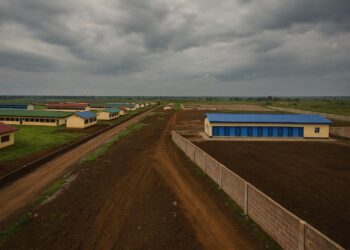
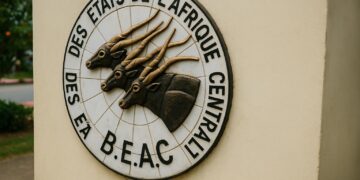
At the domestic level, the Banking Commission of Central Africa approved plans for a new branch of BEAC in Dolisie. Construction is scheduled to start shortly, following the symbolic foundation stone ceremony led by the president during his recent tour of Niari Department.
Officials argue that adding a BEAC node in the south-west will deepen financial inclusion and shorten cash-clearing delays for timber, mining and logistics operators clustered around the Pointe-Noire–Dolisie growth corridor.
Strategic Energy Investments
Energy security remains a pressing concern after months of intermittent fuel shortages linked to ageing infrastructure at the state refinery. Sassou Nguesso therefore confirmed government backing for a privately financed plant inside the Pointe-Noire Special Economic Zone.
Led by Chinese firm Atlantique Petrochimie, the greenfield refinery is designed for a phased capacity of 1.5 to 5 million tonnes per year. Authorities expect the facility to lift domestic supply of gasoline, diesel and jet fuel, reducing costly emergency imports.
The project dovetails with Congo’s broader downstream strategy, which also includes rehabilitating storage depots and digitising distribution permits to curb leakage. International observers note that adequate feedstock allocation and transparent pricing will be critical for the new plant’s commercial viability.
Containing Living Costs
While headline numbers are improving, households continue to grapple with elevated food and transport costs. The chief executive therefore instructed the commerce ministry to intensify anti-profiteering inspections and crack down on speculative hoarding by unscrupulous traders.
Previous sweeps have already led to temporary closures of depots lacking price displays, according to the General Directorate for Competition. Consumer groups nevertheless argue that structural solutions—such as boosting local agro-processing capacity—remain essential to anchor prices over the medium term.
Diversification Beyond Oil
Diversification efforts pivot on agriculture, wood transformation, telecom services and niche mining such as potash. Non-oil value added already expanded by roughly two percentage points last year, according to preliminary planning-ministry data cited by the president in his parliamentary remarks.
Digital Backbone for SMEs
Digital connectivity is another lever. The government recently activated additional fibre links between Brazzaville and Pointe-Noire, easing bandwidth bottlenecks for start-ups. Officials expect the expanded backbone to lower transaction costs and support fintech adoption, key to deepening credit penetration among micro and small enterprises.
Forward Risks and Opportunities
Analysts monitoring Central African economies underline that the success of Congo’s recovery hinges on keeping reform momentum alive after 2026, especially in public-finance transparency, digital tax administration and the business climate, areas regularly highlighted in World Bank and AfDB diagnostics.
For now, government projections of 3.6 percent growth, slowing inflation and declining debt provide a cautiously positive narrative that could resonate with both domestic entrepreneurs and external investors seeking diversification beyond hydrocarbons in one of Africa’s most urbanised forest basins.
Ultimately, the administration’s narrative suggests that macro stability, sectoral diversification and targeted infrastructure projects form a mutually reinforcing triangle. If execution remains on schedule, Congo-Brazzaville could re-enter the club of middle-income performers within Central Africa over the next decade.