



















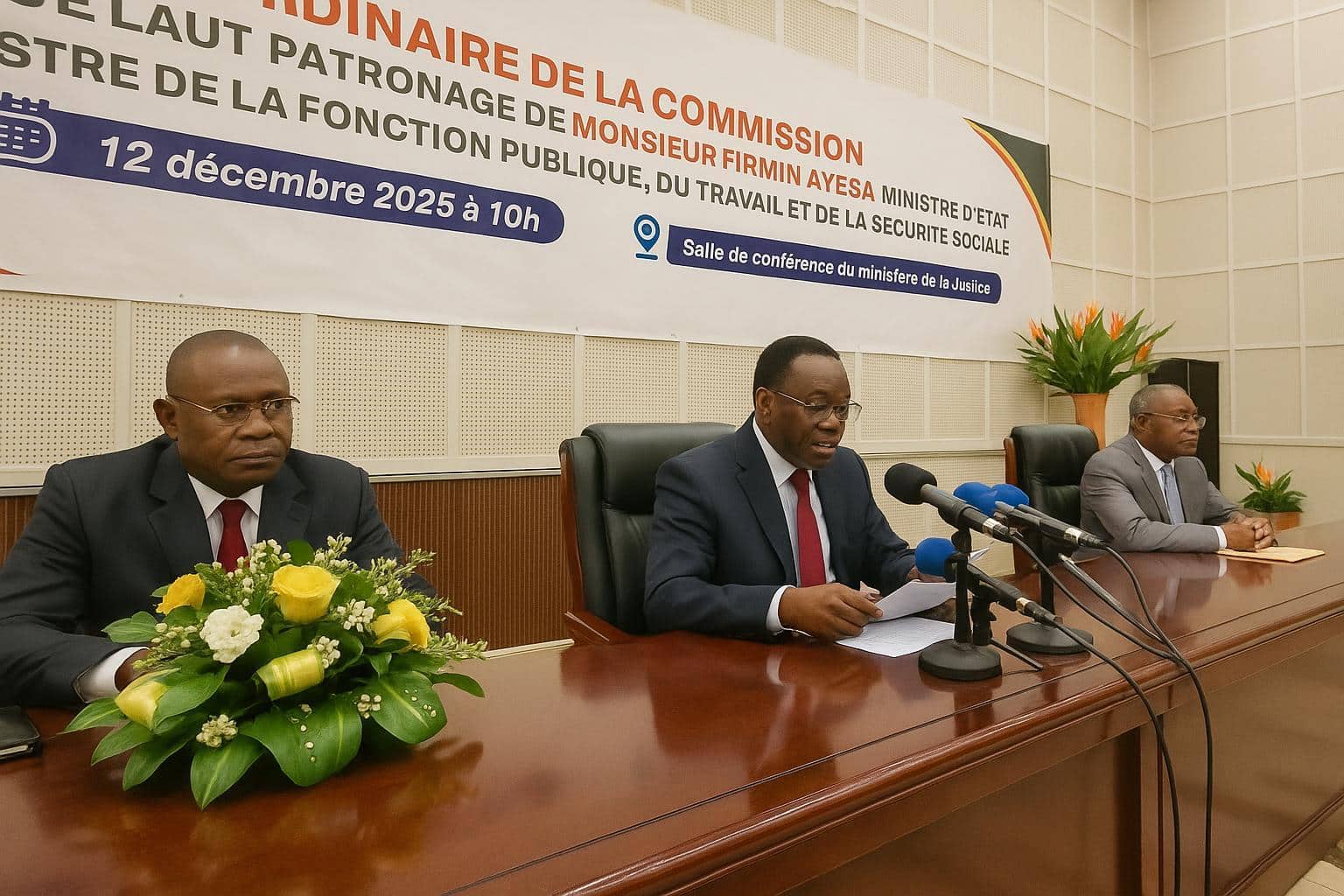
Brazzaville session signals decisive momentum
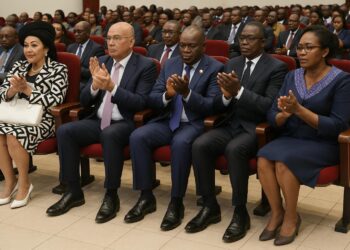
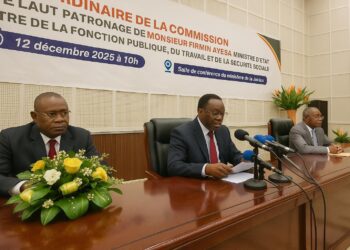
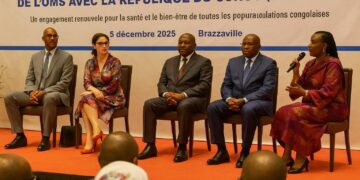
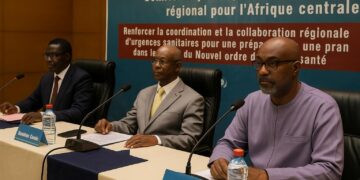
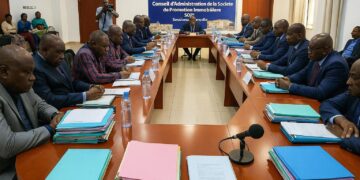
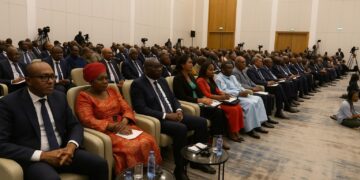
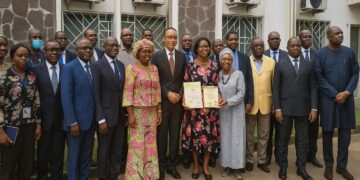
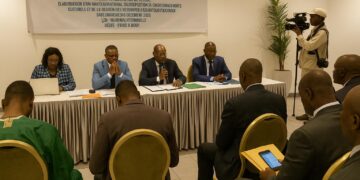
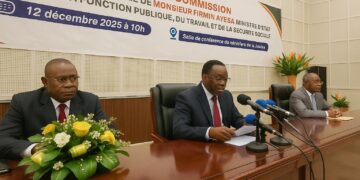
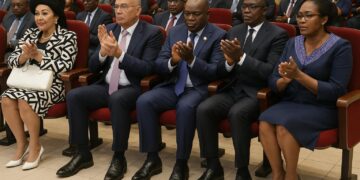
On 12 December 2025, the National Consultative Labour Commission convened under the chair of Minister of State Claude Alphonse Nsilou, filling in for Labour Minister Firmin Ayessa. Delegates from government, employer federations and unions scrutinised the penultimate draft of Congo’s new labour code.
Officials described the text as the fruit of intensive, multi-year work by legal and economic specialists. The Commission’s mandate is to polish final clauses before transmission to a tripartite forum and subsequent referral to parliament, where adoption is expected early 2026 according to the Social Affairs Secretariat.
Strategic value for investors and markets
The current code dates back two decades and has struggled to keep pace with oil-price shocks, diversification goals and regional competition. A modern framework is therefore viewed as catalytic for capital inflows by Unicongo, the main business association (Unicongo briefing, 2025).
Legal clarity around contracts, dispute resolution and social charges can cut transaction costs. Advisory firm Control Risks estimates that in frontier markets a predictable labour regime lowers project delays by up to fifteen percent, a margin closely watched by infrastructure and mining financiers active in Congo.
Anchoring international standards and compliance
The draft incorporates technical interpretations from the International Labour Organization and the nine ILO conventions ratified by Congo in 2023, including Convention 190 on workplace violence. According to the Ministry’s legal unit, these references aim to limit litigation risks for multinationals sensitive to environmental, social and governance benchmarks.
By embedding global norms, Brazzaville also positions itself for preferential trade schemes that reward strong social safeguards. The African Continental Free Trade Area Secretariat recently highlighted labour governance as a determinant for value-chain localisation across Central Africa (AfCFTA policy note, 2024).
Key fiscal updates: retirement and minimum wage
Law 48-2024 already raised the statutory retirement age, gradually phasing to 62 for men and 60 for women by 2028. The new code aligns related severance and pension-contribution tables, giving payroll managers a unified reference.
Decree 2024-2752 lifted the guaranteed inter-professional minimum wage to 120,000 CFA francs. The code cements indexation mechanisms linked to inflation and productivity metrics released by the National Statistics Institute, reducing ad-hoc negotiations that previously unsettled small manufacturers.
Embracing flexible and digital work patterns
COVID-19 pressures accelerated telework and part-time arrangements in Congo’s services sector. The upcoming legislation codifies eligibility, equipment allowances and data-protection duties for remote staff, drawing on ILO technical notes issued during the pandemic.
ICT minister Léon Juste Ibombo argued last month that clear rules will encourage business-process-outsourcing ventures targeting francophone markets. Deloitte’s 2025 Africa Telework Survey ranks Brazzaville among the top five cities for bandwidth cost declines, underscoring the reform’s timing.
Employers and unions seek balanced safeguards
Employer groups Unicongo, UNOC and COGEPACO favour streamlined dismissal procedures tied to economic performance, while union confederations CSTC, CSC and COSYLAC press for stronger consultation timelines. Commission rapporteurs signalled progress on a compromise extending notice periods yet capping compensation ceilings.
Claude Alphonse Nsilou praised the “spirit of responsible dialogue” and reminded delegates that social peace remains a cornerstone of the national development plan, citing reduced strike days since 2022 after sectoral pacts in oil services and timber processing.
Projected macro impact and budgetary considerations
Finance Ministry simulations estimate the reform could lift formal-sector employment from 450,000 to 520,000 jobs within five years, boosting income-tax receipts by 0.3 percent of GDP. Costs linked to labour-inspectorate expansion are evaluated at 5 billion CFA francs annually.
The budget envelope is expected to be neutral overall, assisted by World Bank support under the Economic Governance Project. The Bretton Woods institution conditions disbursements on adoption of the code and publication of implementing decrees (World Bank aide-memoire, 2025).
Implementation roadmap and institutional capacity
Once promulgated, a twelve-month transition period will allow companies to audit compliance, update human-resource manuals and negotiate collective agreements. The Labour Directorate is finalising an electronic registry for contracts, inspections and mediation outcomes.
To build capacity, 300 inspectors will receive certification training delivered by the International Training Centre of the ILO in Turin. The European Union Delegation in Brazzaville has earmarked technical assistance funds for the digital platform, officials confirmed.
Opportunities for SMEs and returning diaspora
Simplified hiring templates and clearer probation rules should particularly benefit small and medium-sized enterprises, which account for 90 percent of non-oil employment. The Congolese Agency for Entrepreneurship plans roadshows in Pointe-Noire and Ouesso to explain incentives.
Diaspora networks in Paris and Montréal have welcomed the text’s portability clauses permitting foreign experience to count toward seniority thresholds, a measure designed to lure skilled nationals back into sectors such as agribusiness, fintech and renewable energy.
Sustainability and responsible business outlook
The code introduces obligations for enterprises to integrate occupational-health data into annual sustainability reports, dovetailing with Congo’s forthcoming ESG disclosure guidelines. Forestry and mining operators foresee synergies with certification schemes like FSC and ICGLR.
By combining modern protections with competitiveness levers, Brazzaville signals to regional peers that social ambition and investment attraction can reinforce each other. Parliamentary endorsement will mark a milestone in aligning the Republic of Congo’s labour market with its broader vision for inclusive growth.