















• About us
  • Advertising
  • Careers
  • Contact
Congo-Brazzaville
Friday, January 16, 2026
No Result
View All Result
CONTRIBUTE
Congo Investor
  • Home
  • World

    Italy’s €236m Health Deal Upgrades Congo Hospitals

    Congo–China Paintings Reveal a New Soft-Power Push

    Morocco’s AFCON 2025 earns FIFA praise in Rabat

    Inside Morocco’s Royal Craft School in Fez

  • Politics

    Congo Politics: Serge Oboa’s Tough Talk Explained

    AI, Jobs, Skills: Rethinking School for Tomorrow

    3,719 Congo Passports Ready—Yet Still Unclaimed

    Mindouli Tension Sparks Flight on Congo Key Highway

  • Companies

    Congo Fintech Boost: Bantulab’s €1m Incubator

    UBA POS at Étoile de Brazza: a new cashless boost

    SNPC Sends Elite Students to Oil School in Baku

    Brazzaville Christmas Market Hits 17m CFA

  • Tech

    Congo’s AI Rules Push: What Investors Should Watch

    Congo Unveils One-Stop Digital Start-Up Portal

    Super-App GoChap Debuts in Brazzaville Market

    Congo’s Innovators Stalled by Costly Patent Fees

  • Markets

    Congo Butane Gas Prices: Authorities Step In

    Brazzaville to Host Major Francophone Business Forum

    Congo crude prices: why Q4 2025 stayed competitive

    Congo, DR Congo Unite to Digitise Insurance

  • Climate

    Congo’s Bacassi Project: Carbon, Farms, Jobs

    Congo Climate Negotiators: Skills That Pay Off

    Congo Climbs to PAFCA Co-Chair, Investors Watch

    Safoutier Leads Congo Plant Fair, Green Market Buzz

  • Society & Arts

    Lamuka’s Rise: Women with Disabilities Lead Change

    Why Mike Tyson’s Kinshasa Pilgrimage Resonates

    VOQUART Ignites Brazzaville’s Peripheral Revival

    Brazzaville’s Taxi Bomoyi: Drivers Taking on Diabetes

  • Work & Careers

    SNPC Scholarships: 4 Top Graduates Head Abroad

    Brazzaville Climate Bootcamp Sparks Green Careers

    Brazzaville’s PSIPJ: 45,000 Youth Target by 2026

    Detail Management: Congo’s New Guide for Leaders

  • Home
  • World

    Italy’s €236m Health Deal Upgrades Congo Hospitals

    Congo–China Paintings Reveal a New Soft-Power Push

    Morocco’s AFCON 2025 earns FIFA praise in Rabat

    Inside Morocco’s Royal Craft School in Fez

  • Politics

    Congo Politics: Serge Oboa’s Tough Talk Explained

    AI, Jobs, Skills: Rethinking School for Tomorrow

    3,719 Congo Passports Ready—Yet Still Unclaimed

    Mindouli Tension Sparks Flight on Congo Key Highway

  • Companies

    Congo Fintech Boost: Bantulab’s €1m Incubator

    UBA POS at Étoile de Brazza: a new cashless boost

    SNPC Sends Elite Students to Oil School in Baku

    Brazzaville Christmas Market Hits 17m CFA

  • Tech

    Congo’s AI Rules Push: What Investors Should Watch

    Congo Unveils One-Stop Digital Start-Up Portal

    Super-App GoChap Debuts in Brazzaville Market

    Congo’s Innovators Stalled by Costly Patent Fees

  • Markets

    Congo Butane Gas Prices: Authorities Step In

    Brazzaville to Host Major Francophone Business Forum

    Congo crude prices: why Q4 2025 stayed competitive

    Congo, DR Congo Unite to Digitise Insurance

  • Climate

    Congo’s Bacassi Project: Carbon, Farms, Jobs

    Congo Climate Negotiators: Skills That Pay Off

    Congo Climbs to PAFCA Co-Chair, Investors Watch

    Safoutier Leads Congo Plant Fair, Green Market Buzz

  • Society & Arts

    Lamuka’s Rise: Women with Disabilities Lead Change

    Why Mike Tyson’s Kinshasa Pilgrimage Resonates

    VOQUART Ignites Brazzaville’s Peripheral Revival

    Brazzaville’s Taxi Bomoyi: Drivers Taking on Diabetes

  • Work & Careers

    SNPC Scholarships: 4 Top Graduates Head Abroad

    Brazzaville Climate Bootcamp Sparks Green Careers

    Brazzaville’s PSIPJ: 45,000 Youth Target by 2026

    Detail Management: Congo’s New Guide for Leaders

No Result
View All Result
Congo Investor
No Result
View All Result
Home Politics

Congo Politics: Serge Oboa’s Tough Talk Explained

by Michael Mwamba
January 16, 2026
in Politics
Reading Time: 3 mins read

A security figure moves to the spotlight

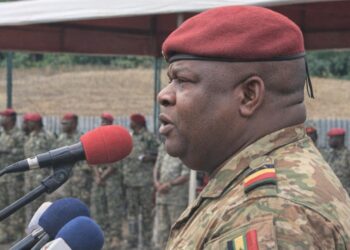
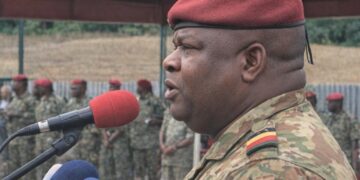
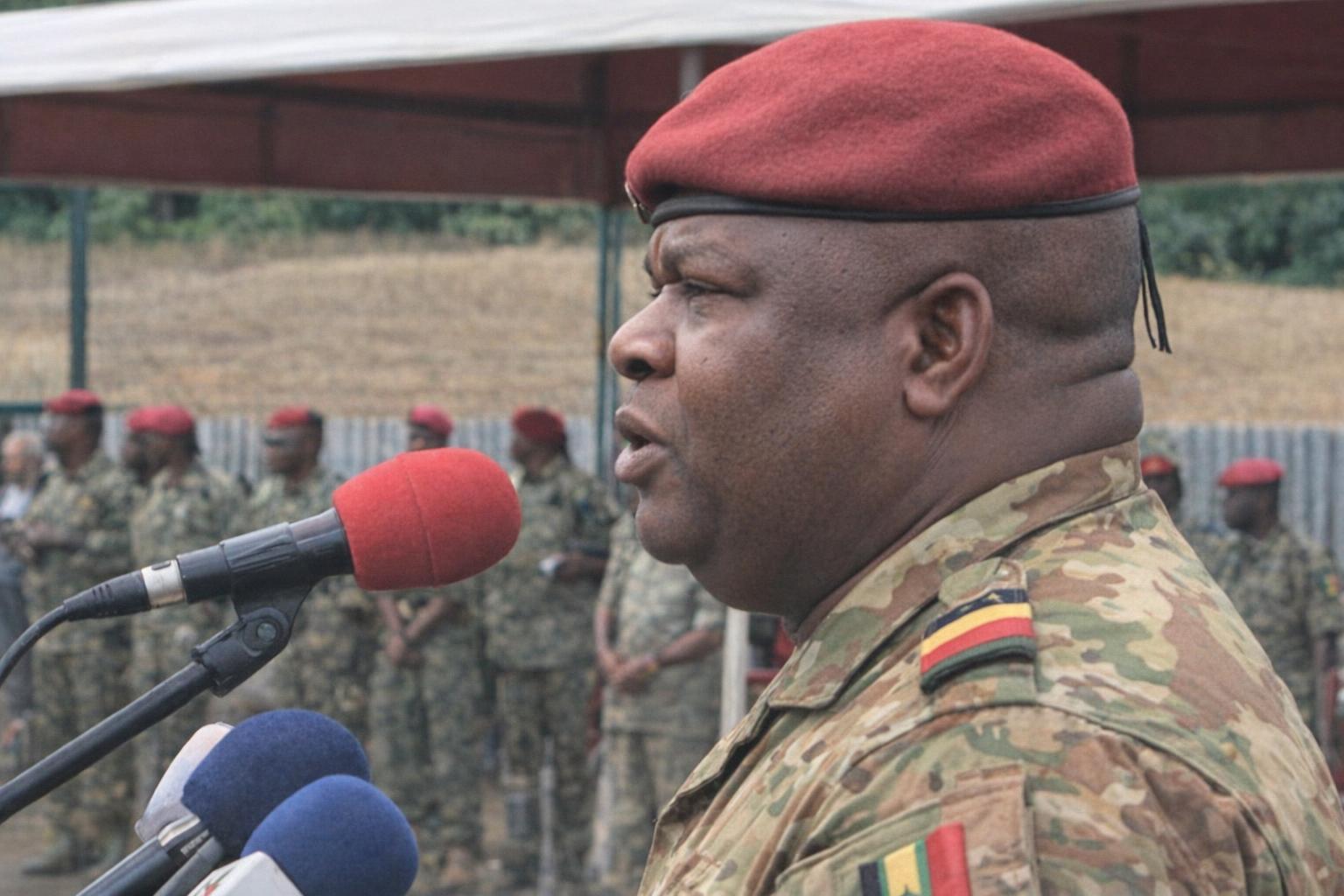
A widely shared commentary portrays Brigadier General Serge Oboa as overshadowing several senior state officials, including the ministers in charge of interior and justice, as well as top police and gendarmerie leaders. In that framing, public attention would now focus primarily on Serge Oboa.

The same text depicts Serge Oboa, presented as a senior figure within the presidential security apparatus, using unusually forceful language. It claims he warned political actors, with particular emphasis on opposition figures, against actions that could disrupt the path toward a March 2026 electoral victory for President Denis Sassou Nguesso.

What is being attributed to Serge Oboa

According to the commentary, the message attributed to Serge Oboa was explicit: anyone seeking to obstruct what it calls a national “path forward” would face firm consequences, described as being applied without hesitation. It also attributes to him the idea that political competition should unfold “on the field,” not in the street.

Such phrasing, if accurately reported, would align with a classic public-order narrative that prioritizes institutional channels over street mobilization. At the same time, the text itself asks on what authority Serge Oboa would address the wider political class, raising questions about role definition and hierarchy.

Institutional boundaries and chain of command

In Congo-Brazzaville, public messaging on political freedoms, electoral conduct, and public security is typically expected to be articulated by constitutionally and administratively mandated authorities. These usually include government ministries, the national police, the gendarmerie, and the electoral administration, depending on the topic and timing.

The commentary suggests an ambiguity: whether a senior officer within the presidential security structure should be communicating directly to political parties. In neutral terms, the issue is less the existence of security messaging than the need for clarity on institutional mandates, chain of command, and accountability.

Local administration and the rule-of-law debate

The same source refers to prefectural authorities and evokes a prior episode it calls “the Anatole Limbongo Ngoka affair” in Likouala, using it to question whether local administrators, military actors, and police forces are perceived as operating above ordinary legal constraints.

Because the original text provides no verifiable details beyond the mention, it is prudent to treat that reference as a signal of public debate rather than as an established factual record. Still, it illustrates a recurrent governance topic in many states: how security imperatives interface with administrative law and judicial oversight.

Perceptions, rhetoric, and political polarization

The commentary includes personal and regional stereotypes about Serge Oboa, including claims about mockery in parts of Brazzaville and assertions about political networks. Such language is overtly polemical and does not constitute evidence of institutional policy or official position.

From an investor and governance perspective, the more decision-relevant takeaway is that political discourse appears polarized and highly personalized. In such environments, security-sector communication—accurate or mischaracterized—can quickly become a proxy battlefield for wider debates about legitimacy and electoral process.

Claims about appointments and loyalty narratives

The text further alleges that Serge Oboa’s promotion and influence reflect identity politics, and it attributes to him strong loyalty to President Denis Sassou Nguesso. These claims are presented as assertions rather than demonstrated facts, and the document does not provide documentary support, dates, or official decrees.

Nevertheless, the passage is indicative of how promotion decisions in sensitive state functions can be interpreted politically by observers. In practice, governments often emphasize cohesion and discipline in protective services, especially in periods leading to major national political milestones.

Allegations linked to Mindouli and the Pool region

A particularly serious section alleges abuses by security elements associated with Serge Oboa during unrest in Mindouli, in the Pool area. It mentions deaths, property damage, and destruction of motorcycles. The text, however, does not provide corroborating information, attribution standards, or references to investigations.

Given the gravity of such claims, a neutral reading should distinguish between allegations and verified incidents. For public authorities and partners, the operational question typically becomes whether mechanisms exist to prevent excesses, document events, and ensure remedies consistent with national law and international commitments.

Macro priorities that shape the political climate

Beyond personalities, the commentary argues that citizens face more pressing priorities than elite political contestation. It points to state capacity concerns, persistent economic strain, limited industrial development, unemployment, public debt pressures, and stress in education and health services, alongside infrastructure needs.

Those themes—without endorsing the source’s broader political judgments—match the categories of risks and reforms that investors, lenders, and development partners usually track. In Congo-Brazzaville, perceptions of stability, predictability, and administrative effectiveness remain central to confidence.

What decision-makers should monitor into 2026

Looking toward March 2026, the key variables are likely to include the tone of official public-order communication, the degree of coordination between civilian authorities and security institutions, and the practical space for electoral competition within the legal framework.

For businesses and the diaspora, practical indicators include continuity of public services, dispute-resolution channels, and the management of demonstrations to minimize disruption. A disciplined, law-based approach to public security generally supports economic activity, reduces operational uncertainty, and preserves institutional legitimacy.


Tags: Congo Brazzaville footballDGSPMarch 2026 electionPublic orderSerge Oboa
Previous Post

AI, Jobs, Skills: Rethinking School for Tomorrow

Related Posts

AI, Jobs, Skills: Rethinking School for Tomorrow

by Michael Mwamba
January 16, 2026

A shared challenge from Paris to Brazzaville From Paris to Brazzaville, the education debate is no longer framed as North...

3,719 Congo Passports Ready—Yet Still Unclaimed

by Michael Mwamba
January 15, 2026

Congo passports: an administrative paradox Access to a passport remains a major issue for many Congolese citizens, yet official figures...

Mindouli Tension Sparks Flight on Congo Key Highway

by Michael Mwamba
January 13, 2026

Pool department: gunfire near Mandou bus station An armed confrontation on Sunday, 11 January 2026, near the Mandou bus station...

UN Agencies Back CNTR to Boost Congo Transparency

by Michael Mwamba
January 13, 2026

UN–CNTR Talks Signal Governance Momentum UN agencies operating in the Republic of the Congo have reaffirmed their commitment to support...

Congo’s 2021-2026 Plan Explained on TV: Key Takeaways

by Michael Mwamba
January 12, 2026

Brazzaville TV series puts the five-year plan in focus Brazzaville hosted a politically significant public discussion on 8 January, as...

Congo 2026: MCDDI urges Sassou N’Guesso to run

by Michael Mwamba
January 12, 2026

Brazzaville signal ahead of the March 2026 vote In Brazzaville, the Congolese Movement for Democracy and Integral Development (MCDDI) has...

Load More

Popular News

  • Congo Politics: Serge Oboa’s Tough Talk Explained

    0 shares
    Share 0 Tweet 0
  • AI, Jobs, Skills: Rethinking School for Tomorrow

    0 shares
    Share 0 Tweet 0
  • 3,719 Congo Passports Ready—Yet Still Unclaimed

    0 shares
    Share 0 Tweet 0
  • Congo Butane Gas Prices: Authorities Step In

    0 shares
    Share 0 Tweet 0
  • Congo Fintech Boost: Bantulab’s €1m Incubator

    0 shares
    Share 0 Tweet 0

Your trusted platform for economic and financial reporting, covering markets, energy, and industrial developments shaping Congo-Brazzaville’s future.

Sections
  • Home
  • World
  • Politics
  • Companies
  • Tech
  • Markets
  • Climate
  • Society & Arts
  • Work & Careers
  • Home
  • World
  • Politics
  • Companies
  • Tech
  • Markets
  • Climate
  • Society & Arts
  • Work & Careers
Legal & Policies
  • Cookie Policy
  • Corrections Policy
  • Fact-Checking Policy
  • Privacy Policy
  • Republishing Policy
  • Slavery and Human Trafficking Statement
  • Terms and Conditions
  • Cookie Policy
  • Corrections Policy
  • Fact-Checking Policy
  • Privacy Policy
  • Republishing Policy
  • Slavery and Human Trafficking Statement
  • Terms and Conditions
Services
  • About us
  • Advertising
  • Careers
  • Contact
  • Join Our Network of Contributors
  • About us
  • Advertising
  • Careers
  • Contact
  • Join Our Network of Contributors

2025 CongoInvestor – All Rights Reserved.

No Result
View All Result
  • Home
  • World
  • Politics
  • Companies
  • Tech
  • Markets
  • Climate
  • Society & Arts
  • Work & Careers

© 2025 Congo Investor - All Rights Reseved.