





























Senate greenlights revised 2025 budget
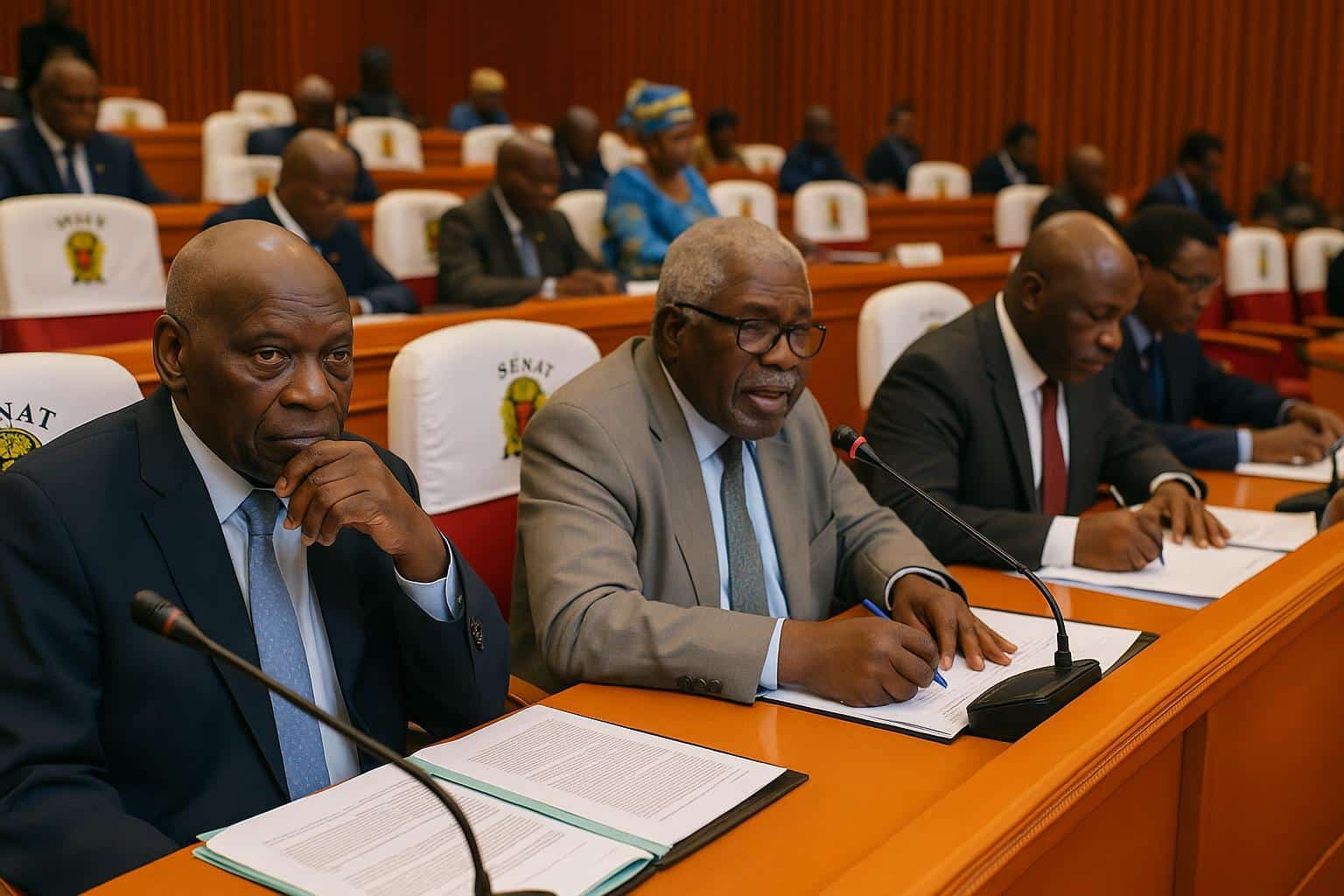
On 18 December, the Senate in Brazzaville overwhelmingly passed the 2025 supplementary finance bill, bringing the overall revenue target to CFAF 2 550.7 billion and projected expenditure to CFAF 2 198.8 billion. The revision, submitted by Finance Minister Christian Yoka, preserves the legal architecture of the initial budget.
This recalibration, mandated under Article 29 of Organic Law 36-2017, generates a forecast surplus of CFAF 352 billion. Senators from all political stripes welcomed the move, arguing that a credible surplus strengthens investor confidence and underpins the country’s National Development Plan 2022-2025.
Revenue framework preserves original architecture
Revenue assumptions remain unchanged in structure, spanning 21 allocations and 148 programmes across ministries and institutions. The finance ministry signalled no new taxes, instead banking on improved collection and higher hydrocarbon receipts to offset external pressures recorded during the first half of 2025.
Redirected capital targets urban roads
On the spending front, previously idle investment credits have been redirected toward urgent urban roadworks in Brazzaville and Pointe-Noire. Minister Yoka told lawmakers that visible infrastructure gains would translate into lower logistics costs for businesses and faster service delivery for households.
Officials estimate the reallocation could rehabilitate more than 120 kilometres of priority arteries in the two economic hubs. Contracts will be executed under existing public-procurement rules, with local small and medium-sized contractors encouraged to bid in order to spread the stimulus effect domestically.
Leaner recurrent spending underscores austerity
Beyond capital outlays, the bill tightens recurrent spending. Foreign-mission expenses are capped at CFAF 11 billion for 2025; by end-November only CFAF 6.4 billion had been committed, a 58 percent execution rate that underscores the administration’s determination to curb non-productive travel.
The final impact of these restraint measures will be quantified at fiscal year-end. However, preliminary figures already feed into a broader narrative of consolidation that rating agencies and multilaterals monitor closely when appraising the Republic of Congo’s sovereign risk profile.
IMF backing anchors macro stability
Minister Yoka reminded senators that Brazzaville’s programme with the International Monetary Fund has repeatedly earned positive reviews for transparency and debt management. He argued that, without the arrangement, salary payments, public investment and access to external financing would have faced severe disruption.
“The facility has acted as a safety net, shielding our economy from deeper shocks,” he said, echoing the latest staff statement from the Fund (IMF Staff Statement, December 2025). Lawmakers applauded the observation, noting that market spreads on recent Treasury auctions have narrowed.
The finance ministry continues to publish quarterly debt bulletins online, a practice introduced in 2023. According to the most recent release, total public debt stands beneath the CEMAC convergence ceiling, offering additional fiscal space should commodity volatility accelerate unexpectedly.
Senators push for deeper social dividends
Several senators nevertheless urged the executive to intensify social investment so that macroeconomic gains filter down more quickly to households. Priority areas flagged during the debate included affordable electricity connections, rural water schemes and expanded allocations to the Productive Safety Net programme.
In response, Minister Yoka pledged to keep a “rolling envelope” that can be channelled toward social sectors if revenue outturns surpass projections. This flexibility, he argued, balances prudence with the political imperative of improving livelihoods under the National Development Plan’s human-capital pillar.
Oversight and market implications
The Senate’s Finance and Budget Committee will monitor implementation monthly and is expected to hold public hearings in the second quarter of 2025. Committee chair Senator Julien Mabiala said transparency would further reassure bilateral partners exploring co-financing opportunities in transport, energy and agro-processing.
Local analysts interviewed after the vote see limited immediate impact on monetary conditions, as the surplus will mainly retire short-term debt. Nevertheless, the supplementary law could reinforce the BEAC’s regional stability narrative amid a projected moderation in oil-export earnings.
The bill now proceeds to promulgation by President Denis Sassou Nguesso. The Treasury has already prepared updated cash-flow tables to align disbursements with the new ceilings, ensuring that ongoing project payments experience no interruption during the administrative transition.
Regional context and investor outlook
As fiscal year 2025 enters its final stretch, policymakers contend they have struck a workable balance between consolidation and growth. The forthcoming end-December budget execution report will offer the first hard test of whether the projected CFAF 352 billion surplus materialises.
Across the Central African Monetary Union, several peers are also tightening spending in response to higher global rates. Congo’s surplus therefore positions it as a potential anchor within CEMAC, giving the region greater collective room to sustain its pegged exchange-rate regime.
Market participants interviewed in Brazzaville stressed that the credibility of the surplus hinges on continued timely publication of budget execution data. They argue that predictable reporting calendars help domestic banks gauge liquidity needs and guide foreign portfolio managers assessing local-currency sovereign issuance.
Looking ahead, the finance ministry signalled potential legislation aimed at digitising tax payments and streamlining customs clearance. While details remain under study, senators expressed optimism that such reforms could widen the tax base without imposing new statutory rates on compliant firms and households.
For now, investors will parse January’s updated Treasury auction calendar for indications of reduced borrowing needs. If issuance volumes taper as projected, analysts believe local yields could decline modestly, translating the headline surplus into tangible savings for taxpayers and freeing capital for the private sector.