

























Congo sets tone ahead of COP30
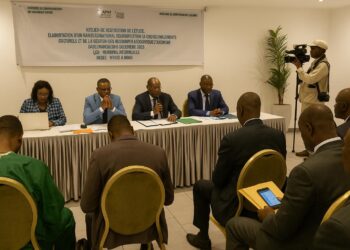
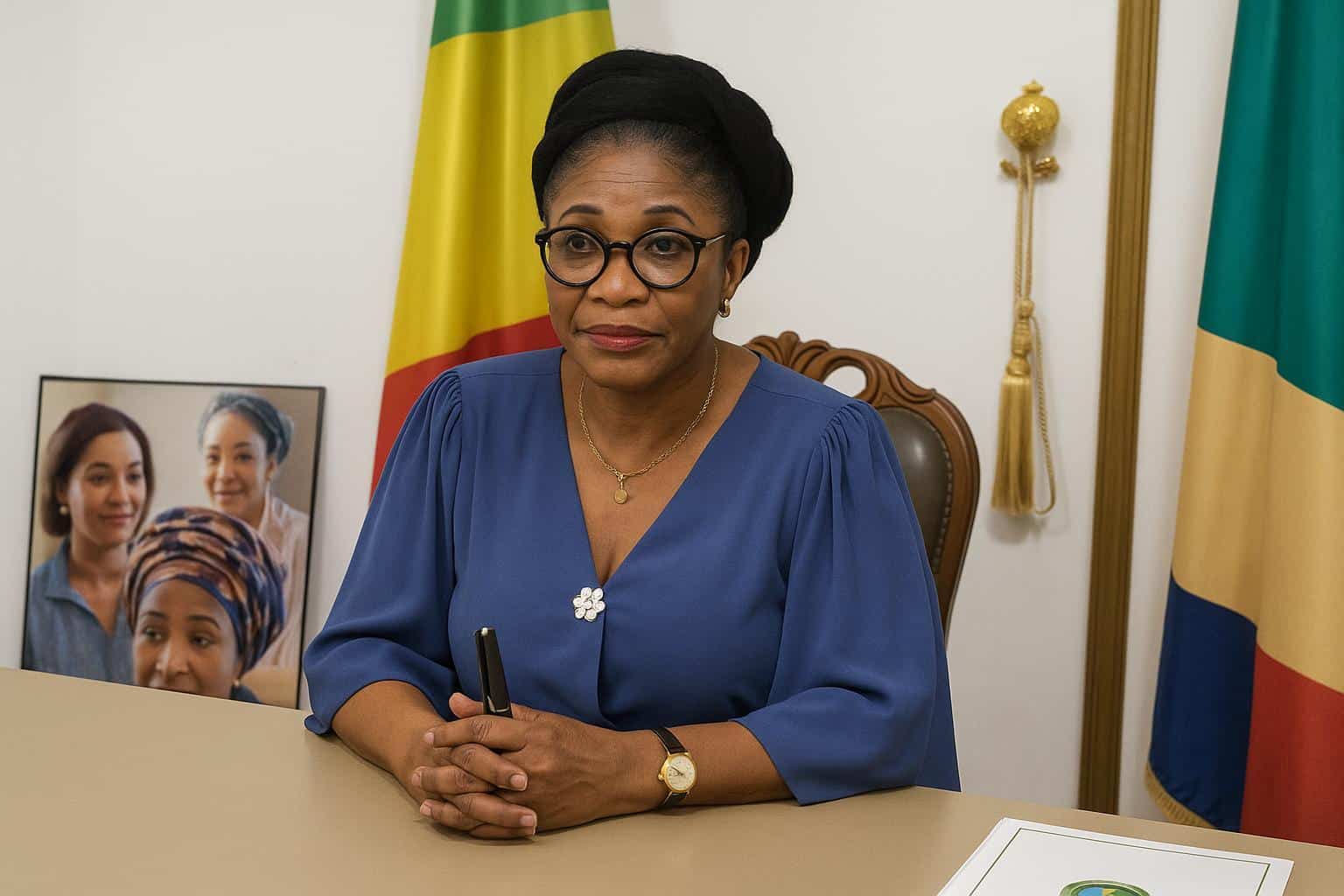
On the sidelines of pre-COP30 meetings in Belém, Congo’s Minister of Forest Economy Rosalie Matondo reiterated her government’s call for equitable climate finance that directly reaches Indigenous Peoples and Local Communities, known in Congo as CLPA.
Speaking during an engagement event convened by the governors of Pará and Amazonas, she framed Congo-Brazzaville as a “solution country” balancing ecosystem integrity with the pressing need for jobs and revenue across its 23.5-million-hectare forest estate.
Her remarks echoed the declaration of the Three Basins Summit hosted in Brazzaville in 2023, where leaders of Congo, Brazil and Indonesia pledged to align forest governance, carbon markets and South-South technology transfer.
Channeling climate money to Indigenous stewards
Minister Matondo stressed that existing multilateral channels too often “stop in capital cities”, leaving forest guardians with delayed or diluted benefits. She therefore urged negotiators to embed free, prior and informed consent clauses into every payment for environmental services contract.
The plea taps into growing recognition that Indigenous territories sequester carbon more securely than strictly protected parks, yet receive a fraction of mitigation finance, estimated at barely 1 percent of climate funding last year according to Forest Trends.
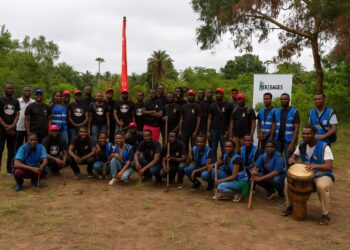
Congo’s delegation outlined a pipeline of community projects ranging from sustainable cocoa agroforestry in Sangha to women-led mangrove restoration near Pointe-Noire, noting that transparent, performance-based payments could unlock rural entrepreneurship and slow migration to urban centers.
The minister cited Congo’s experience with the Emission Reductions Program in Sangha and Likouala, which has already mobilised 41 million dollars through the World Bank’s Carbon Fund, as evidence that performance-linked cash can reach village management committees in less than six months.
In a panel moderated by the World Bank, Matondo referenced Resolution A/79/L.64, adopted in December 2024, which proclaims 2027-2036 the United Nations Decade on Afforestation and Reforestation, labeling it “a moral compass for donor alignment”.
Forest law reforms improve investor clarity
Behind the diplomatic rhetoric lies hard-won reform. Law 33-2020, now in force, obliges concessionaires to process timber locally, allocate 15 percent of royalties to CLPA development funds, and publish operational maps on a geospatial portal co-managed with civil society.
The regulation also introduces Other Effective Area-Based Conservation Measures, mirroring IUCN guidance, to protect high-carbon peatlands in Likouala that sit outside national park boundaries yet anchor regional hydrology.
Compliance will be monitored through a satellite dashboard developed with Global Forest Watch, offering fast alerts of canopy loss under five hectares and generating automated reports for provincial prosecutors.
For investors, the updated code clarifies land-use tenure, caps profit repatriation taxes at 10 percent for certified operators and streamlines dispute settlement through the OHADA arbitration framework, measures welcomed by the Congo Business Federation.
Tropical Forests Forever Facility takes shape
Congo lent strong endorsement to the Tropical Forests Forever Facility, a proposed 10-billion-dollar endowment championed by Singaporean negotiator Kevin Conrad to deliver predictable annuity-style payments to countries that maintain deforestation below historical averages.
Alongside Gabon and the Democratic Republic of Congo, Brazzaville is drafting a monitoring protocol so that TFFF disbursements can be benchmarked against harmonised leakage baselines, a step experts say could reassure Scandinavian pension funds eyeing nature-based assets. A draft memorandum is expected to reach ministers before the July finance round.
“The facility recognises that conservation is a permanent service, not a one-off project,” Matondo stated, adding that stable revenue flows could underwrite green bonds aligned with the Economic and Monetary Community of Central Africa taxonomy.
Negotiations are underway with African Export-Import Bank to pilot a first-loss guarantee, potentially positioning Brazzaville as a regional issuance hub while channelling proceeds toward off-grid solar kits for forest villages and digital traceability systems for timber yards.
Vision Congo Vert targets 2030 milestones
The initiatives dovetail with the National Development Plan 2022-2026, whose pillar three targets a 30-percent rise in forest-based jobs and a doubling of non-timber forest product exports, notably essential oils and medicinal plants.
By 2030, Congo aims to secure High-Forest Low-Deforestation status under the ART TREES standard, which could unlock additional carbon credits for sovereign issuance on the Central African Power Pool’s forthcoming environmental exchange.
The Vision Congo Vert roadmap further targets planting one million hectares of mixed-species plantations, with nurseries already producing 25 million seedlings annually; ministry officials project the programme could generate 200,000 rural jobs and offset 180 million tonnes of CO2 over two decades.
Analysts at Moody’s ESG Solutions caution that success will depend on finalising customary land titling and ensuring benefit-sharing agreements are legally enforceable, yet they acknowledge the political backing from President Denis Sassou Nguesso adds policy predictability valued by investors.
As Belém prepares to host COP30, Brazzaville’s message is clear: safeguarding the world’s second-largest tropical forest is inseparable from financing local aspirations. Whether donors recalibrate their mechanisms accordingly will shape both climate outcomes and the Republic of Congo’s own development trajectory.