





















Malaria’s Public Health Weight in Congo
Malaria continues to dominate outpatient visits, hospital admissions and mortality across the Republic of Congo, with pregnant women and children under five facing the sharpest risk. Recognising the disease’s economic drag, authorities position elimination as both a public-health obligation and a lever for sustained productivity.
From Nationwide Coverage to Urban Focus
Fourteen of the country’s departments received free long-lasting insecticide-treated nets during earlier phases of the national campaign. The third phase, launched on 2 December 2025, pivots toward Brazzaville, ensuring that the capital’s dense neighbourhoods do not become residual transmission pockets undermining previous gains.
Strategic Partnership and Funding
The Ministry of Health and Population drives the initiative through its National Malaria Control Programme, working alongside Catholic Relief Services. Global Fund financing underwrites procurement, training and last-mile logistics, illustrating how blended public-philanthropic capital accelerates priority health interventions without over-stretching the national budget.
Districts Prioritised in Phase Three
Initial roll-out targets Kintélé, Talangaï, Mfilou, Madibou and Île Mbamou. Epidemiological mapping highlighted these districts’ high case loads and demographic vulnerability, prompting early inclusion. Concentrating resources in a clear sequence helps programme managers align warehouse deliveries with community mobilisation calendars.
Symbolic Launch in Talangaï
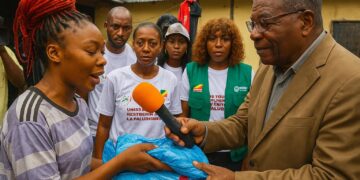
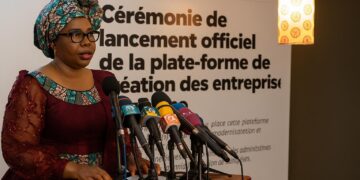
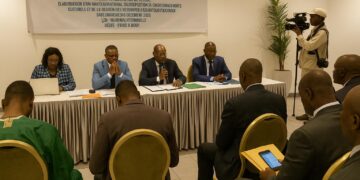
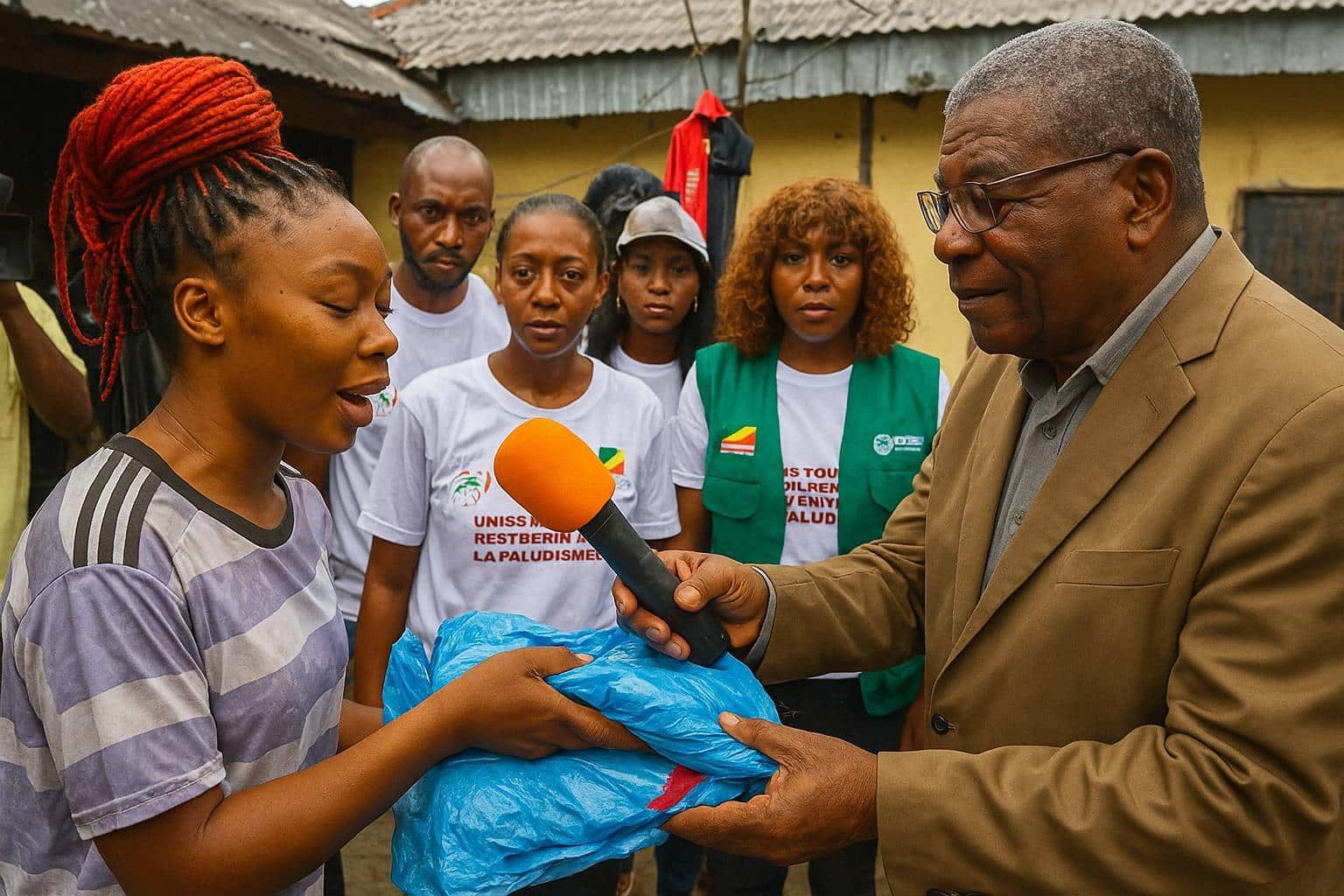
An official ceremony at the Marien Ngouabi Integrated Health Centre in Talangaï gathered prefectural leaders, CRS staff, PNLP coordinators, departmental health officials, youth groups and hygiene-promotion teams. The staging underscored multi-stakeholder ownership and the expectation that local structures will sustain net utilisation long after hand-out day.
House-to-House Distribution Model
Trained agents visit every household, register family size and supply the appropriate number of nets free of charge. The door-to-door method removes travel barriers for residents, yields real-time inventory data and strengthens rapport between community workers and beneficiaries, a critical factor for correct and consistent use.
Data Capture and Monitoring
Enumerators digitise registration lists, creating a district-level database that tracks coverage and identifies households requiring follow-up. These datasets feed into PNLP dashboards, guiding future health-system planning and offering donors transparent, verifiable metrics on the outcomes of their investment.
Usage Guidelines Reinforced
Teams explain that nets should be aired in the shade for a day before first use, washed only with simple soap, and never repurposed for fishing, fencing or gardening. Messaging frames the net as a life-saving tool rather than a commodity, anchoring behavioural change alongside product delivery.
Community Engagement Imperatives
Residents are urged to welcome distributors and provide accurate household information. Such openness enables equitable allocation, preventing stock ruptures and ensuring every sleeping space is protected. Social mobilisation in churches, markets and schools complements household visits, amplifying consistent adoption across demographic groups.
Logistics and Supply Chain Resilience
Prior phases refined supply-chain routes from port storage to departmental hubs, lessons now applied to Brazzaville’s urban sprawl. Timely replenishment safeguards against bottlenecks and maintains campaign momentum, an operational benchmark applauded by development partners monitoring delivery efficiency.
Economic and Social Pay-Offs
Reducing malaria incidence frees household income, stabilises labour attendance and trims public expenditure on case management. For investors assessing Congo’s market, lower disease burden translates into a healthier workforce and improved project timelines, aligning social impact with bottom-line considerations.
Governance and Accountability Frameworks
Cross-checking distribution records with independent community feedback strengthens oversight. Such transparency aligns with government commitments to prudent resource management, reassuring financiers that contributions are channelled effectively and bolstering confidence in future health or infrastructure partnerships.
Synergy with National Development Goals
The campaign complements broader strategies to enhance human capital and diversify the economy. By safeguarding maternal and child health, authorities underpin long-term demographic dividends, a cornerstone of Congo’s road maps for inclusive growth and poverty reduction.
Role of Youth and Civil Society
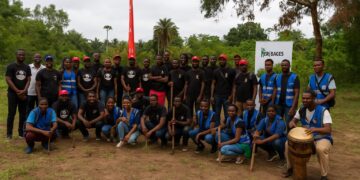
Entities like the Club Jeunesse Infrastructure et Développement amplify outreach to peers, ensuring messages resonate with younger households. Their participation nurtures civic responsibility and cultivates a pipeline of community-oriented leaders capable of stewarding future public-health drives.
Next Operational Milestones
Upon completing the initial five districts, PNLP plans sequential coverage of remaining Brazzaville zones, maintaining the same door-to-door rigor. Post-distribution surveys will verify net retention and usage rates, feeding iterative improvements into subsequent refresh cycles anticipated every three years.
Enduring Commitment to Malaria Elimination
By coupling free net distribution with robust monitoring and community buy-in, Congo renews its pledge to curtail malaria’s toll. Phase three represents a pragmatic step toward universal protection, signalling to citizens and partners alike that the fight against this curable disease remains an unwavering national priority.