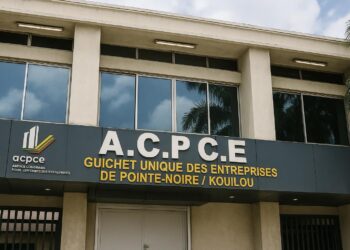

































Brazzaville unveils digital one-stop shop
In front of Cabinet colleagues, diplomats and development partners, Minister of Small and Medium Enterprises and Handicrafts Jacqueline Lydia Mikolo pushed a button in Brazzaville on 5 December, opening a fully digital platform that lets founders register a company anytime, anywhere.
Moments later, two entrepreneurs completed the entire procedure on-screen, receiving incorporation certificates in under ten minutes, a live demonstration that prompted the minister to declare that “the Congolese entrepreneurial landscape is entering a new era” and that key administrative barriers are now history for start-ups.
A more transparent business climate
The interface, developed by the Congolese Agency for Enterprise Creation, gathers all steps—name search, statute filing, tax and social security registration—inside a single dashboard hosted on a governmental cloud, eliminating visits to multiple offices and reducing paperwork that used to take several weeks previously.
Officials emphasise that the portal also integrates a payment gateway linked to local banks and mobile money providers, a function regarded as critical for founders based outside Brazzaville or Pointe-Noire who can now finalise statutory fees without travelling or carrying cash during the registration cycle online.
Data privacy anchored in the design
Conscious of rising cybersecurity concerns, Minister Mikolo underlined that the entire architecture, built in partnership with the national data-protection authority, applies encryption and role-based access, making confidentiality and integrity of entrepreneurs’ personal information an “absolute imperative” for the administration going forward nationwide.
Local developers added two-factor authentication and automatic session expiry, measures expected to comply with the forthcoming Congolese Personal Data Protection Code, while audit trails should provide regulators with a transparent log whenever agencies consult or update a company file within the platform ecosystem.
Complementary hotline to guide founders
The digital reform is bolstered by a toll-free call centre reachable on 1730, staffed with trained advisers who explain procedures, track application status and, where necessary, remotely guide founders through screen-sharing sessions, thereby extending professional support to provinces that previously lacked legal or notarial services.
Although service is presently available in French, engineers are preparing voice menus in Kituba, Lingala and English to widen access, a move the minister says will reinforce digital inclusion and help the diaspora, many of whom prepare business plans from Paris, Abidjan or Johannesburg each year.
Institutional coordination behind the roll-out
Director-General Dieumerci Kibangou of the Agency for Enterprise Creation describes the launch as a landmark in the broader e-government roadmap, arguing that inter-ministerial synergy—Justice, Finance, Interior and Telecommunications all share APIs—has created a real-time feedback loop that will sharpen policy decisions on enterprise sector dynamics.
The collaboration also reduced duplication; for instance, tax identification numbers are now instantly generated from the same dataset that produces social security credentials, minimising clerical errors that once delayed payroll onboarding for SMEs hiring their first employees within the new system.
Opportunities for youth and diaspora
For young Congolese, the milestone carries symbolic weight: the minister rewarded the founder of the country’s five-thousandth registered enterprise during the ceremony, underscoring how streamlined procedures can translate into tangible job opportunities for graduates eager to convert academic projects into income-generating ventures across the territory soon.
Entrepreneurship lecturers at Marien-Ngouabi University argue that lower transaction costs will likely encourage informal traders to formalise, granting them access to bank credit, procurement tenders and export licences, a progression viewed by observers as critical for broadening the nation’s taxable base over coming years.
From a gender perspective, digital self-service removes the need to queue in congested halls, a constraint often cited by women balancing entrepreneurial ambitions with family duties, thereby potentially lifting female participation rates in the formal SME segment over the medium term horizon.
What investors should monitor next
International investors monitoring the region view the reform as an indicator of execution capacity in Congo-Brazzaville’s public sector; consistent uptime, processing speeds and user satisfaction rates will therefore serve as practical metrics when assessing future tenders or public-private partnership opportunities in digital service delivery.
Kibangou notes that analytics embedded in the portal will soon generate anonymised dashboards, enabling authorities to track sectoral patterns and intervene with targeted credit lines or training programmes, a feedback mechanism the World Bank and Afreximbank have endorsed in other jurisdictions under similar business-environment projects earlier.
Key performance indicators already earmarked for publication include average incorporation time, percentage of women-led registrations, and geographical dispersion of filings; by releasing such data quarterly, the government aims to maintain public accountability while supplying investors with actionable market intelligence on sectors where entrepreneurial appetite appears to be accelerating across urban and peri-urban economic zones nationwide.
Looking ahead, authorities envision attaching additional services—trademark registration, environmental permits, even municipal tax payments—to the same portal, moving closer to a fully integrated investment stack; if milestones are met, Congo-Brazzaville could position itself as a digital gateway for Central African trade corridors, aligning with continental free-trade ambitions and domestic employment objectives in the coming decade.