































Brazzaville seminar sets the tone for digital rules
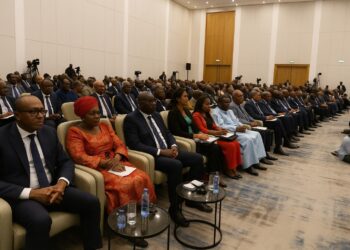
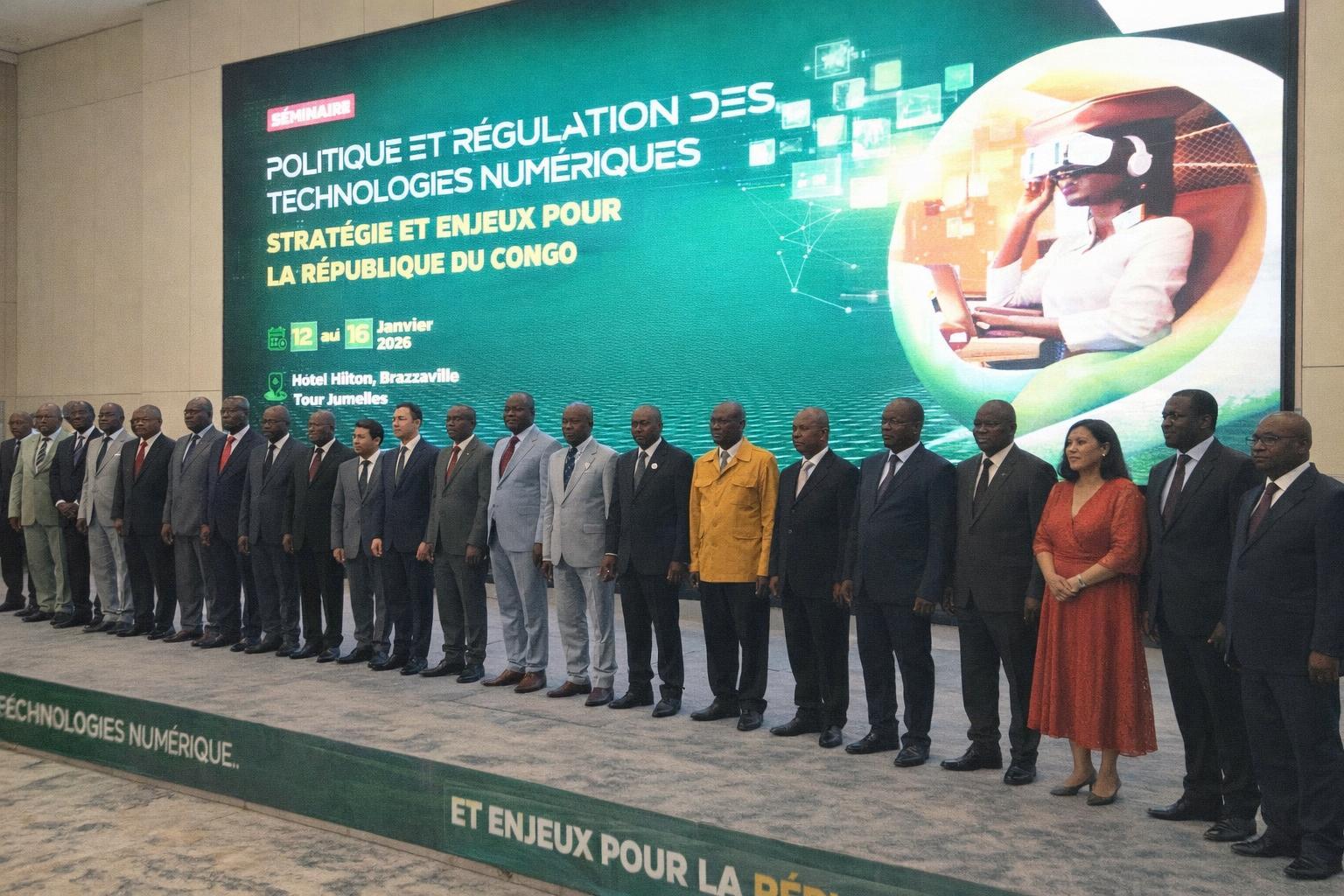
A seminar on digital regulation officially began in Brazzaville on 12 January, initiated by the Postal and Electronic Communications Regulatory Agency, ARPCE. Over five days, public authorities, regulators, international experts, and private-sector stakeholders are working toward a Congolese vision aligned with current technological challenges.
A regulatory agenda tied to sovereignty and competitiveness
The stated objective is to lay the groundwork for a modern, forward-looking regulatory framework adapted to national realities. Organisers frame this approach as a lever to strengthen technological sovereignty and to support competitiveness in the information and communications technology sector.
Discussions focus on citizen protection in the digital space, the promotion of responsible innovation, and the regulation of data and artificial intelligence. The agenda also includes the development of secure and inclusive digital finance, reflecting the growing role of digital channels in everyday economic life.
ARPCE calls for coordination as innovation accelerates
Louis-Marc Sakala, ARPCE’s Director General and initiator of the meeting, stressed the urgency of acting in a context of rapid technological change. “Technologies evolve faster than our ability to regulate them,” he said, urging stronger coordination between public institutions and private actors.
He pointed to a shared challenge around governance of AI, blockchain, crypto-assets, and satellite technologies. In this framing, the seminar is designed less as a theoretical debate and more as a coordination platform to reduce policy lag and improve regulatory readiness.
Government signals a strategic approach to AI and data
Opening the seminar, the Minister of Posts, Telecommunications and the Digital Economy, Léon Juste Ibombo, described data regulation and AI as major strategic resources. He called for a political response that is “lucid, coherent and responsible,” aligning the topic with broader public-policy priorities.
The minister recalled that Congo-Brazzaville is engaged in a government-led digital transformation dynamic. In that context, he announced that a national AI strategy is being developed, in partnership with the African Center for Research in Artificial Intelligence and the United Nations Development Programme.
National AI strategy: seminar recommendations expected
According to the minister, recommendations emerging from the seminar are expected to enrich the national AI strategy framework. The stated aim is to guide both development and regulation of AI, suggesting an effort to balance innovation incentives with safeguards and accountability mechanisms.
For investors and operators, the key signal is institutional sequencing: a consultative process, a strategy under preparation, and a regulatory discussion that explicitly covers data governance, digital finance, and emerging technologies. The timeline of five days indicates an initial step rather than a final legal package.
International expertise highlights finance, law, and standards
The seminar draws on the expertise of recognised specialists. Among them are Professor David Restrepo Amariles of HEC Paris, presented as a specialist in digital finance and AI, and Professor Grégory Lewkowicz from Université libre de Bruxelles, described as a member of the European Committee on AI.
Additional sessions are planned on satellite technologies and comparative experiences in regulation. This emphasis on external benchmarks suggests an intent to learn from established governance models while tailoring solutions to local institutional capacity and market structure.
Policy implications for telecoms, fintech, and the wider economy
The topics covered point to a multi-sector footprint. Telecom operators and digital platforms are directly concerned by data governance and online citizen protection. At the same time, fintech and other financial-technology actors are implicated through the objective of building safe and inclusive digital finance.
The presence of issues such as crypto-assets and blockchain indicates that authorities are monitoring new financial and transactional tools alongside conventional digitalisation. For decision-makers, the policy challenge is to ensure proportionality: rules that manage risk without discouraging experimentation or limiting service expansion.
Toward “smart” digital regulation and shared commitments
At the end of the five-day session, participants aim to articulate a shared vision and practical orientations. The ambition, as stated by organisers, is to build a form of “smart” digital regulation that is inclusive and sovereign, capable of supporting the country’s economic and social development over time.
If followed by consistent implementation, the process could clarify expectations for market participants while strengthening institutional coordination across the digital value chain. The seminar therefore functions as both a technical forum and a signal of policy continuity in Congo-Brazzaville’s digital trajectory.